Structural Angle Fabrication · Factory Direct
Structural Angle Fabrication Equipment
A mixed structural shop processes braces, brackets, frame members and connection angles, often in the same week. RITEC builds CNC angle lines for this work in our own factory in Jinan, Shandong Province, China.
Send us a representative job list, not the largest section you have ever processed. We size the line around the angle work you repeat and keep the occasional parts on a practical route.
Feed and mark
CNC feeding and part marking
Punch both legs
holes in both angle legs
Shear and discharge
fixed-length shearing, finished part out
Separate Routine Angle Parts from Occasional Jobs
Routine angle parts are the ones that return every week, and they decide whether a CNC angle line pays off. List quantities, sections, materials, holes and finished lengths, and note where people and machines lose time between operations.
Repeated Project Members
Common hole patterns and section groups that come back batch after batch. These are the parts where a programmed line removes repeated measuring and handling.
Short Brackets and Connection Angles
We check the finished length, hole access and how the part is held and discharged. A large maximum section does not prove that every short part is practical on the line.
Long Braces and Frame Members
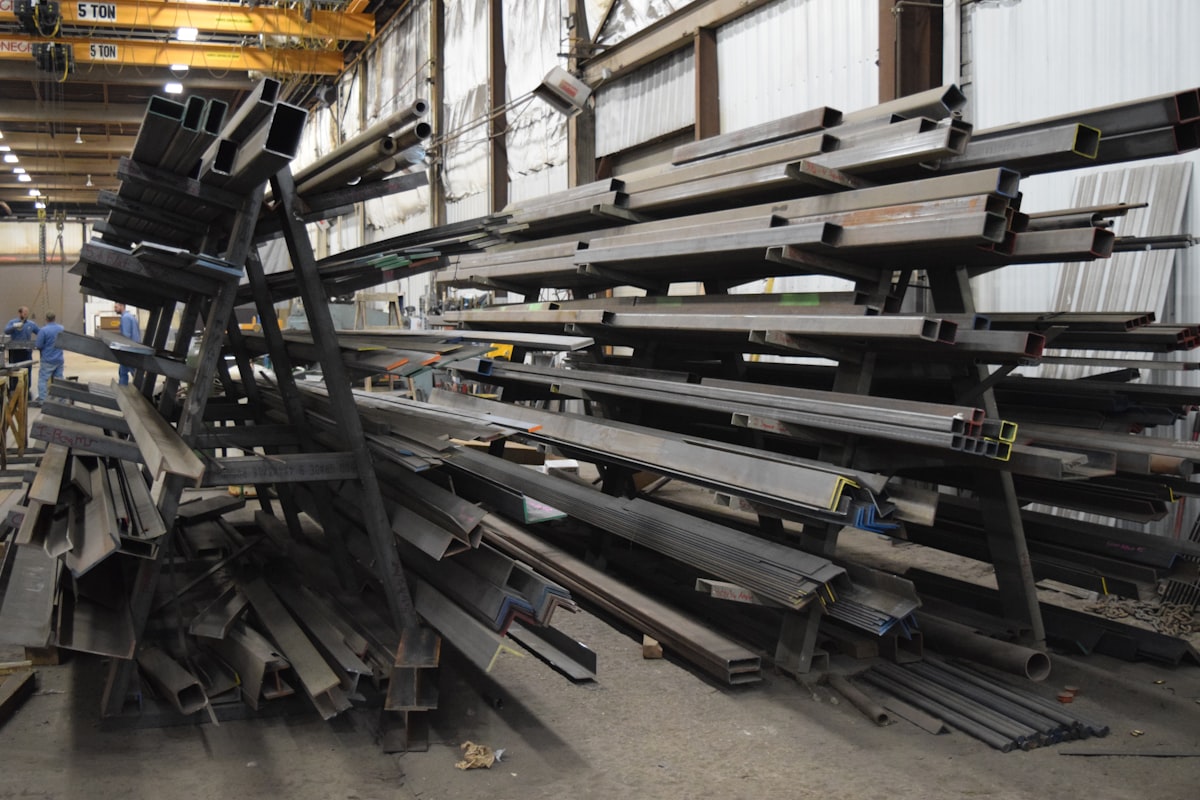
Raw stock handling, support and collection of finished pieces matter as much as the machine. We plan infeed and outfeed space around your longest stock.
Production fit depends on your recurring part mix, not on the label "steel structure".
Find Where Time and Rework Enter the Job
Time and rework usually enter between the machines: manual layout, waiting for shared equipment and moving parts from station to station. Map what happens between receiving a drawing and releasing a finished part, then compare it with the CNC route.
Separate Manual Steps
A CNC line will not fix incomplete drawings, material variation or a missing downstream operation. We list those separately, so the comparison stays honest.
RITEC CNC Angle Line
Hole positions come from the program, so layout and marking stop being a manual task on every part. Feeding, marking, punching and shearing run as one continuous process.
Compare a Dedicated Angle Line with Your Alternatives
A dedicated angle line pays off on regular angle work; it is not automatically the right answer for every job. We compare it with the machines you already run, including an ironworker where that is a realistic alternative.
| Production condition | What we check | Usual direction |
|---|---|---|
| Regular batches of angle members | Whether integrated feeding, punching and shearing fit the workload | CNC angle line |
| A few varied brackets | Whether your existing machine still handles them well | Keep your current machine |
| Frequent section and hole-size changes | The real adjustment and tooling work between jobs | Evaluate on your job list |
| Work shared across different profiles | Which machines serve the other profiles and where the bottleneck is | Review the whole mix |
| Expected growth in one angle product group | Whether the future workload is defined well enough to size equipment | Size on defined work |
Regular batches of angle members
Whether integrated feeding, punching and shearing fit the workload
CNC angle lineA few varied brackets
Whether your existing machine still handles them well
Keep your current machineFrequent section and hole-size changes
The real adjustment and tooling work between jobs
Evaluate on your job listWork shared across different profiles
Which machines serve the other profiles and where the bottleneck is
Review the whole mixExpected growth in one angle product group
Whether the future workload is defined well enough to size equipment
Size on defined workThe comparison covers investment, floor space, handling, flexibility and part preparation, not just cycle speed.
Review Short Parts, Hole Access and Secondary Work
The difficult parts decide whether a line finishes your work or leaves gaps. Send drawings of the awkward ones early: we check each feature against the line configuration or give it an explicit route outside the line.
Shortest Finished Part
Send the minimum finished length you produce. We check how the part is held, punched, sheared and discharged rather than assuming a big section range covers it.
Holes Near the End or Heel
Holes close to the part end or the heel affect punch access and edge distance. Mark them on the drawing so we can check them against the tooling.
Both Legs, Equal and Unequal Angles
Our CNC angle line punches both legs in the same process. Tell us which equal and unequal angles you run, so we confirm holding and reference for each.
Slots and Special End Shapes
Slotted holes need their own tooling. Notches and cut-backs go on our CNC hydraulic angle notching machine, added only where your drawings show them.
Milled, Drilled or Tapped Features
Milled heels go on an angle steel heel milling machine, which we also build. Tapped holes get their own route, and holes that may need drilling are a separate decision: see angle punching vs drilling.
Tooling and Changeovers
Our offer lists the punch and die sets included, the hole diameters set up on the line and what a size change involves. We base it on your real job mix, not on general CNC claims.
Judge Output on a Real Batch, Not a Punch Cycle
Output is judged on a batch of parts you actually make, not on a single punch cycle or a travel speed. Our CNC angle line capacity guide explains how we estimate it from a part mix.
Choose a batch with the section and hole changes your shop really makes, and record staffing, setup, inspection and part collection.
Compare the cost of finishing that batch on your current route and on a RITEC angle line, including tooling and handling; we mark which figures are measured and which are estimates.
If future demand is uncertain, we work through more than one scenario, so you can tell an essential capability from an optional investment.
The Angle Line and the Machines Around It
We build the CNC angle line and the machines a structural shop uses alongside it in our own factory in Jinan, Shandong Province, China. You deal with one manufacturer for angles, plates and beams, and each machine is added only where your parts need it.
CNC Angle Line
Feeds, marks, punches both legs and shears structural angles to length, then discharges the finished part.
See our CNC angle linesCNC Hydraulic Angle Notching Machine
For angle ends that need a notch or cut-back where braces and frame members meet.
See our angle notching machinesAngle Steel Heel Milling Machine
For angles where the drawing calls for a milled heel, so one angle can sit inside another. Ask Henry about heel milling for your section range.
CNC Plate Drilling Machine
For the structural connection plates that join your angle members. It drills, taps and chamfers or countersinks holes from your plate drawings.
See our CNC plate drilling machinesHydraulic Plate Punching Machine
For connection plates where punched holes meet your specification. We build both punching and drilling machines, so we recommend the process from your drawings.
See our plate punching machinesCNC Beam Drilling Line
For the beams and columns in the same project, so beam work does not compete with your angle line.
See our CNC beam drilling linesWe also build channel steel and flat steel punching lines and band saws. For each project, our written offer states the machine configuration, the tooling included and the sample parts to be checked. Building lattice towers as well? See our transmission tower fabrication equipment.
Questions from Mixed Fabrication Workshops
Short answers to common questions from structural steel shops. If yours is not here, ask Henry directly.
Is a dedicated angle line worthwhile for small batches?
It depends on your total angle workload, how often parts repeat and how much setup they need, not on a fixed batch size. Send a few representative batches and we compare finishing them on your current route and on a CNC angle line.
Can a CNC angle line replace our ironworker completely?
It usually takes over the recurring angle work. An ironworker may still be the practical machine for other profiles or one-off jobs, so we compare the operations and parts each machine actually handles in your shop.
Can the angle line process all our structural steel?
No. An angle line processes angles; beams, channels, flats and plates need their own machines. We build CNC beam drilling lines, channel and flat steel punching lines, and plate drilling and punching machines, so we can review those parts in the same project.
Can it handle short brackets and unequal angles?
Send drawings of your shortest parts and the unequal angles you run. We check holding, hole access and discharge against the line configuration before we quote, and tell you plainly if a part should stay on another route.
What should a sample-part check include?
Your common parts plus the short, awkward or frequently changed jobs that matter to your decision. Before the check, we agree with you which parts are run, what is measured and how time is counted.
Does RITEC build its CNC angle lines in-house?
Yes. RITEC is a manufacturer, not a trading company. Our factory is in Jinan, Shandong Province, China, where machining, assembly, electrical installation, programming and full-line testing are done in-house.
Turn Your Job List into an Equipment Plan
Send representative angle drawings, quantities and materials, plus the machines you use today. Tell us which operations limit production and which parts you expect to add; we reply with a line configuration based on that workload.
Or email cncmachinery@costergroup.cn
You send
- Angle drawings
- Quantities per part
- Material grades
- Current machines
- Operations that limit output
- Parts you plan to add
We check
- Parts for the line
- Short and awkward parts
- Secondary operations
- Batch workload
- Written supply scope