China CNC Hydraulic Angle Notching Machine Factory
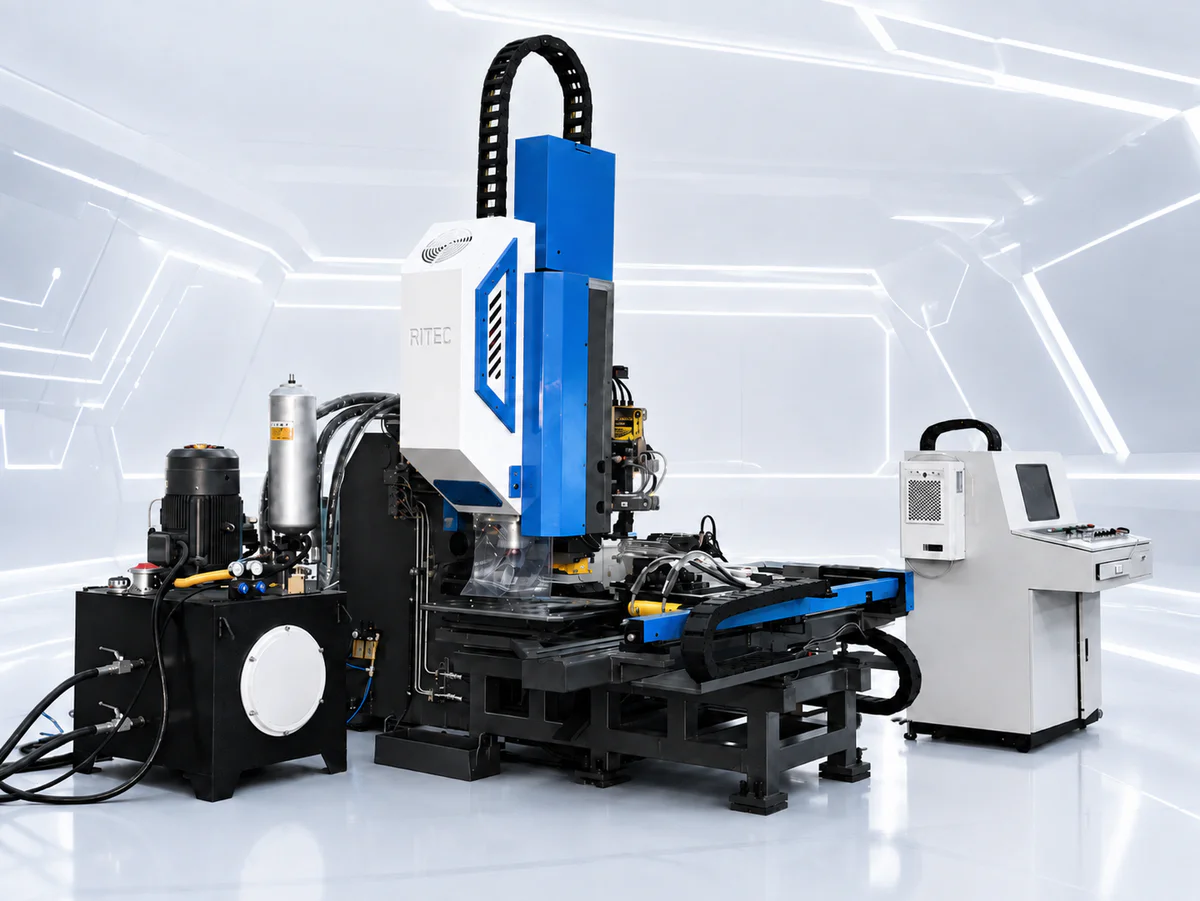
A CNC hydraulic angle notching machine built for angle steel and angle iron notch processing.
We help you confirm the machine configuration based on your angle size, thickness, material grade, and notch drawing. Whether you need end notching, V notch, corner notch, left / right notch, or repeated batch notching, we check the right tooling and hydraulic cutting setup before production.
Send your angle steel specification and notch drawing to get a practical machine configuration from our factory.
Years Experience
Machines Delivered
Countries Served
What You'll Find on This Page
Jump straight to what matters for your angle notching project, from notch types and the CNC hydraulic method to factory testing, operation support, and getting your quote.
Angle Notching Needs
End, V, corner, and left / right notches you cut every day.
Manual Notching Problems
Where hand-cutting slows you down and wastes angle steel.
CNC Hydraulic Method
How hydraulic cutting gives you clean, repeatable notches.
Size & Notch Compatibility
The angle sizes, thickness, and notch shapes it handles.
Tooling & Blade Support
Blades and dies matched to your angle and notch drawing.
Factory Testing
We trial your samples and send proof before shipment.
Operation Support
Install, training, and after-sales help when you need it.
FAQ
Lead time, payment, shipping, and warranty answered.
Send Drawing
Send your angle spec and notch drawing for a real config.
Get a Quote
Send your drawing, get a configuration within 24h →
What Angle Notches Do You Cut?
Your angle steel notching requirements depend on assembly design, welding preparation, clearance, and connection details. No two drawings are the same.
If you run repeated notch dimensions, need consistent positioning, or produce in batches, this CNC hydraulic notching machine is built for exactly that kind of work.
Common Angle Notching Requirements
End Notching
Remove material from the end of your angle steel for assembly and structural connections.
Corner Notching
Create clearance at corners where multiple steel members meet.
V Notching
Form V-shaped cuts for specific fabrication and connection requirements.
Welding Preparation Notches
Open up space for weld access and clean joint preparation.
Left & Right Notches
Position notches on either side of the angle, exactly as your drawing calls for.
Repeated Production Notches
Hold the same notch dimensions across large quantities, part after part.
Custom Notch Shapes
Have a shape that isn't standard? Send your drawings, samples, or production requirements and we'll evaluate the right tooling and hydraulic cutting setup for it before production.
Where Manual Notching Holds You Back
Most angle steel shops start with manual marking, flame cutting, grinding, or semi-manual notching. That works for small runs. As your order volume climbs, the same methods start costing you time, consistency, and labor.
Repeated measuring
More setup time than the cut
Sizes drift
Parts don't match at assembly
Rough edges & burrs
Extra finishing required
Rework at assembly
Added labor and delays
Shift-to-shift variation
Hard to standardize
Relies on skilled workers
Output at risk
Recognize These Problems in Your Shop?
If repeated measuring, inconsistent notches, and assembly rework are slowing your output, a CNC hydraulic notching machine fixes the root cause. Send your angle spec and notch drawing and we'll work out the right configuration for your production.
How the CNC Hydraulic Notching Works
For repeated notch production, cutting quality depends on more than force. It comes down to positioning consistency, material stability, and the right tooling. This machine brings controlled positioning together with hydraulic cutting force so your notches stay repeatable, part after part.
The Process, Step by Step
CNC Positioning for Repeatable Locations
The positioning system sets each notch location, so you skip the repeated manual measuring. When parts share the same notch point, that position repeats across the run, cutting marking work and tightening consistency.
Hydraulic Cutting Force
The hydraulic system delivers the force the notching operation needs. Instead of flame cutting or manual grinding, the cut goes straight through matched tooling, giving you a stable process built for repeated production.
Clamping Keeps Material Stable
Angle steel can shift mid-process if it isn't supported. The clamping system holds your workpiece in place through the cutting cycle, cutting down the unwanted movement that throws off notch consistency.
Tooling Defines the Notch Shape
Your notch profile comes from the tooling, not from operator hand movement. Tooling is matched to the notch shape, angle size, material thickness, and production needs, and different notch designs may call for different tooling setups.
Built for Repeated Production
When the same notch design runs across many parts, positioning, clamping, hydraulic force, and tooling work together to keep your process consistent, exactly what you need for angle components heading into assembly, welding, or structural work.
Let's Configure It Around Your Parts
Positioning, clamping, hydraulic force, and tooling only matter when they're matched to your work. Send your angle size, thickness, material grade, and notch drawing, and we'll put together a practical configuration for your production.
What We Confirm Before Configuration
Every notching application gets evaluated against your material spec and notch requirements. Here's what we usually confirm with you before configuring the machine, so the setup fits your parts from day one.
| Item | Why We Confirm It |
|---|---|
| Angle Size | Sets the machine capacity, support requirements, and tooling arrangement for your parts. |
| Material Thickness | Drives the hydraulic cutting force and the tooling we select. |
| Material Grade | Different materials call for different cutting considerations. |
| Notch Shape | Determines the tooling design and the processing method. |
| Notch Depth | Affects the tooling structure and cutting requirements. |
| Notch Position | Helps us set the positioning and your operating workflow. |
| Left / Right Notch | Influences the machine setup and production sequence. |
| Production Quantity | Helps us evaluate the workflow and plan your tooling. |
| Edge Requirement | Tells us whether any additional finishing needs to be planned. |
| Drawing or Sample | Gives us the most reliable basis for a technical evaluation. |
Angle Size
Sets the machine capacity, support requirements, and tooling arrangement for your parts.
Material Thickness
Drives the hydraulic cutting force and the tooling we select.
Material Grade
Different materials call for different cutting considerations.
Notch Shape
Determines the tooling design and the processing method.
Notch Depth
Affects the tooling structure and cutting requirements.
Notch Position
Helps us set the positioning and your operating workflow.
Left / Right Notch
Influences the machine setup and production sequence.
Production Quantity
Helps us evaluate the workflow and plan your tooling.
Edge Requirement
Tells us whether any additional finishing needs to be planned.
Drawing or Sample
Gives us the most reliable basis for a technical evaluation.
Send Your Drawing or a Sample
The single most reliable thing you can send is your drawing or a sample. With that in hand, we can evaluate the tooling and give you a configuration that actually matches your parts, not a generic quote.
Tooling That Matches Your Notch
Machine capacity matters, but it's often the tooling configuration that decides whether your specific notch can be produced efficiently. Tooling shapes the notch, sets the cutting quality, and keeps your production consistent over the long run.
What to Know About Tooling
Notch Shape Depends on Tooling
Different notch designs call for different tooling. We review your notch profile, depth, angle size, and thickness first, and your drawing or sample makes sure the tooling matches the exact geometry you need.
Tooling Should Match the Application
A setup that suits one angle size may not suit another. When your dimensions or notch requirements change significantly, we plan tooling adjustments or alternative configurations as part of the machine evaluation.
Blade Condition Affects Cutting Quality
Cutting edges wear over time. Blade condition shows up in your notch edge quality, dimensional consistency, and overall performance, so regular inspection keeps your cutting results stable.
Practical Blade Replacement
Swapping blades should be straightforward and built into normal maintenance. Keeping your commonly used spare blades on hand helps you avoid production interruptions when a replacement is due.
Spare Parts & Technical Support
Tooling, blades, and wear parts stay available through your machine's service life. Before shipment, we'll discuss recommended spares with you based on your expected production and notch application.
Not Sure Which Tooling Your Notch Needs?
Send your notch drawing, angle size, and material thickness, and we'll work out the right tooling and blade setup, plus the spare parts worth keeping on hand for your production.
Tested Before It Ships to You
Before your machine leaves the factory, we test it against the confirmed configuration and tooling arrangement. The point is simple: verify the machine runs and the notching performs as expected, so you know it's right before it ships.
Machine Function Verification
We check the operating sequence, positioning system, hydraulic operation, and tooling installation during testing, confirming your machine is ready to ship.
Tooling & Notching Inspection
We review tooling installation and cutting performance during the test, and inspect the finished notches for shape consistency against your confirmed tooling configuration.
Sample Testing
Send angle steel samples, drawings, or production requirements and we can arrange sample notching before shipment, so both sides review the actual result before it heads out.
Test Records Before Delivery
We can provide photos, videos, or testing records to match your project, so you get to review how the machine runs before shipment is arranged.
Testing Gallery
Want a Sample Notch on Your Angle Steel?
Send your angle spec and notch drawing, and we'll arrange sample notching and share the test photos or video before shipment, so you see the real result before anything leaves the factory.
Support Across the Full Lifecycle
Reliable production isn't just about the machine. It's about practical support when you install, operate, and maintain it. We stay with you across the whole lifecycle to keep your line running smoothly.
Installation Guidance
Before commissioning, we share machine layout recommendations, utility requirements, and installation guidance, so your workshop is prepped and setup time after delivery stays short.
Operation Assistance
Through manuals, photos, videos, or remote communication, we walk you through basic operation, positioning setup, and production procedures, so your operators get up to speed faster.
Tooling & Blade Guidance
We support you on tooling installation, blade replacement, and routine inspection. Proper tooling maintenance keeps your notch consistency and production stability where they should be.
Hydraulic System Assistance
Hydraulic performance shapes your cutting quality and machine operation. We guide you on routine inspection, troubleshooting, and component replacement whenever it's needed.
Spare Parts Availability
We can supply common wear parts and replacement components matched to your machine configuration, and we'll talk through recommended spares with you during project planning.
Remote Technical Support
When questions come up in production, send photos, videos, drawings, or operating details. We review them with you to pin down likely causes and give practical recommendations.
Questions You Might Be Asking
Quick answers on machine suitability, tooling, positioning, and what to send for a fast technical evaluation.
Can this machine process my angle steel size?
It depends on your angle dimensions, material thickness, notch requirements, and tooling configuration. Send your angle specification and notch drawing and we'll confirm whether the machine suits your application.
Can different notch shapes be produced on the same machine?
Often, yes, through the right tooling configurations. Feasibility comes down to your notch geometry, angle size, material thickness, and production requirements.
Do different notch designs require different tooling?
In many cases, yes. Tooling is closely tied to notch shape, notch depth, and material dimensions, so different notch requirements may call for different tooling arrangements.
Can CNC positioning reduce manual measuring?
For repeated production, yes. CNC positioning cuts down repeated measuring and marking, and the positioning settings help you hold more consistent notch locations across multiple parts.
What factors affect notch quality?
Several things: your material specification, tooling condition, machine setup, hydraulic performance, and production practices. Regular inspection of tooling and machine components keeps your results stable.
What information is needed for machine evaluation?
Sending these speeds up your technical evaluation:
- Angle size
- Material thickness
- Material grade
- Notch shape
- Notch depth
- Notch position
- Production quantity
- Drawing, photo, or sample if available
Send Your Drawing, Get a Real Configuration
Tell me about your angle size, thickness, and notch requirement. I'll come back to you with a practical machine configuration, usually within 24 hours.
Henry
Your Angle Notching Specialist
Hi, I'm Henry. I've spent years helping fabrication shops get angle notching right, from a single drawing to full batch production.
Send me your angle steel specification and notch drawing. I'll check the tooling and hydraulic setup, and give you a configuration that actually fits your parts, not a generic quote. No pressure, just a straight answer.
Henry