China Custom Roll Forming Machine Factory
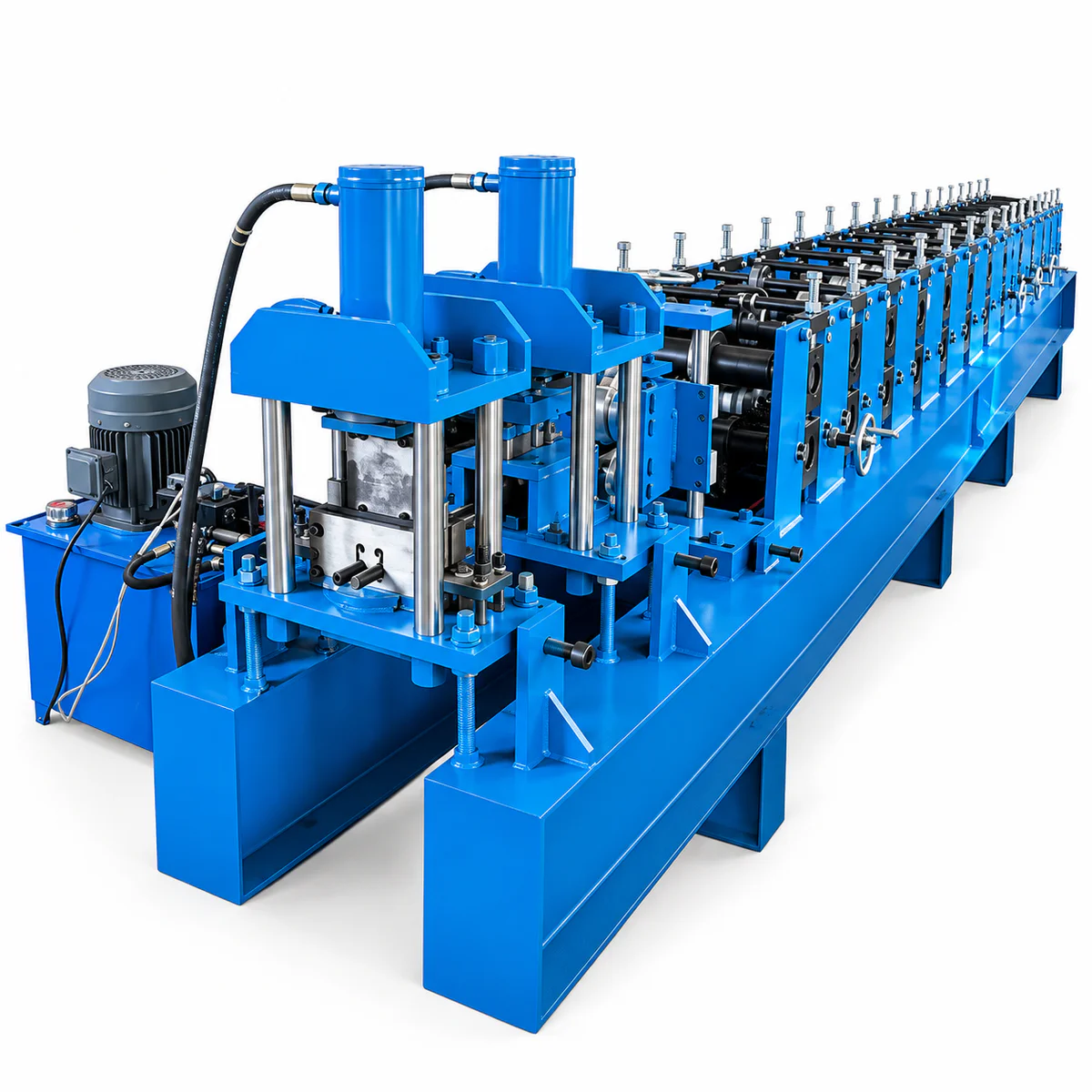
Get a roll forming machine built around your profile drawing, material thickness, hole pattern, cutting method and production target.
Send us your profile drawing, sample photo or product idea. We review the section shape, forming difficulty, punching layout, material requirement and line configuration before we build your machine.
Built to your drawing
Your profile, not a fixed catalog
12-24h response
Fast technical review on your inquiry
Form, punch, cut in one line
Integrated to your production target
17+ years
Building custom forming lines for steel profiles worldwide
What You'll Find Here
Jump straight to what matters for your custom line, from sending your profile and forming suitability through tooling, testing, and final acceptance before your machine ships.
Start With Your Profile
Send your drawing, sample photo or product idea to start.
Profile Forming Suitability
Whether your section shape can roll form cleanly.
Project Development Process
From your drawing to a running line, step by step.
Custom Line Configuration
Decoiler, forming, punch and cut matched to your part.
Roll Tooling Design
Roller stations and forming passes built for your shape.
Punching and Cutting Strategy
Hole pattern and cut method matched to your output.
Material and Surface Protection
Coil type, thickness and coating kept undamaged in forming.
Multi-Size Planning
Run several profile sizes and widths on one line.
Testing and Commissioning
We trial your parts and tune the line before it ships.
Acceptance Before Shipment
You sign off on sample parts and video before we ship.
Why Work With Our Factory
17+ years building custom forming lines worldwide.
FAQ and Drawings
Lead time, payment, shipping, and how to send drawings.
Send Your Profile Drawing
Send your drawing, get a line configuration within 24h →
Your Line Starts With Your Profile, Not a Catalog Model
Your profile has its own forming difficulty, material behavior, punching needs and tolerance. A standard machine model can't account for that. Your drawing can.
Before we design your line, we study your section shape, material thickness, bend radius, hole layout, cut length and production target. That review is what turns a generic machine into a line built for your part.
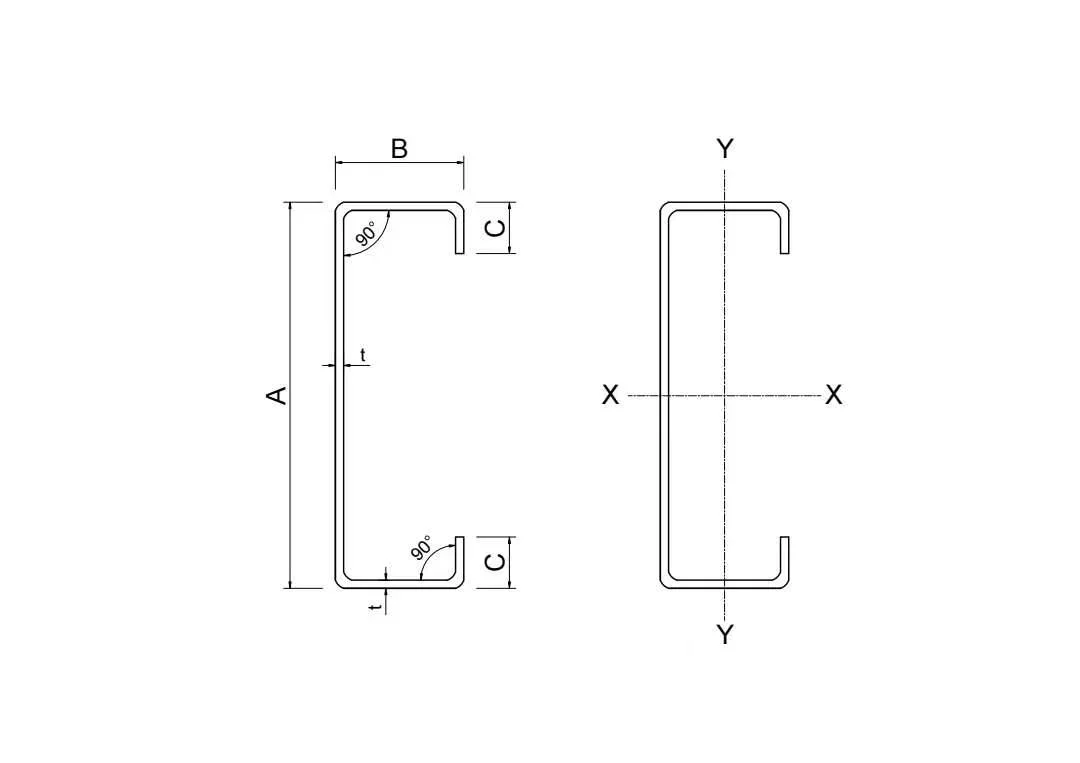
Profiles We Build Lines For
If your section looks close to one of these, or nothing like them, send it anyway. Custom is the default here.
Got a Profile That Looks Complicated?
For special shapes, we check whether your profile suits continuous roll forming, whether pre-punching is needed, and whether it may require straightening, special cutting or multiple roll sets. You get a straight answer on feasibility before anyone talks price.
Can Your Profile Be Roll Formed?
Not every section suits direct roll forming. Before we design your machine, we review your profile shape, material, thickness, bend radius, hole layout and tolerance, so you know what you're getting before tooling is cut.
This is what tells us whether your profile can be formed continuously, how many forming stations it needs, and what process layout will hold stable production at your target speed.
| What We Review | Engineering Focus |
|---|---|
| Profile Shape | Open section, deep profile, narrow opening, asymmetric shape or complex geometry |
| Bend Quantity | Number of bends, bending direction and forming sequence |
| Bend Radius | Risk of cracking, springback, corner instability or coating damage |
| Material Thickness | Forming force, roll gap, machine rigidity and cutting pressure |
| Material Strength | Springback control, motor power, tooling pressure and station design |
| Hole and Slot Layout | Pre-punching position, hole deformation risk and feeding accuracy |
| Profile Tolerance | Opening size, height, width, straightness and repeatability |
| Surface Requirement | Roll surface treatment, guiding method and scratch control |
| Production Target | Line speed, cutting method, punching frequency and collection method |
Profile Shape
Open section, deep profile, narrow opening, asymmetric shape or complex geometry
Bend Quantity
Number of bends, bending direction and forming sequence
Bend Radius
Risk of cracking, springback, corner instability or coating damage
Material Thickness
Forming force, roll gap, machine rigidity and cutting pressure
Material Strength
Springback control, motor power, tooling pressure and station design
Hole and Slot Layout
Pre-punching position, hole deformation risk and feeding accuracy
Profile Tolerance
Opening size, height, width, straightness and repeatability
Surface Requirement
Roll surface treatment, guiding method and scratch control
Production Target
Line speed, cutting method, punching frequency and collection method
High-Strength Steel, Tight Openings or Strict Tolerance?
Profiles with high-strength steel, narrow openings, many bends, deep sections, pre-punched holes or tight tolerance need the forming process evaluated carefully before your machine goes into production. Skip that step and you pay for it on the line.
Once we review your drawing, you get a recommended forming method, station count, punching position, cutting method and machine structure. If your profile needs adjustment, we can work through bend radius, hole position, thickness or tooling options with you before the design is locked.
From Your Drawing to a Running Line
Your project is built step by step from your profile drawing. We review the shape, confirm the material, plan the process and design the tooling before anything is manufactured, so your machine matches your product, not a standard line forced onto a non-standard profile.
 1
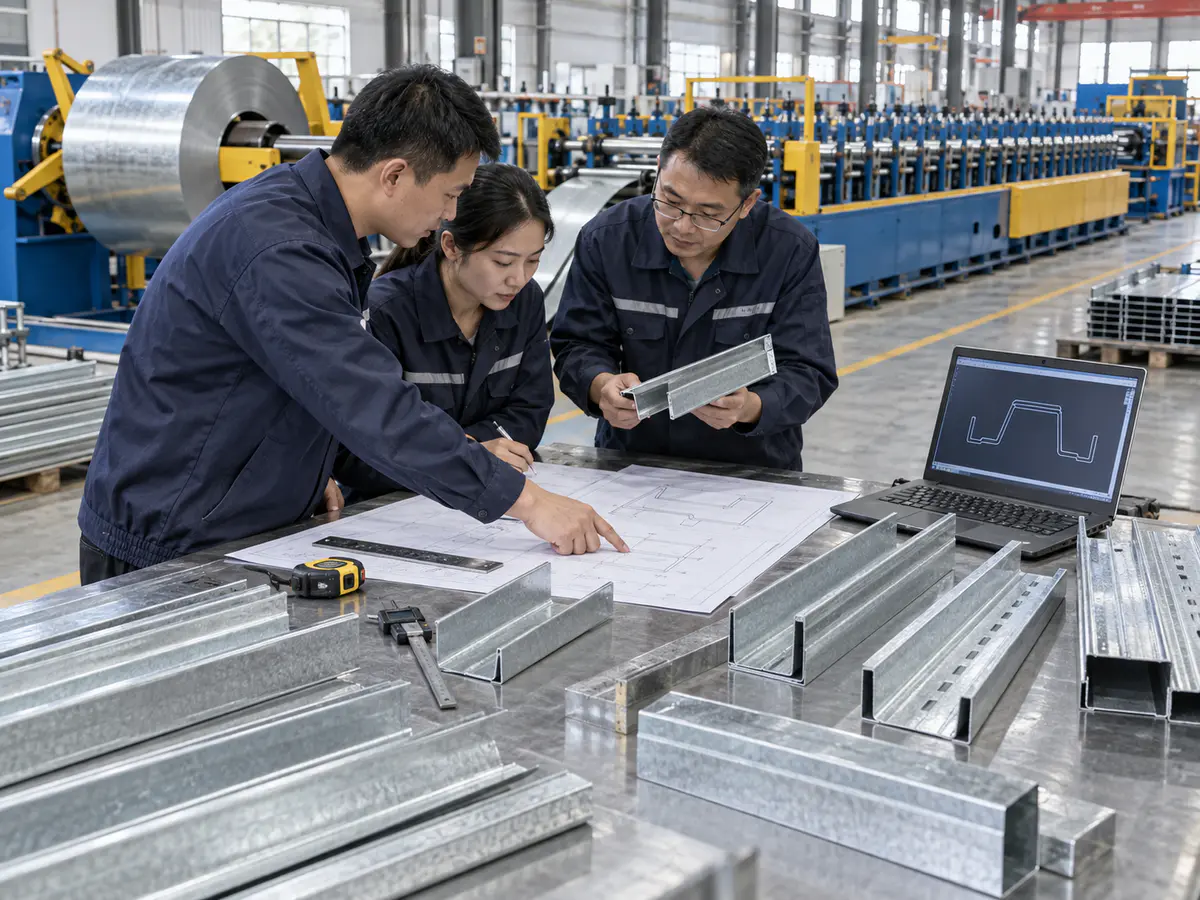
1Profile Drawing Review
We check section shape, width, height, bend radius, hole position, thickness and tolerance. Only have a sample photo or product idea? We'll discuss the basic forming direction with you first.
 2
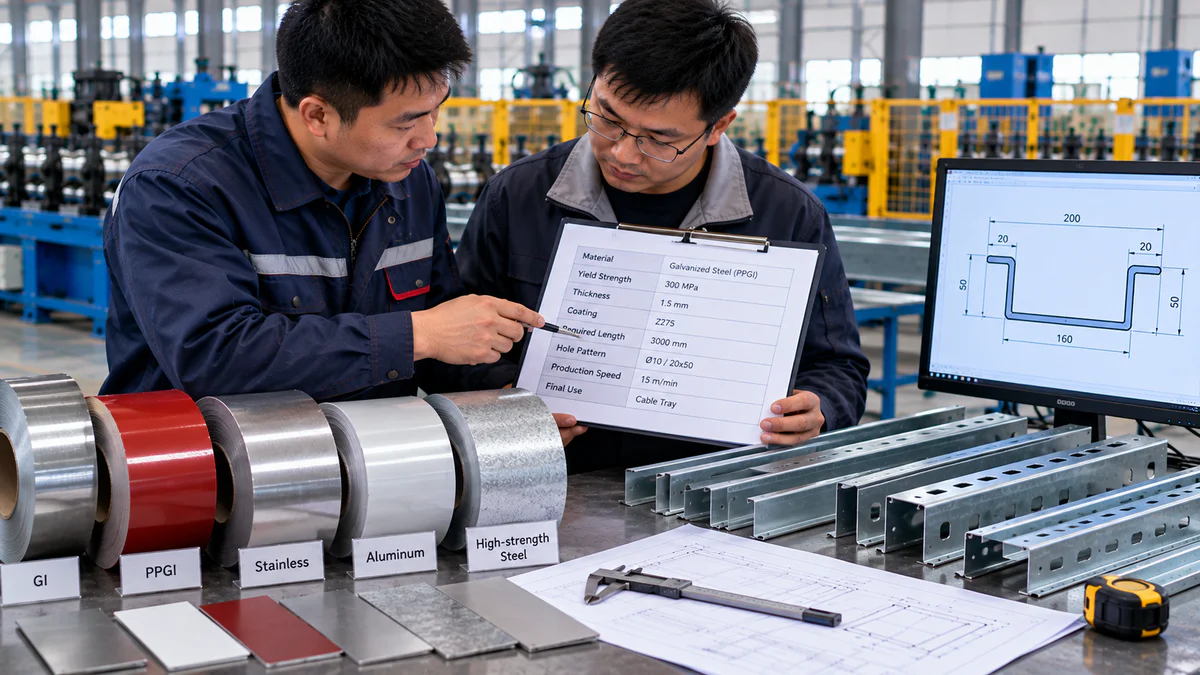
2Material and Requirement
We confirm material type, yield strength, coil thickness, surface coating, required length, hole pattern, production speed and the final use of your profile.
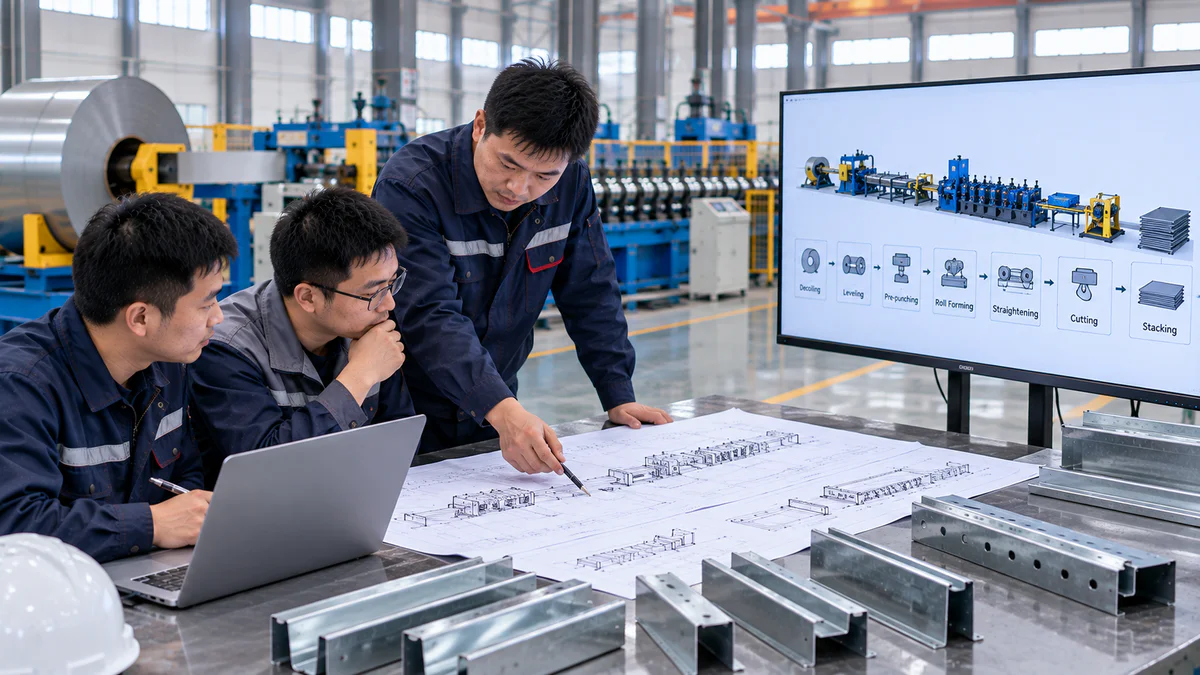 3
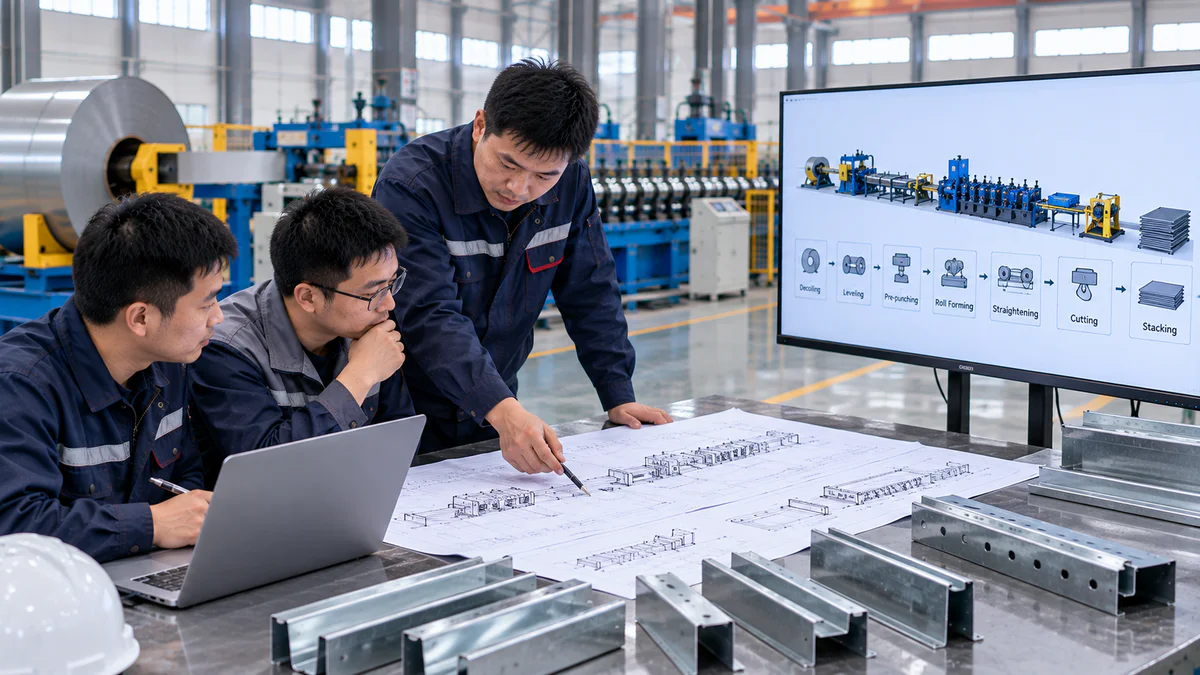
3Process Layout Planning
Based on your profile, we set the process layout: decoiling, leveling, pre-punching, roll forming, straightening, post-cutting, flying cutting or stacking.
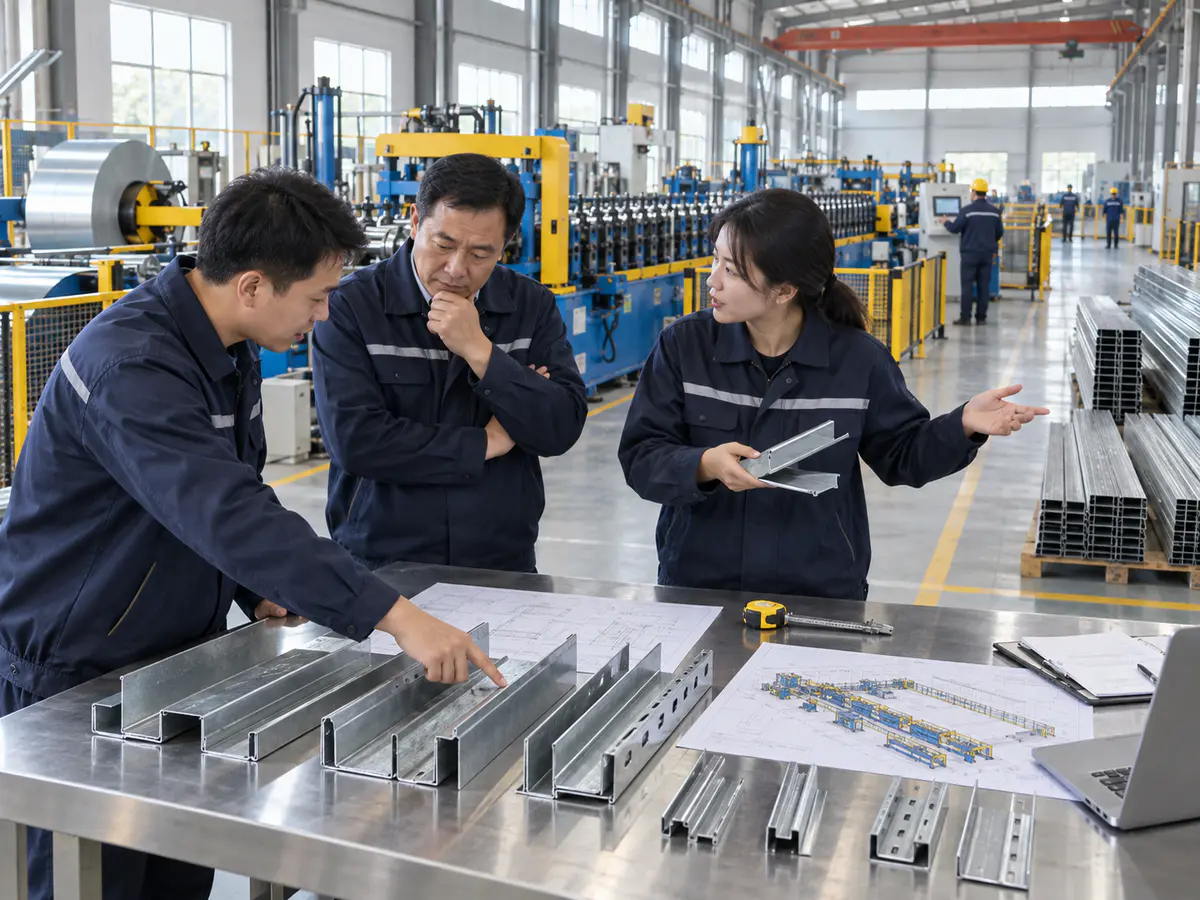 4
4Roll Tooling Design
Tooling is designed around your profile geometry, bending sequence, springback and surface needs. Complex or asymmetric profiles get careful forming-pass and adjustment planning.
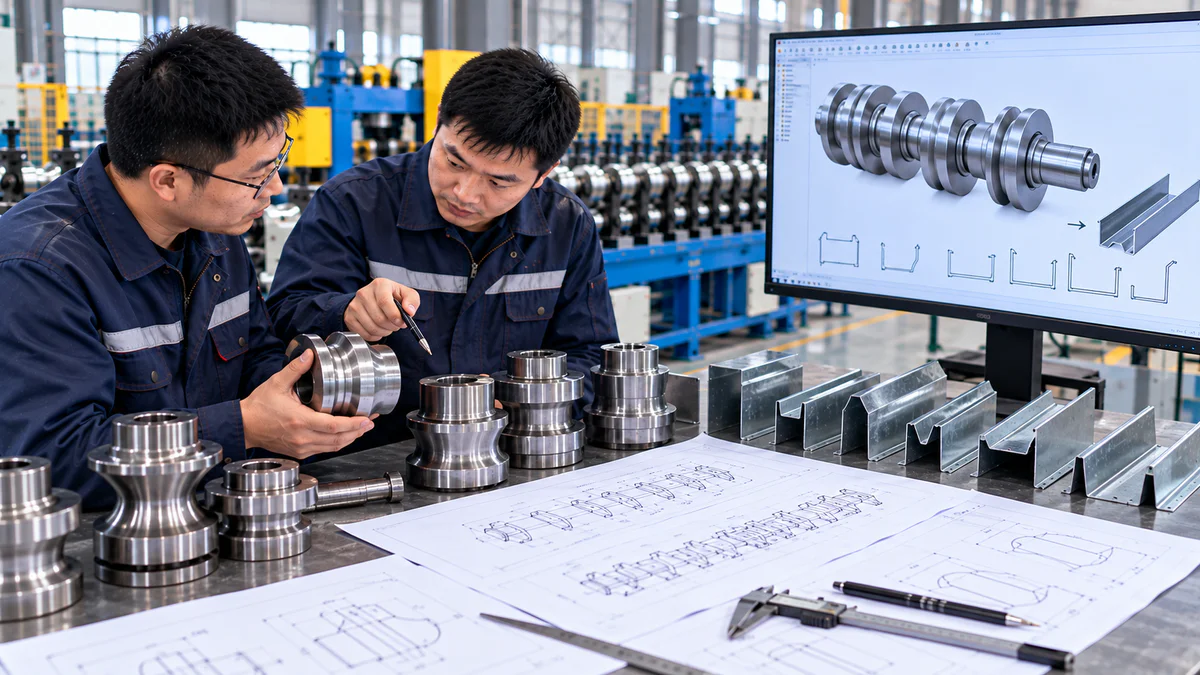 5
5Machine Production
Once details are confirmed, we manufacture the frame, roll stands, shafts, rollers, punching system, cutting system, hydraulic system and electrical control.
 6
6Sample Testing
Before shipment we run your material, check profile dimensions, hole position, straightness, cut quality and surface condition, then fine-tune the line until it's right.
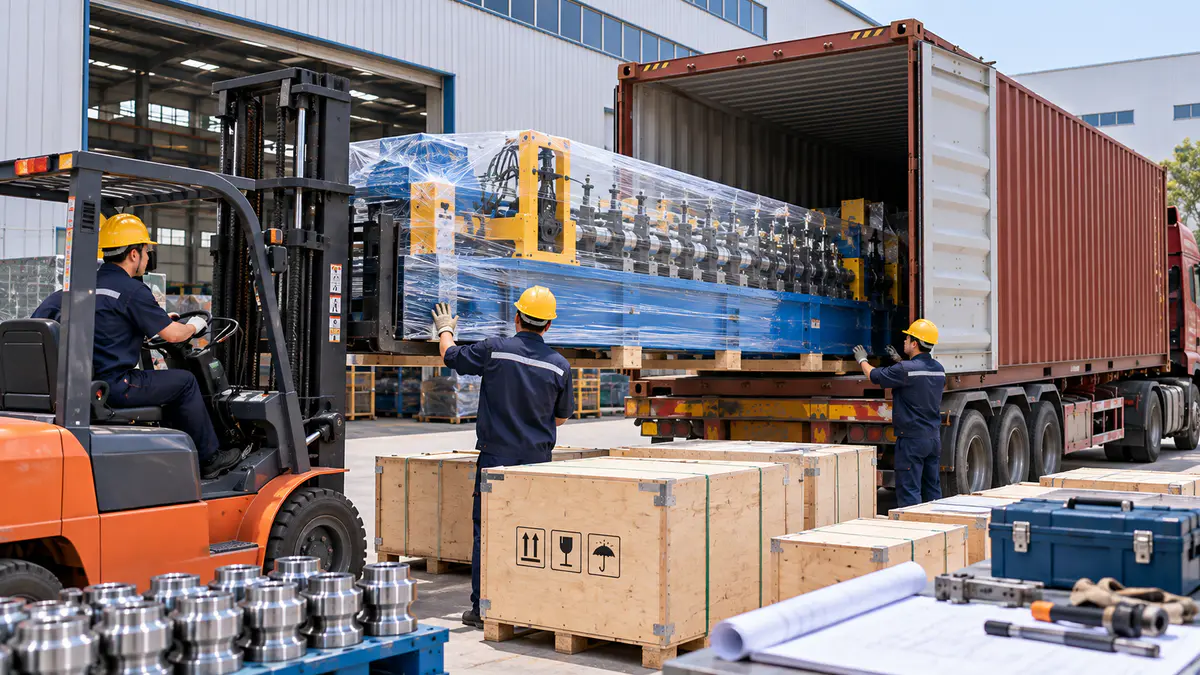 7
7Shipment and Commissioning
After testing and your confirmation, the machine is prepared for shipment. You get operation guidance, adjustment support and technical communication through installation and start-up.
Your Custom Line Configuration
Your line is configured around your profile drawing, material thickness, punching layout, cutting method and production target. There's no single standard layout for a custom profile.
After we review your drawing, we select the process sequence and machine modules that fit your product. The goal is a line that's practical to form, adjust, run and maintain, not one padded with devices you don't need.
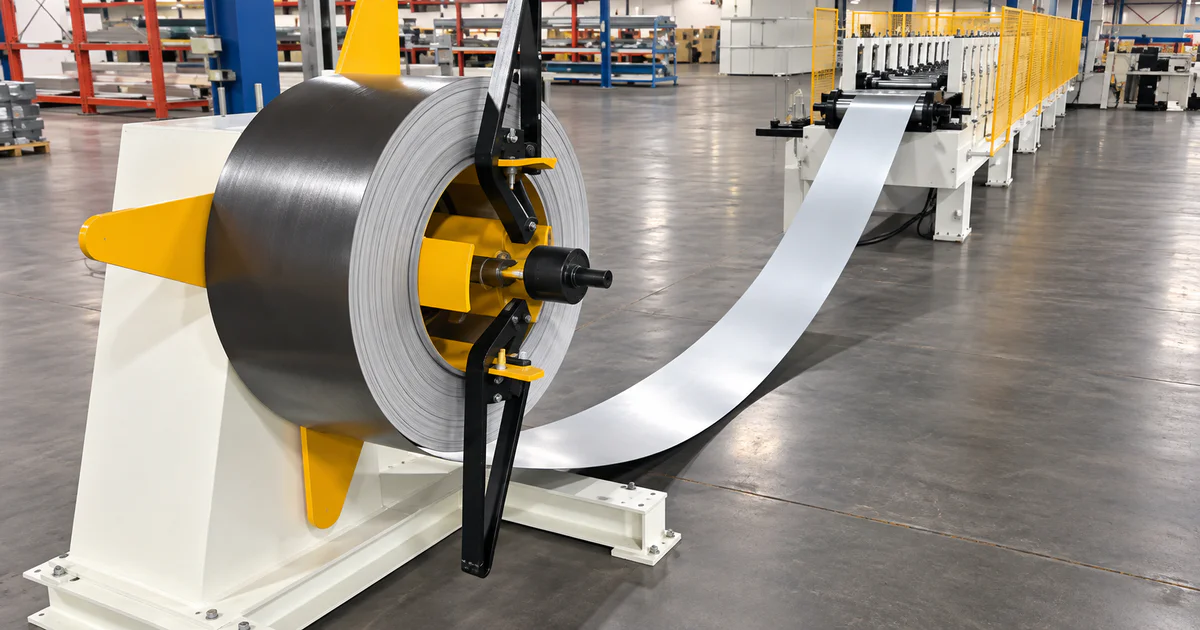
Coil Feeding and Preparation
Your line can start with a manual, hydraulic or automatic decoiler, matched to your coil weight and production speed. When holes need accurate position or forming needs to stay stable, we add leveling and servo feeding to prepare the strip first.
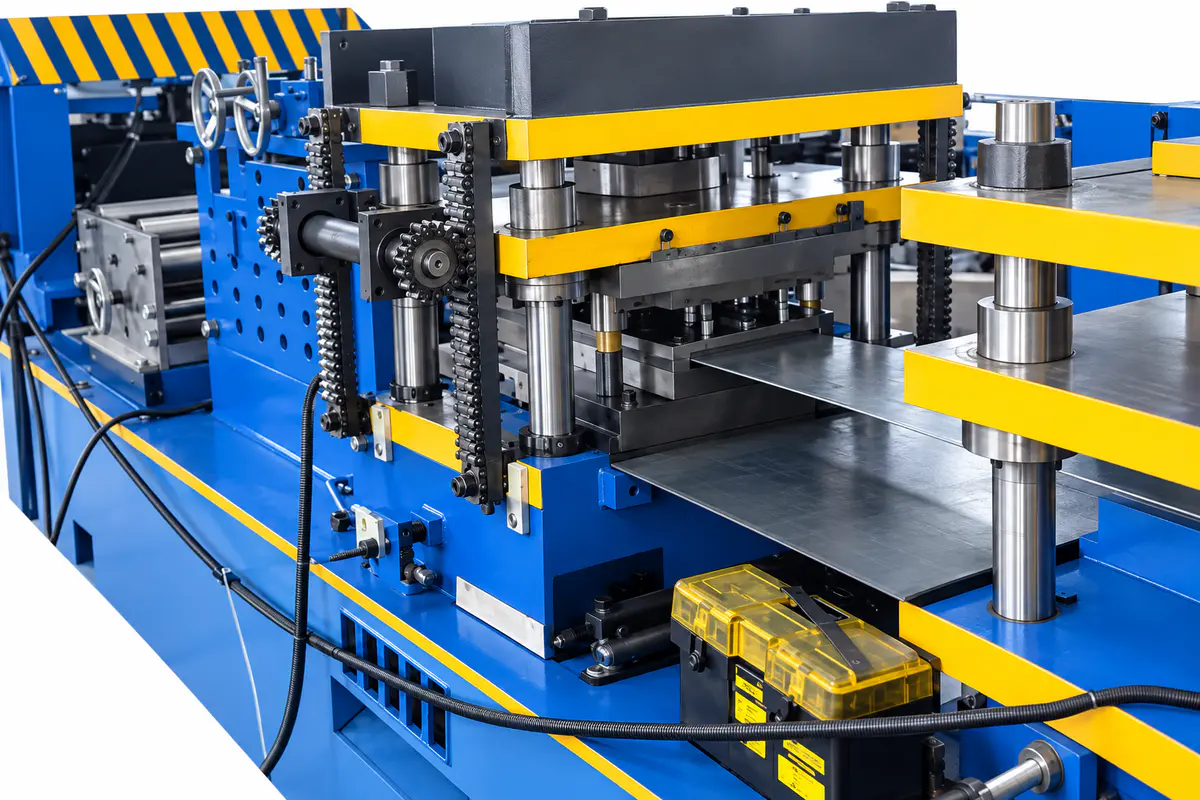
Punching Before Forming
If your profile has holes, slots, notches, embossing or logo marks, the punching system usually sits before the forming section. Pre-punching works well when hole position has to be controlled on flat strip. We design the die layout and feeding accuracy around your hole pattern and speed.
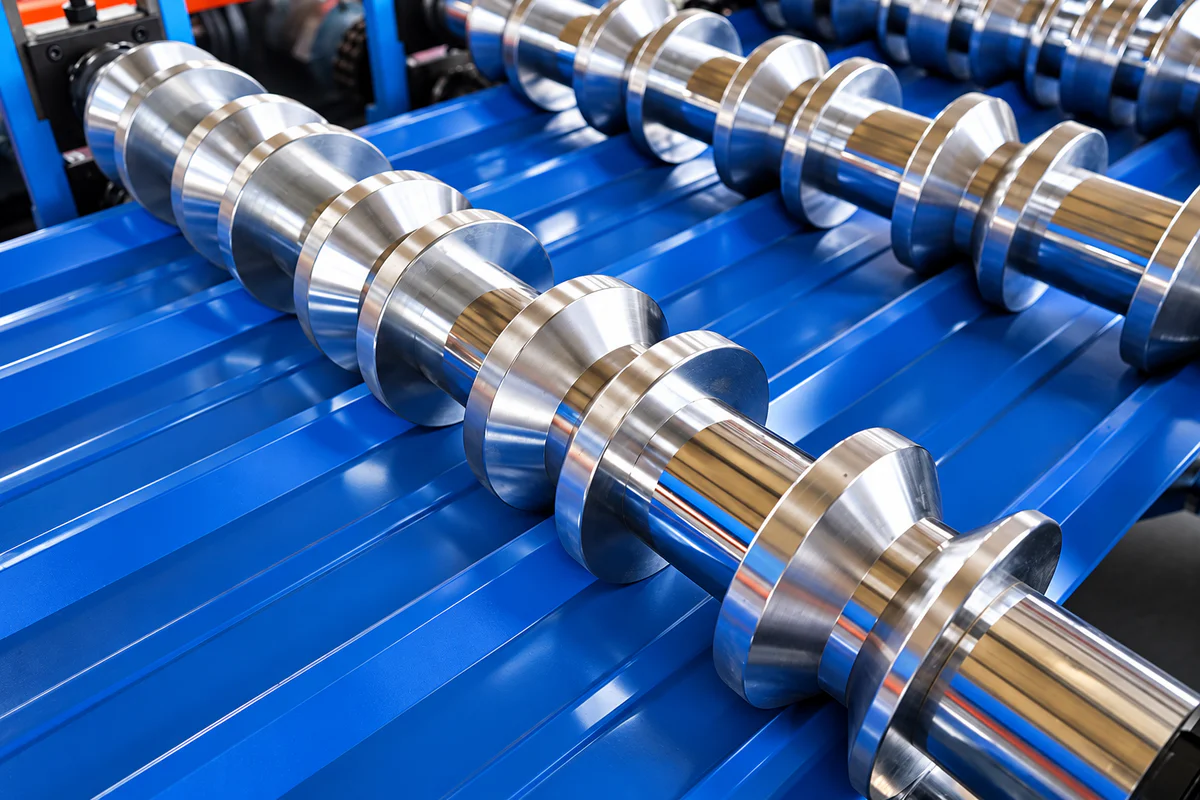
Roll Forming Section
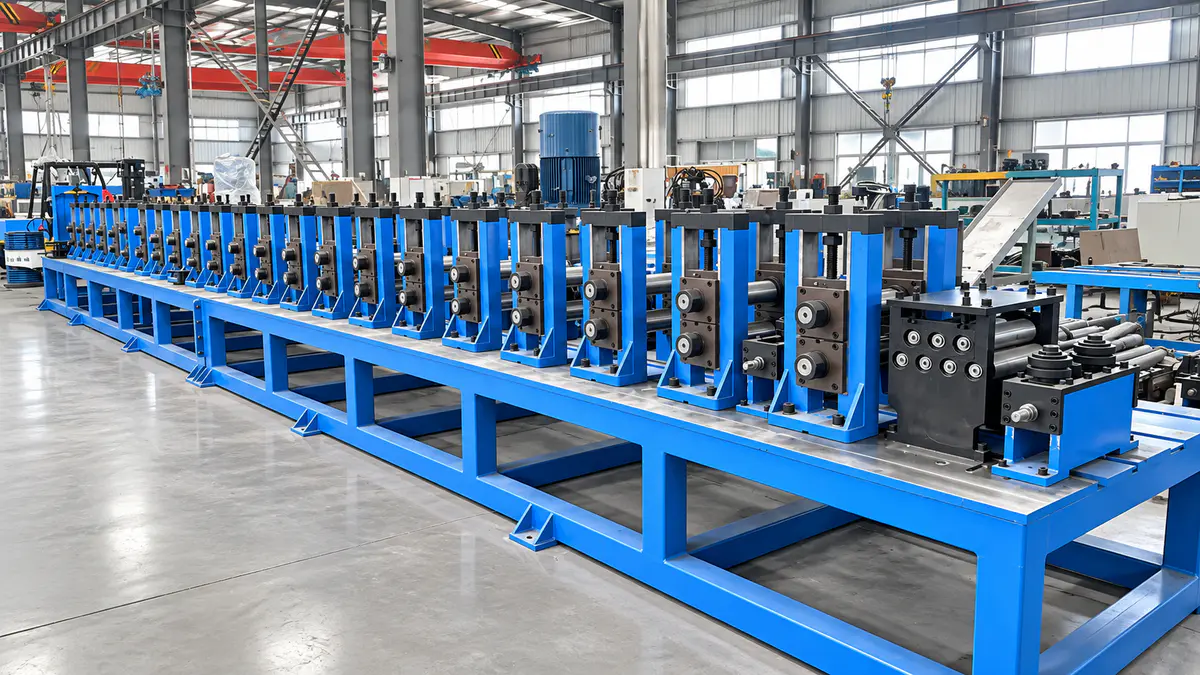
The forming section is designed around your profile shape. Roll stand count, shaft diameter, frame strength, roller material and adjustment method are chosen for your complexity, thickness and forming force. Deep sections, asymmetric profiles and high-strength steel get more stations, stronger stands and a more careful roll pass design.
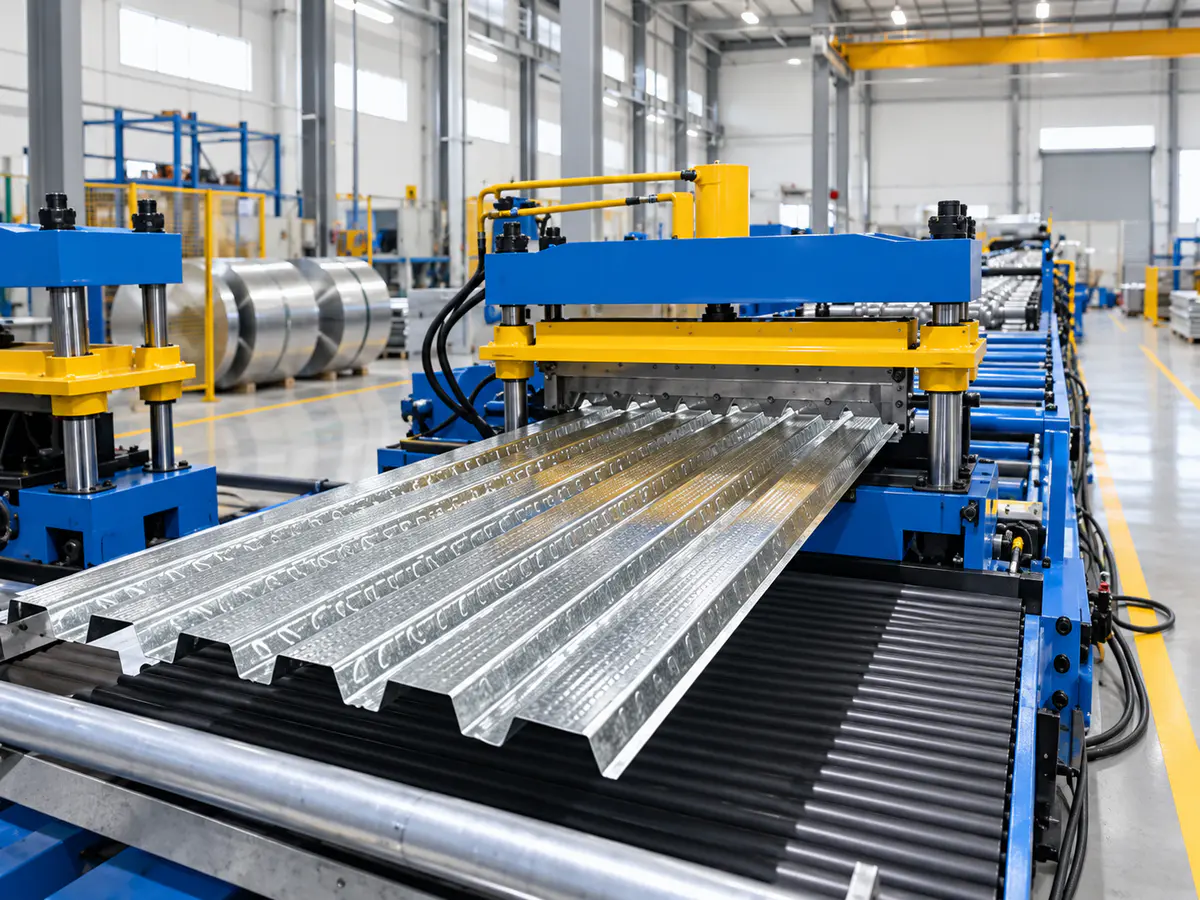
Straightening and Cutting
After forming, your profile may need straightening to control bowing, twisting or opening size, with the method set by your shape and tolerance. Cutting can be post-cutting, flying cutting or saw cutting, chosen by profile shape, thickness, cut length, speed and whether the end can accept any deformation.
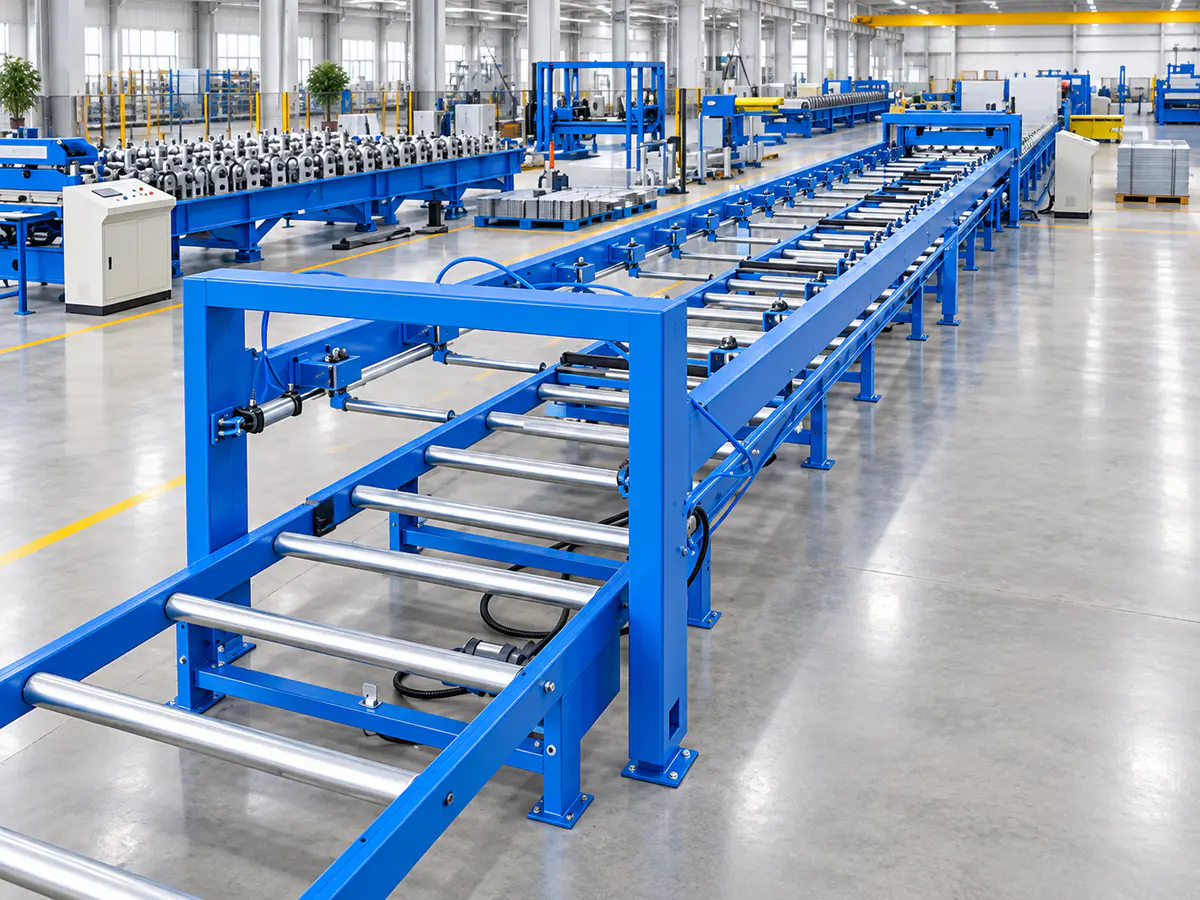
Collection and Control
Finished profiles can land on run-out tables, simple supports or automatic stackers. The control system handles length setting, punch and cut quantity, production count and operating parameters. For some projects you can add protective film, side punching, automatic width adjustment, interchangeable roll sets or cassette tooling.
Your final configuration should match your product, not just add more devices. A practical custom line balances profile quality, production speed, easy operation and long-term maintenance.
Roll Tooling Built for Your Profile
Roll tooling is the core of your machine. For a non-standard profile, the roller design decides forming stability, profile accuracy, surface quality and how well the line holds up over years of production.
We design your tooling around your drawing, material thickness, bend radius, section depth, tolerance and surface condition. It isn't pulled from a standard roller set. It's developed for your specific profile.
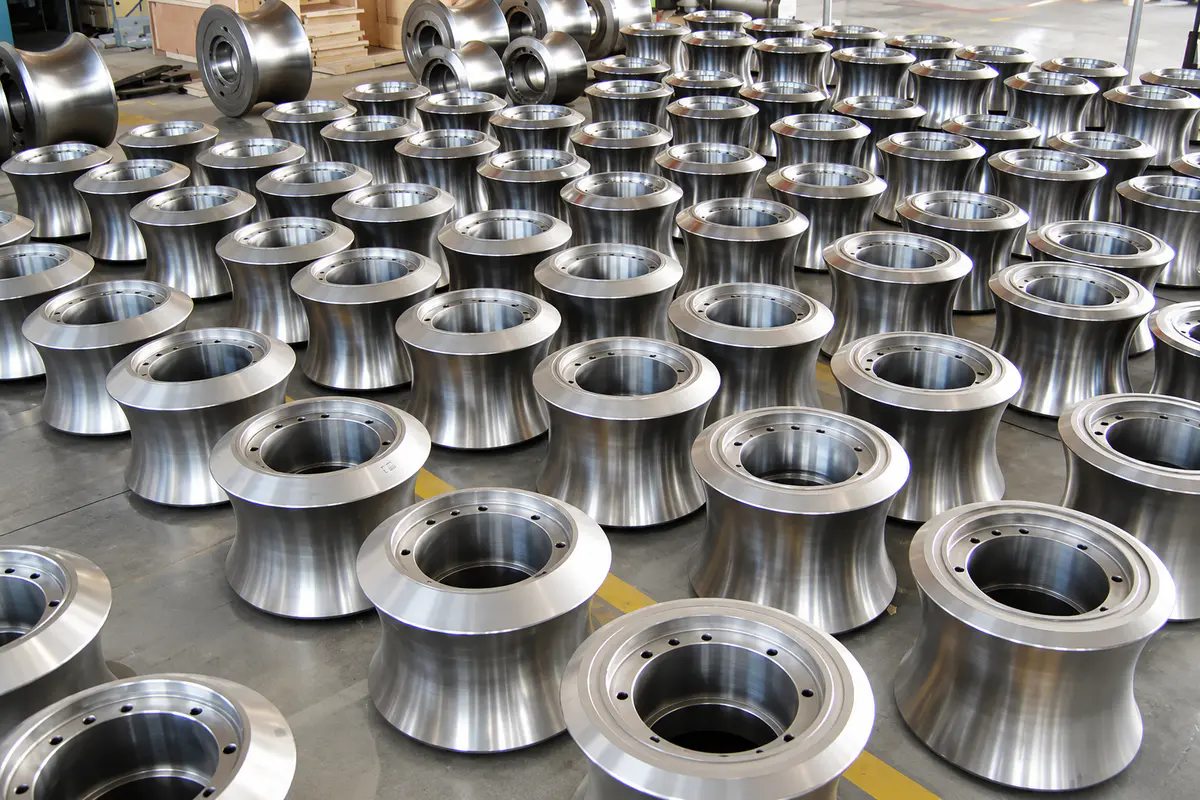
Forming Pass Design
Your profile can't be formed in one step. The strip passes through a series of roll stations and reaches its final shape gradually.
The pass design controls how the material bends at each station, how stress is distributed, and how the shape is built up step by step. Push the forming angle too fast and you get cracking, twisting, edge wave, surface marks or unstable dimensions.
Station Quantity and Bend Sequence
How many forming stations you need depends on profile complexity, material thickness, material strength, bend quantity and tolerance.
Simple open profiles may need fewer stations. Deep sections, asymmetric profiles, high-strength steel or narrow openings need more careful planning. The bend sequence has to match your shape, or the finished profile gets hard to control in production.
Springback and Profile Control
Different materials react differently during forming. Galvanized, stainless, aluminum, pre-painted and high-strength steel each spring back their own way.
We work material strength, bend radius and forming direction into the tooling to control opening size, height, width, straightness and repeatability. For profiles that tend to twist or bow, the tooling and straightening method are planned together, not separately.
Roller Material and Surface Treatment
Roller material and surface treatment are selected for your strip, coating condition and production requirement.
For pre-painted, galvanized, stainless or aluminum profiles, surface protection matters. We consider roller finishing, guiding method and contact pressure to reduce scratching, coating damage and unnecessary friction, so your parts come off clean.
Trial Adjustment Before Shipment
Once the tooling is installed, the machine is trial-adjusted with suitable material. We check profile shape, dimensions, opening size, straightness, cutting result and surface condition.
If a sample doesn't meet the required result during testing, we adjust the tooling, guides, straightening unit or machine settings before your line ships. Good tooling isn't about making the first sample. It's about keeping your profile stable through repeated production.
Your profile can't be formed in one step. The strip passes through a series of roll stations and reaches its final shape gradually.
The pass design controls how the material bends at each station and how stress is distributed. Push the forming angle too fast and you get cracking, twisting, edge wave, surface marks or unstable dimensions.
How many forming stations you need depends on profile complexity, material thickness, strength, bend quantity and tolerance.
Simple open profiles need fewer stations. Deep sections, asymmetric profiles, high-strength steel or narrow openings need more careful planning, and the bend sequence has to match your shape.
Galvanized, stainless, aluminum, pre-painted and high-strength steel each spring back their own way.
We work material strength, bend radius and forming direction into the tooling to control opening size, height, width, straightness and repeatability. Profiles that twist or bow get tooling and straightening planned together.
Roller material and surface treatment are selected for your strip, coating condition and production requirement.
For pre-painted, galvanized, stainless or aluminum profiles, we consider roller finishing, guiding method and contact pressure to reduce scratching, coating damage and friction, so your parts come off clean.
Once tooling is installed, the machine is trial-adjusted with suitable material. We check profile shape, dimensions, opening size, straightness, cutting and surface condition.
If a sample doesn't meet the result during testing, we adjust tooling, guides, straightening or machine settings before shipment. Good tooling keeps your profile stable through repeated production, not just the first sample.
Tooling Is Where Your Profile Is Won or Lost
The roller design decides whether your profile stays accurate, clean and stable across a full production run, not just on the first sample. That's why we develop it around your drawing instead of pulling from a standard set.
Send your profile drawing or sample. We'll tell you the forming approach, the station and pass plan, and any surface protection your material needs, before any tooling is cut.
Punching and Cutting Strategy
On many custom profiles, punching and cutting matter as much as forming. Holes, slots, notches, embossing and cut ends all affect accuracy, production speed and how your parts assemble.
Before we design the punching and cutting system, we review your hole layout, profile shape, thickness, forming sequence, required length and tolerance. The right process keeps hole deformation, cut distortion and constant re-adjustment off your production floor.
Pre-Punching Before Forming
Holes, slots or notches are made on the flat strip before it enters the forming section, so spacing is locked in before any bending happens.
Works well for
Hole position has to be checked against the forming sequence. Holes too close to bend areas can stretch, deform or shift after forming.
Post-Punching After Forming
Holes are made on the finished profile shape, used when accuracy depends on the final formed section rather than the flat strip.
Works well for
Needs careful positioning, profile support and die design, especially for deep sections, closed shapes or tight assembly tolerances.
Choosing Your Cutting Method
Your cutting system is selected by profile shape, material thickness, line speed and end-face requirement. For narrow openings, high side walls or complex sections, the cutting die has to support the profile properly to keep the end from deforming.
Post-Cutting
Suits many open profiles at standard production speeds. The strip is cut after forming, a simple and reliable choice for everyday work.
Flying Cutting
Cuts on the move so the forming process never stops. The right call when your line needs continuous, high-output production.
Saw Cutting
For thick, closed or complex profiles where the cut end needs better shape control than a die cut can give.
Punching, Forming and Cutting Are One Process, Not Three
A fast line is worthless if hole position drifts, the profile twists, or every cut end needs correction. We review the full process before production: punching position, feeding accuracy, forming sequence, cutting clearance, profile support and finished length control.
The goal is simple. Your profile comes out with accurate holes, stable shape, clean cutting and a production speed that actually works on the floor.
Your Material Shapes the Design
A line for galvanized steel won't use the same tooling pressure, roll surface or process setting as one for stainless, aluminum, pre-painted or high-strength steel. Before final design, we review your material type, thickness range, yield strength, coating condition and surface requirement, so the forming process, roller contact, guiding and machine strength are built around what you actually run.
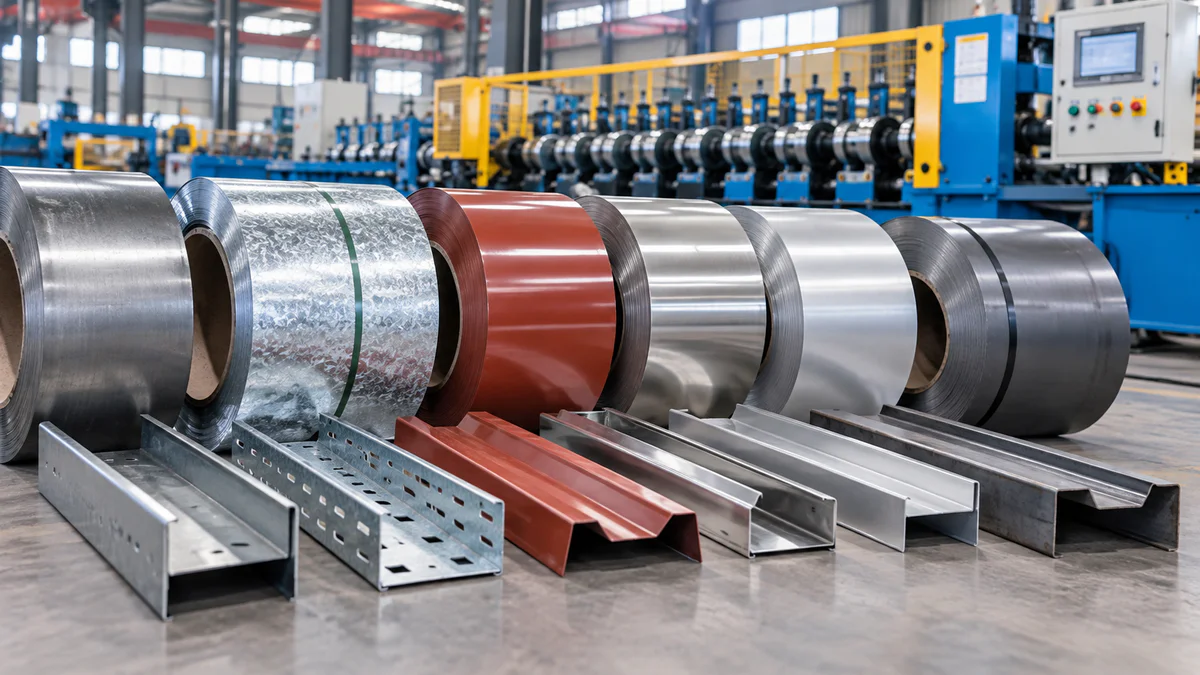
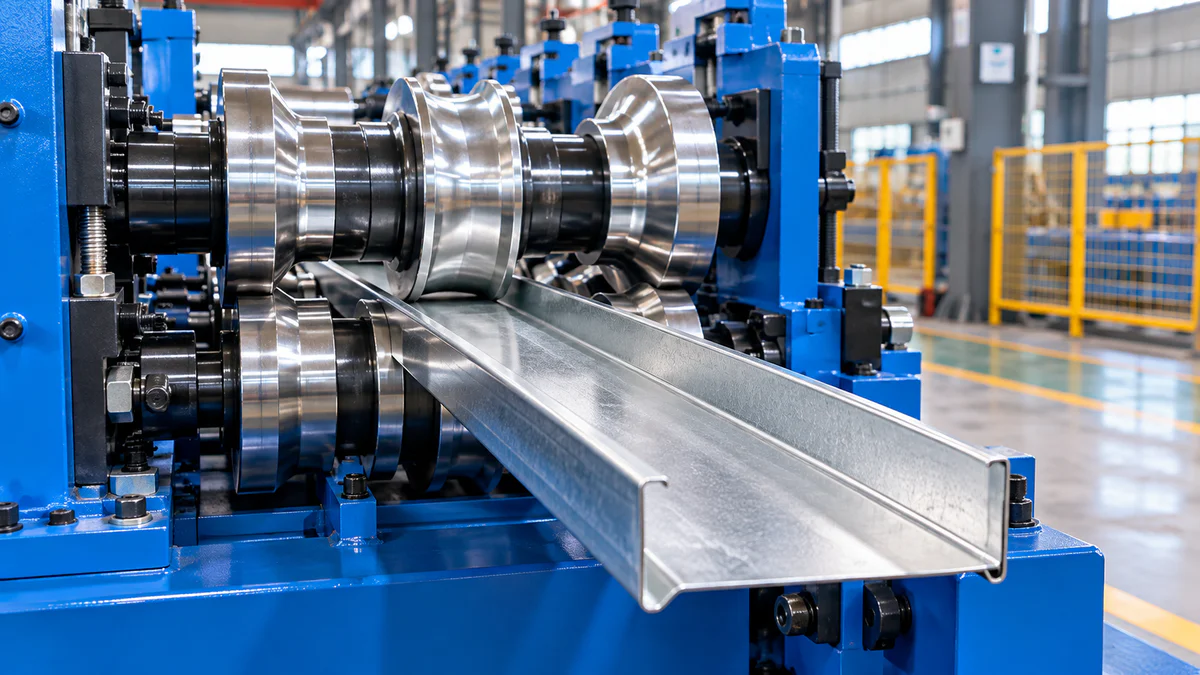
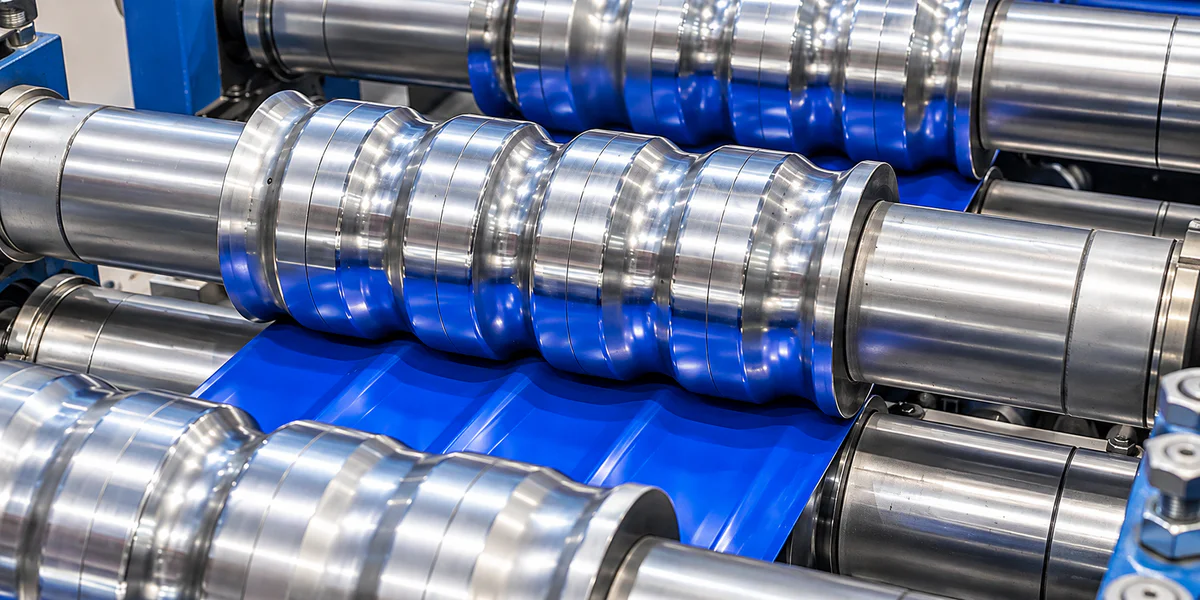
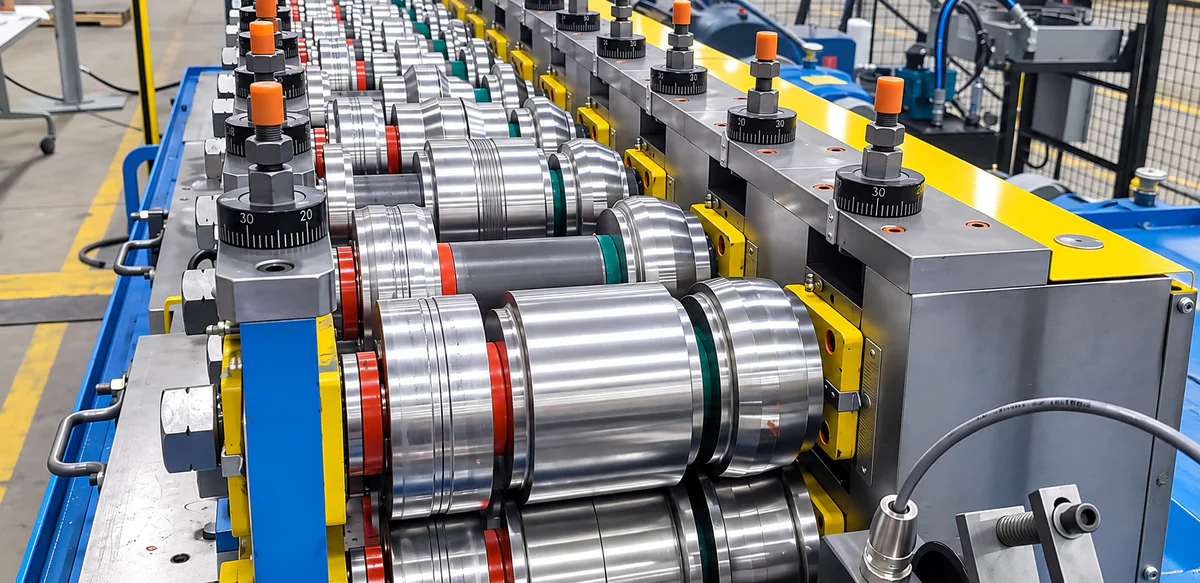
Material Details We Need From You
Send us the material information below and we can properly evaluate forming force, springback, surface protection, cutting pressure and your final machine configuration. The more accurate your details, the more accurate your line.
Planning for Multiple Sizes
If you plan to produce more than one profile size, raise it before machine design. A line can sometimes be built for a whole product family, but not every profile can share the same tooling or layout.
Before we suggest a multi-size solution, we review your profile drawings, width and height range, bend positions, material thickness, hole patterns and tolerance. That tells us how far one machine can stretch across your range.
First: One Profile or a Family?
Some of you need one fixed profile. Others need several sizes from the same family, different widths, heights, flange sizes or hole patterns. The answer decides everything that follows.
Similar geometry, small changes
Adjustable tooling may handle the whole range on one machine.
Different bends or shapes
Separate roll sets or a different machine design may be needed.
Adjustable Width Design
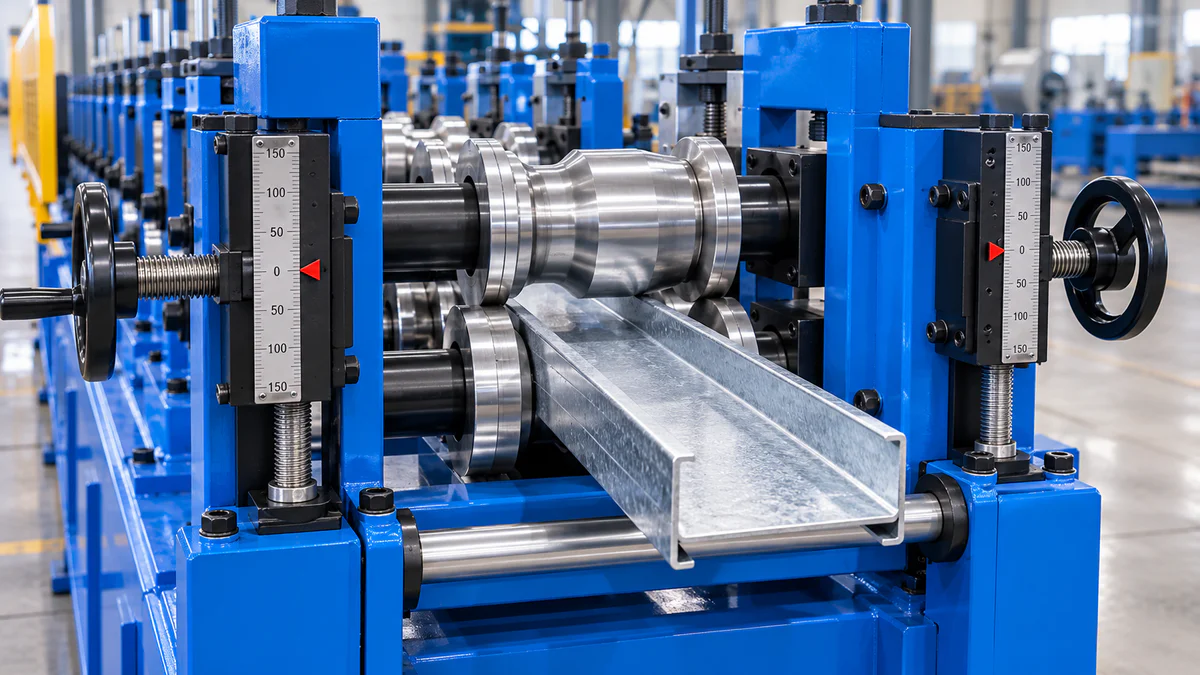
For many C, U, channel, rack, shelf or framing profiles, the machine can be built with adjustable width, manual, motorized or servo-controlled depending on your accuracy, production frequency and budget.
It cuts tooling changes, but needs a stronger structure and accurate guides. If the adjustment range is too wide, profile stability and tolerance have to be checked carefully.
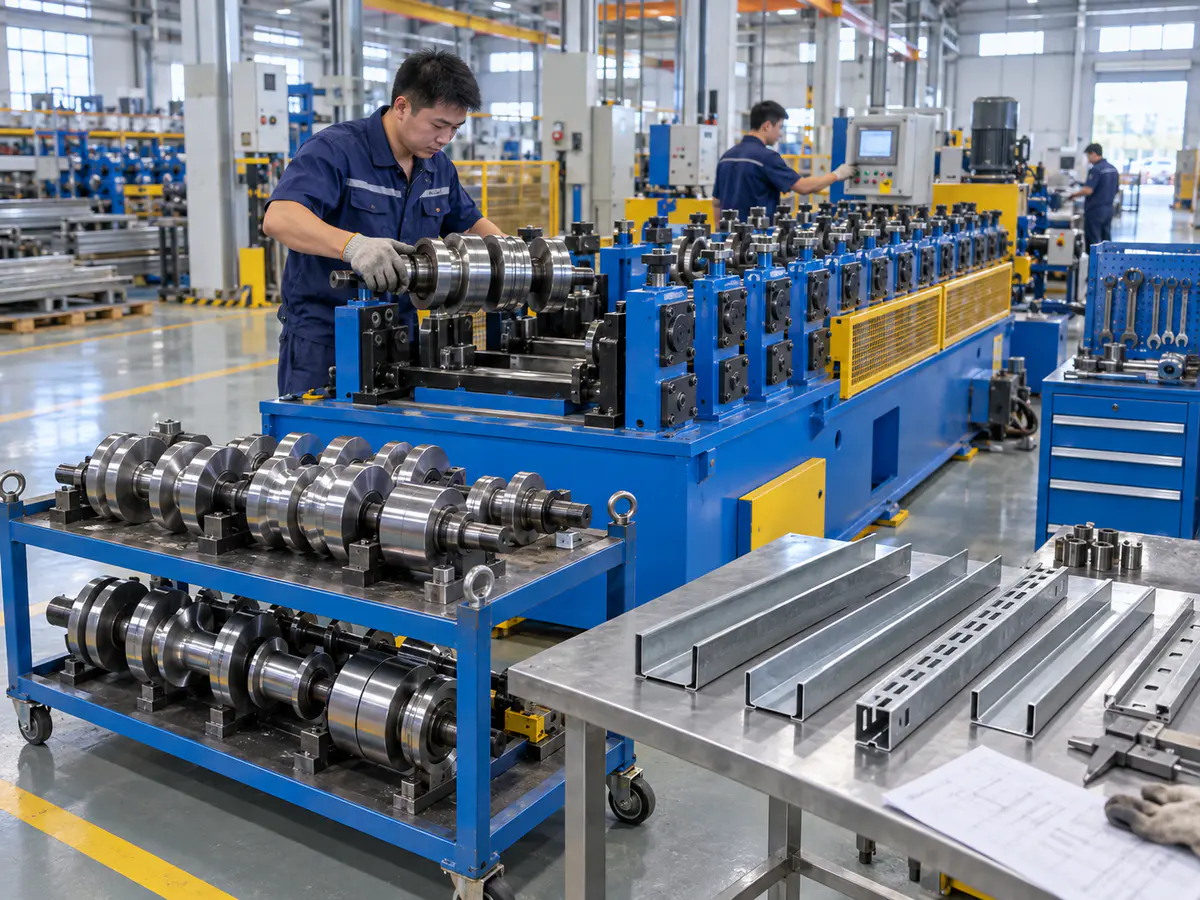
Interchangeable Roll Sets
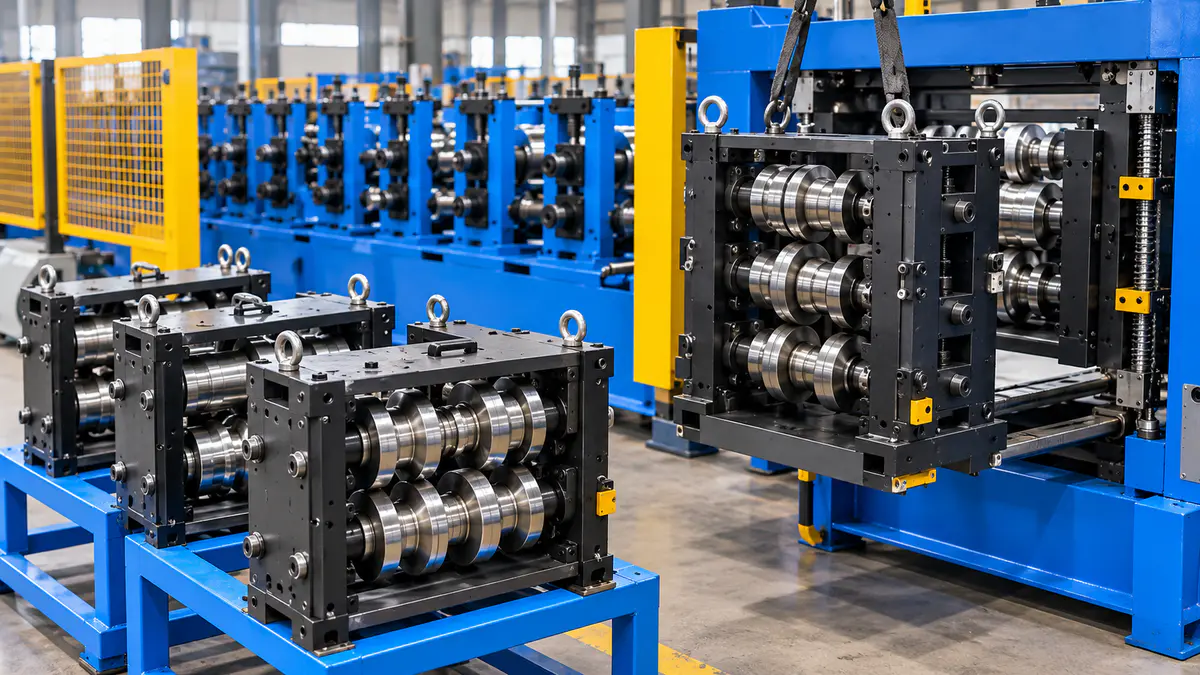
When different profiles can't share the same roller design, interchangeable roll sets let you run several related profiles with genuinely different forming shapes on one machine base.
More flexibility, but factor in changeover time, tooling storage, adjustment work and operator skill before you choose it.
Cassette-Type Tooling
For frequent profile changes or higher-volume planning, cassette-type forming swaps a whole tooling cassette instead of changing individual rollers, cutting changeover work sharply.
Best when you need regular size changes, tighter production planning and fast switching between product types. It carries a higher initial investment and a more carefully designed structure.
Planning to Add More Sizes Later?
If more profile sizes are coming down the road, tell us at the start. Frame width, shaft diameter, motor power, punching space, control system and line layout can be built with room to grow, so a future upgrade doesn't mean a new machine.
A good multi-size plan balances flexibility, cost, changeover time and profile accuracy. The best solution isn't the most complicated one. It's the one that matches your product range and how you actually run production.
Sample Testing and Commissioning
Your machine shouldn't just run. It should produce profiles that match your drawing, your material and your production purpose. Before delivery, we test the line with suitable coil material when available and check profile shape, size, hole position, straightness, cutting and surface condition.
If anything needs adjustment, we modify the guides, roll gap, straightening unit, punching position or cutting setting before your machine ships, not after it lands on your floor.
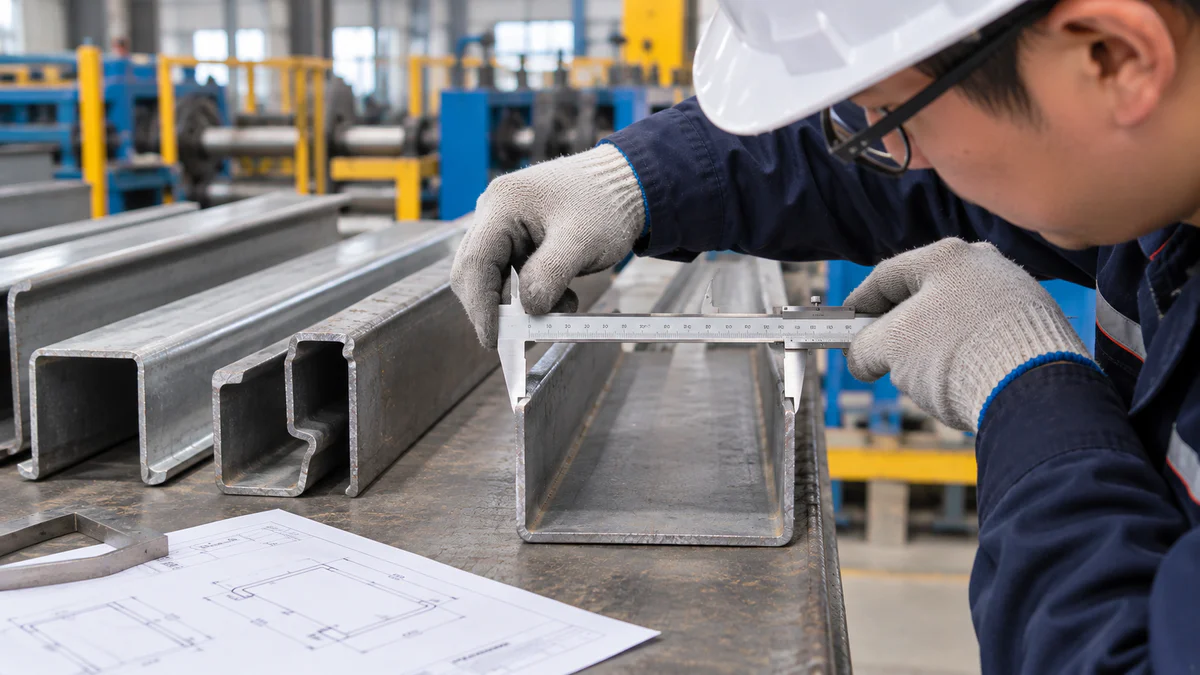 1
1Profile Shape Testing
We check the finished profile against your drawing, and watch the tricky stuff closely on deep, asymmetric or narrow-opening sections.
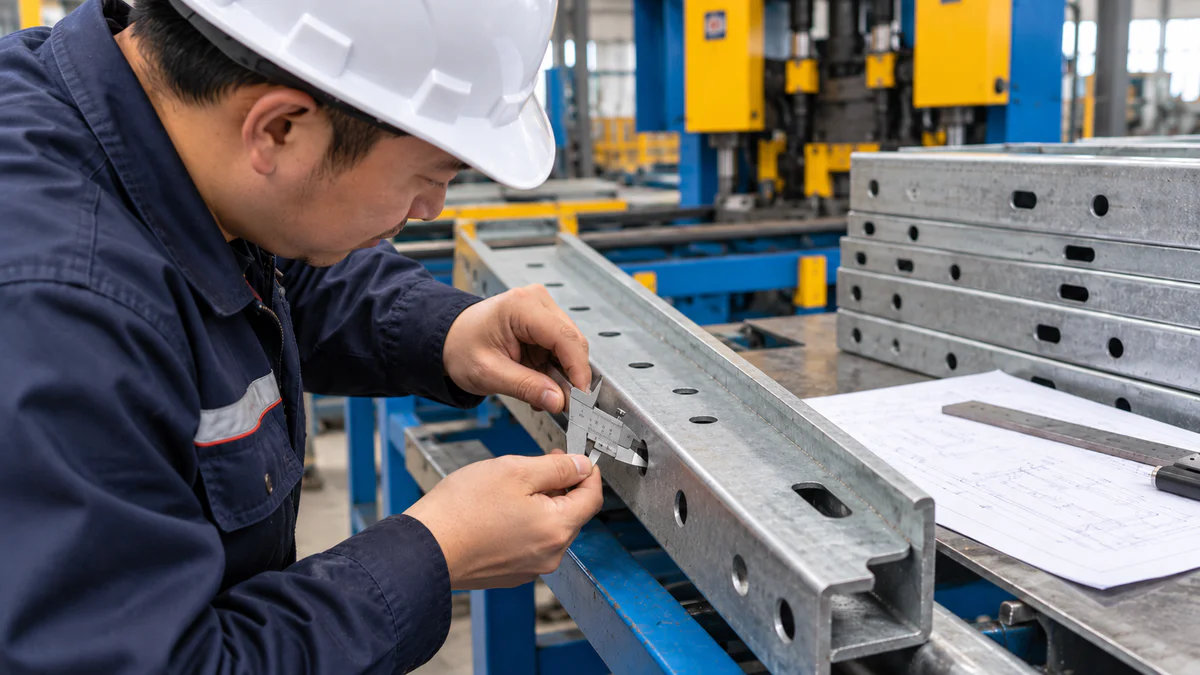 2
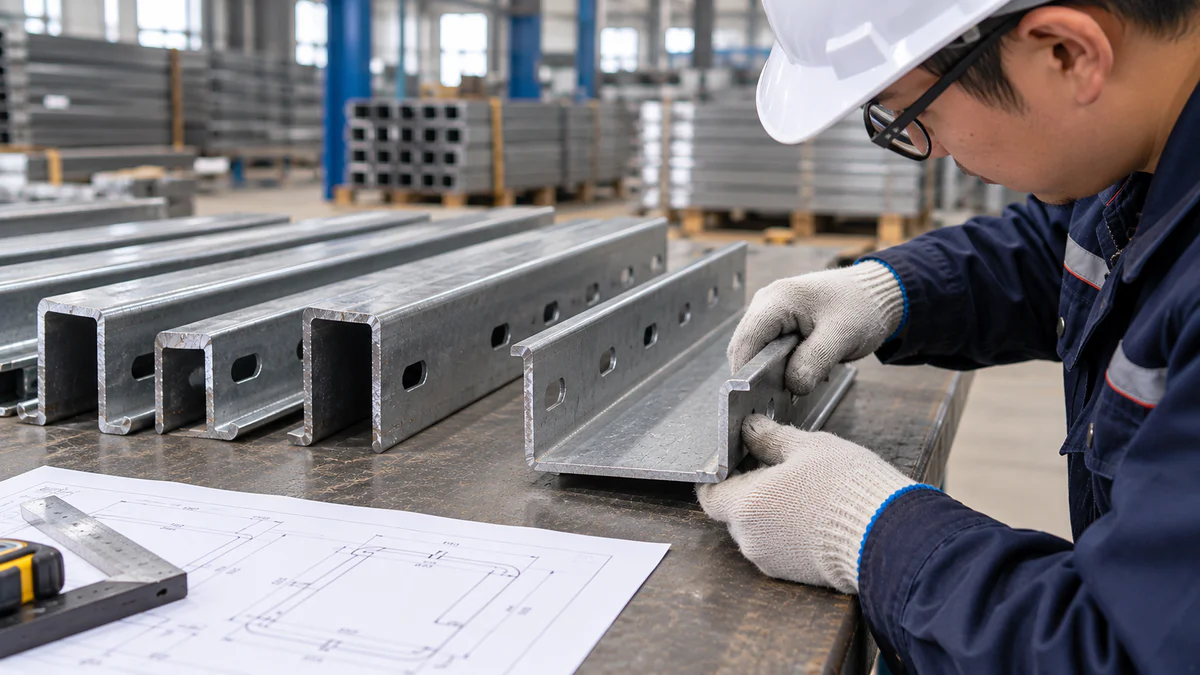
2Hole Position and Punching Check
If your profile has holes, slots, notches or embossing, we check the punching result together with the forming process, not in isolation.
 3
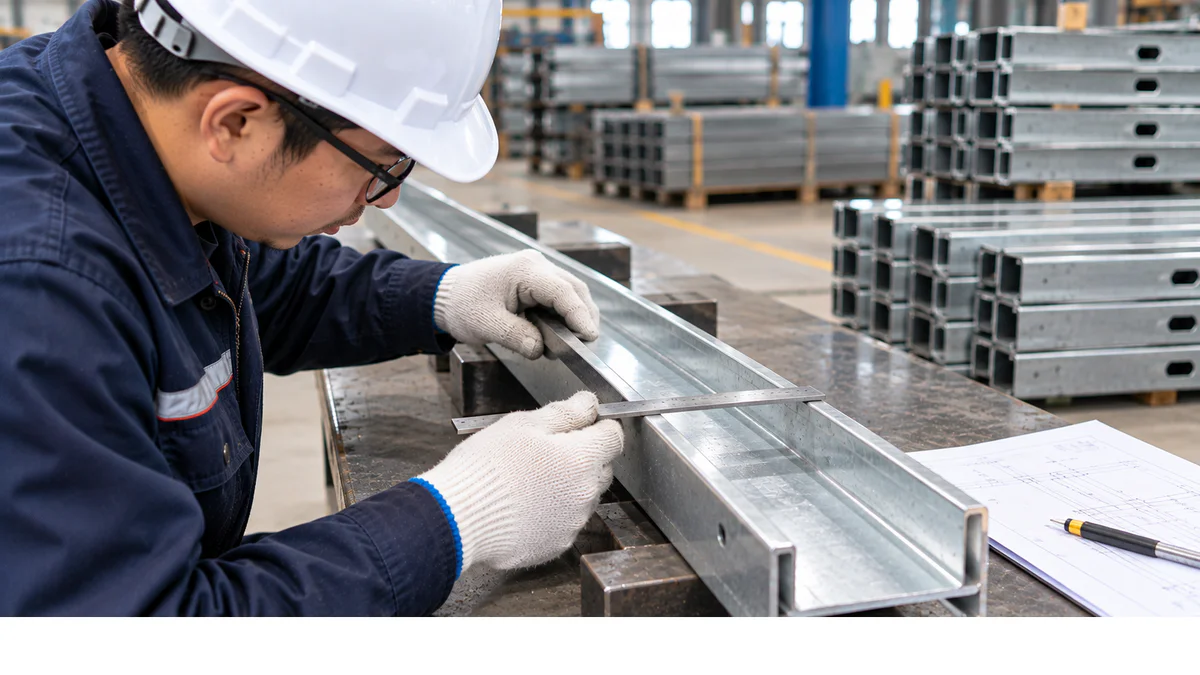
3Cutting Quality Check
The cutting system is tested against your profile shape, material thickness and required length, with the die or saw set to support the section correctly.
 4
4Straightness and Surface Inspection
After forming and cutting, we check the profile is straight enough for your application, and inspect the visible surface on coated material.
Commissioning Support After It Arrives
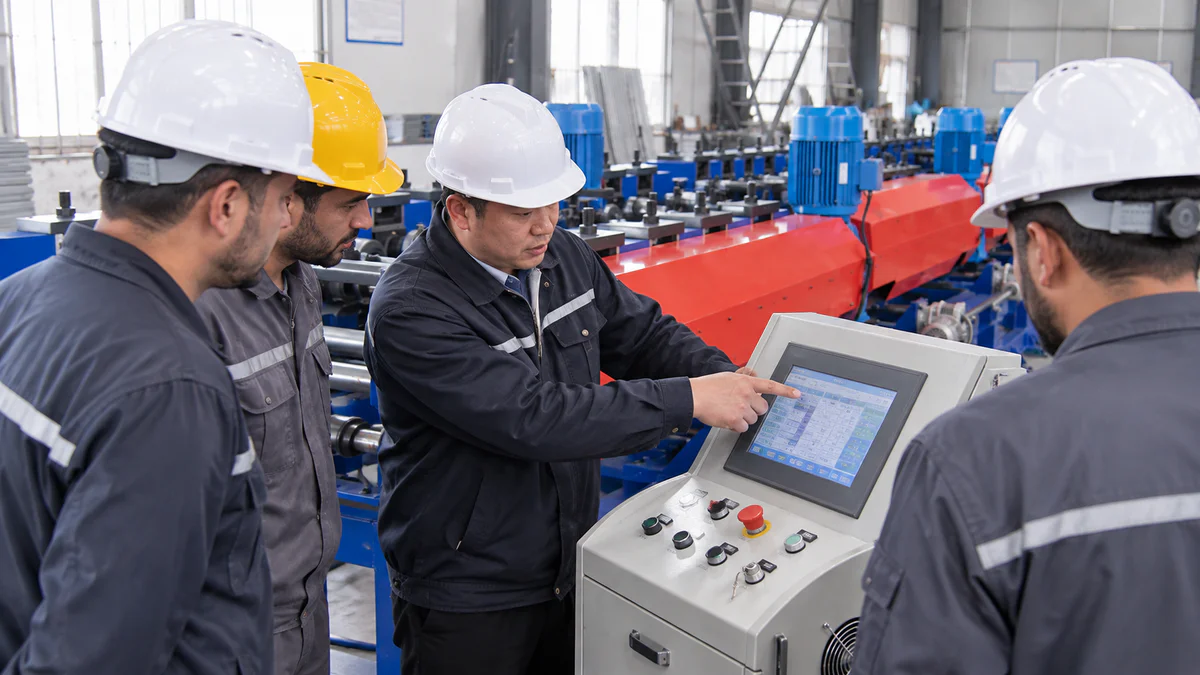
Once your machine reaches your factory, commissioning support gets your team into production the right way. You get operation guidance, line adjustment support, electrical and hydraulic checking guidance, roll forming troubleshooting and training for daily running.
When your operators need to adjust profile size, straightness, cutting length or punching parameters, we support them using your test samples and machine settings as the reference, so they're never guessing.
A good custom project doesn't stop at delivery. Your machine is tested, adjusted and supported until it produces your profile in a stable, practical way.
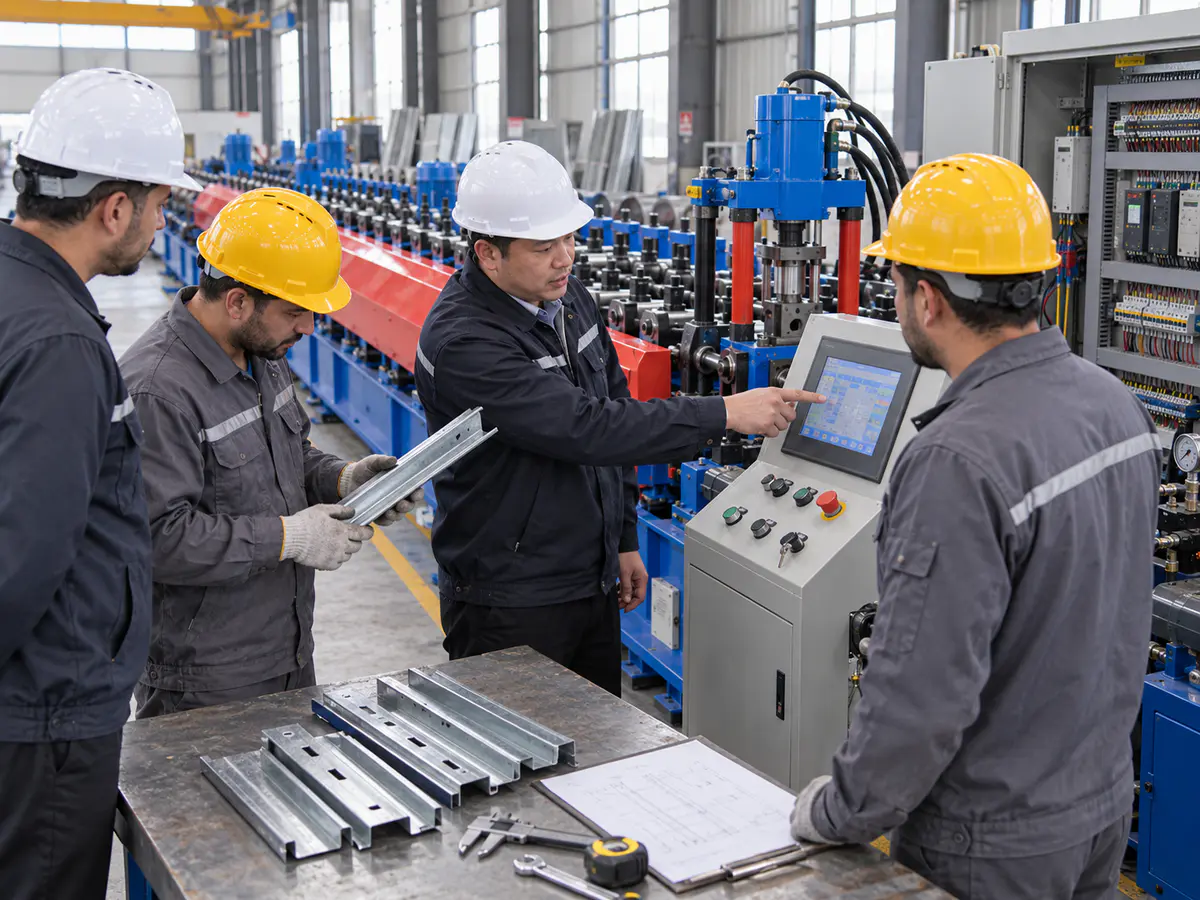
Acceptance Before Shipment
Before your machine ships, it's checked against the finished profile, not just whether it runs. We test the line and review sample profiles against your drawing, material, hole layout, cutting length and surface requirement, so you know it's ready before it's packed.
Pre-Shipment Checklist
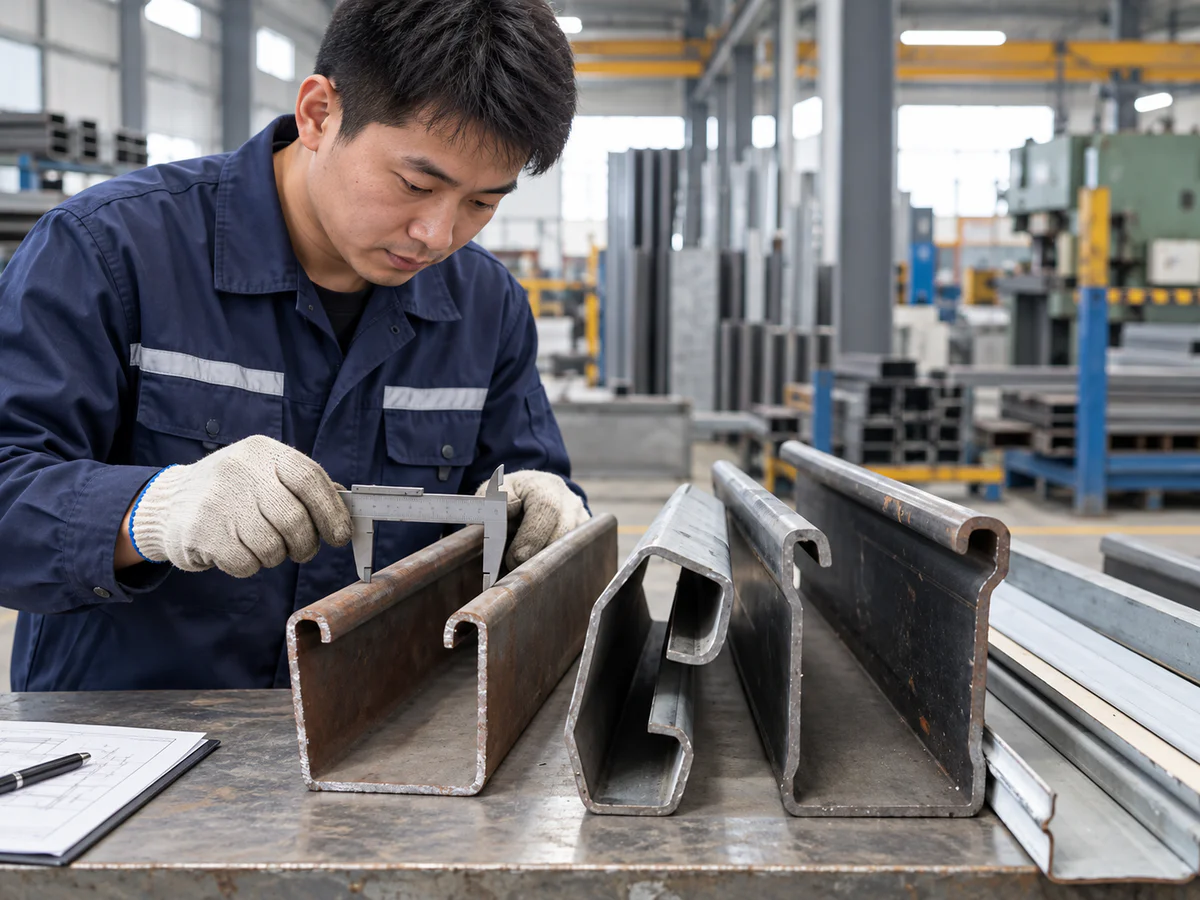
Profile Dimension Check
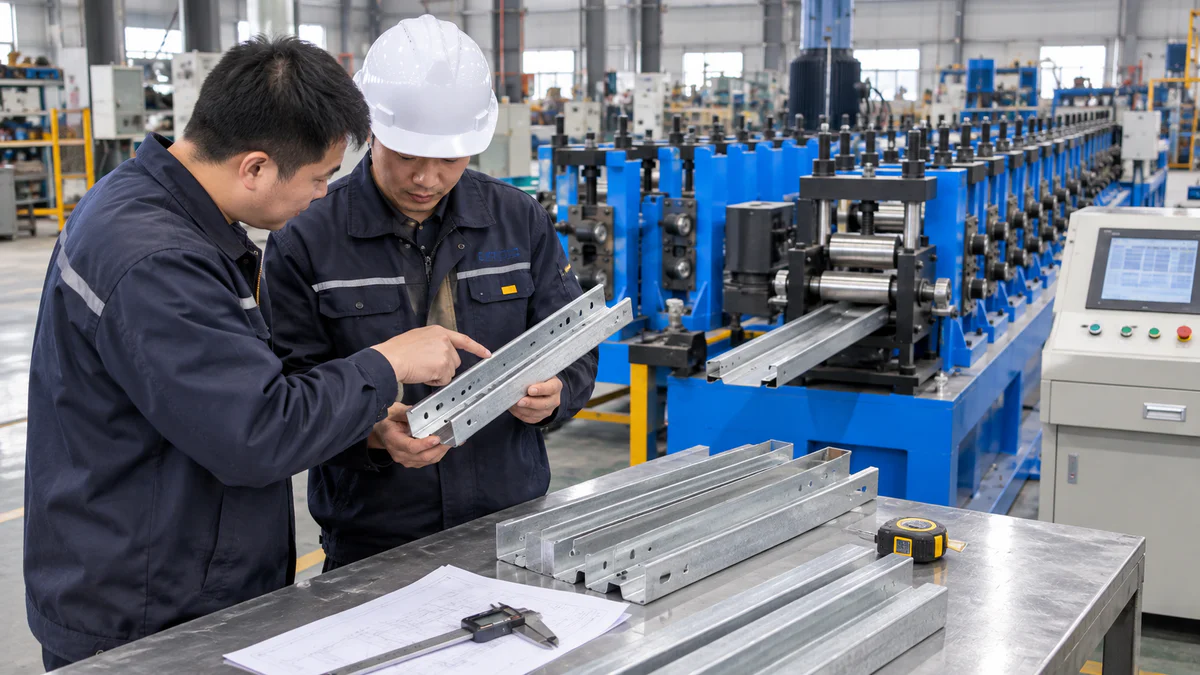
We check the key dimensions of your finished profile: width, height, flange size, opening size, bend angle and section shape.
For profiles with strict assembly requirements, we confirm the checking points before testing, so the sample matches your product use, installation method and downstream process.
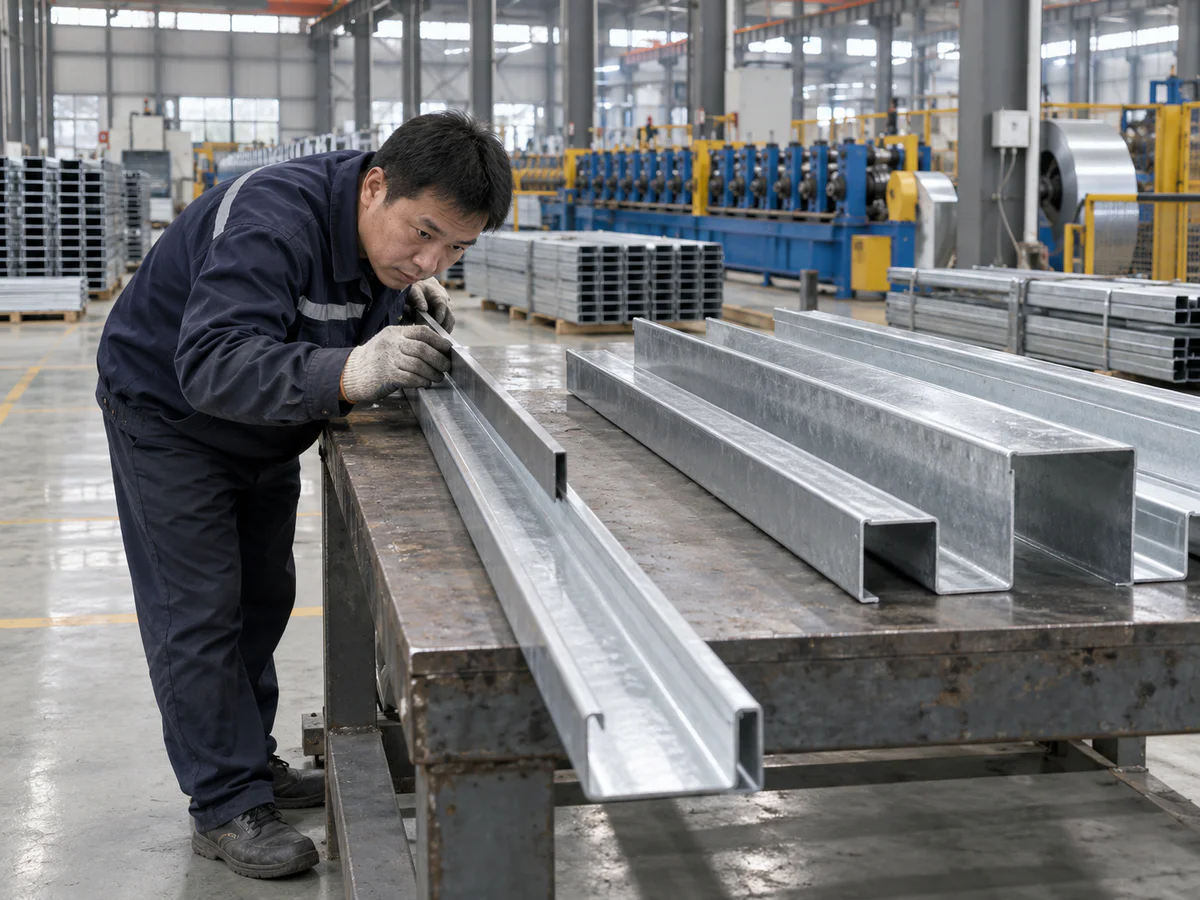
Straightness and Shape Stability
After forming and cutting, we review the profile for obvious bowing, twisting, edge wave, side height difference or unstable opening size.
Long profiles, deep sections, asymmetric shapes and high-strength materials get extra attention here. The straightening unit, guides and forming settings are adjusted before shipment if needed.
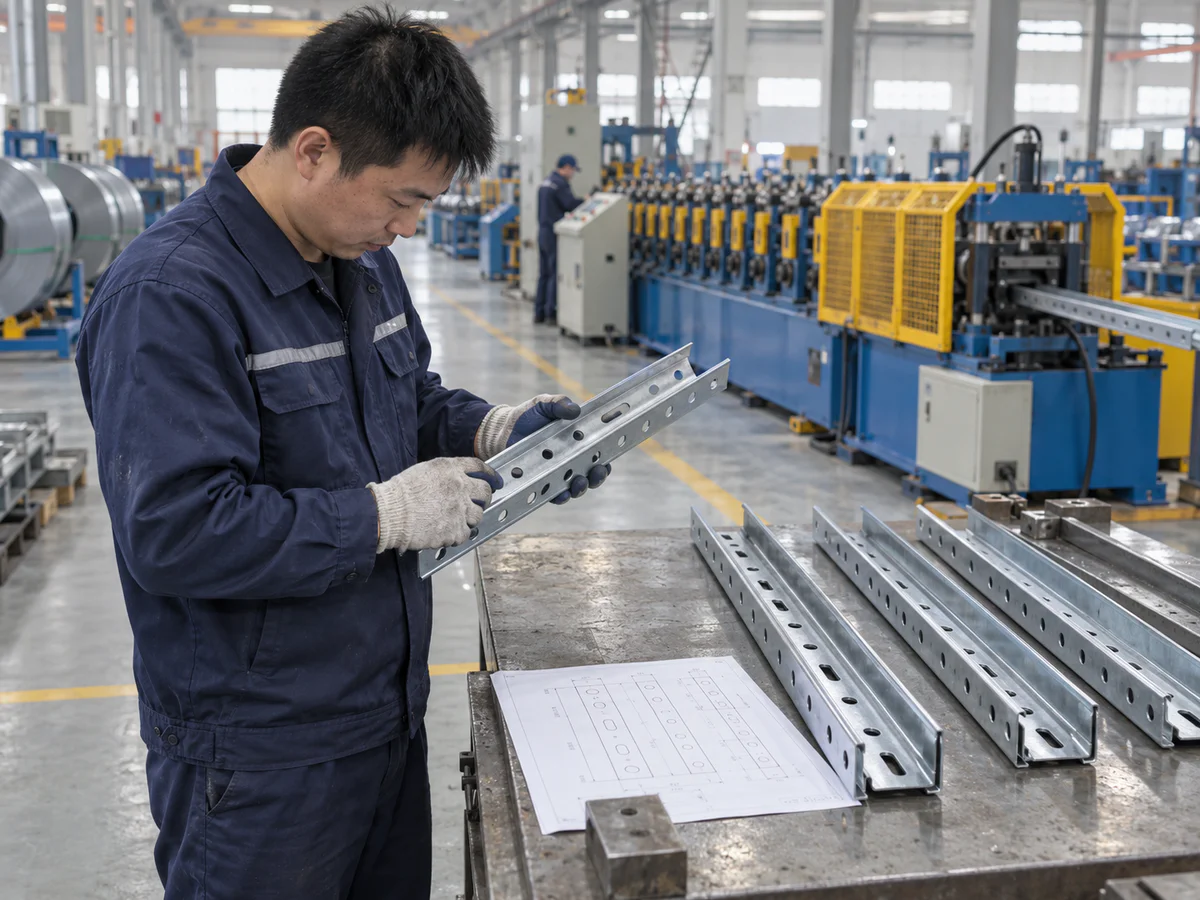
Hole and Slot Position Check
If your profile has holes, slots, notches or embossing, we check position and shape after forming.
For pre-punched profiles, we review whether holes stretched, shifted or deformed during forming. For post-punched profiles, we confirm the punching position matches the formed section correctly.
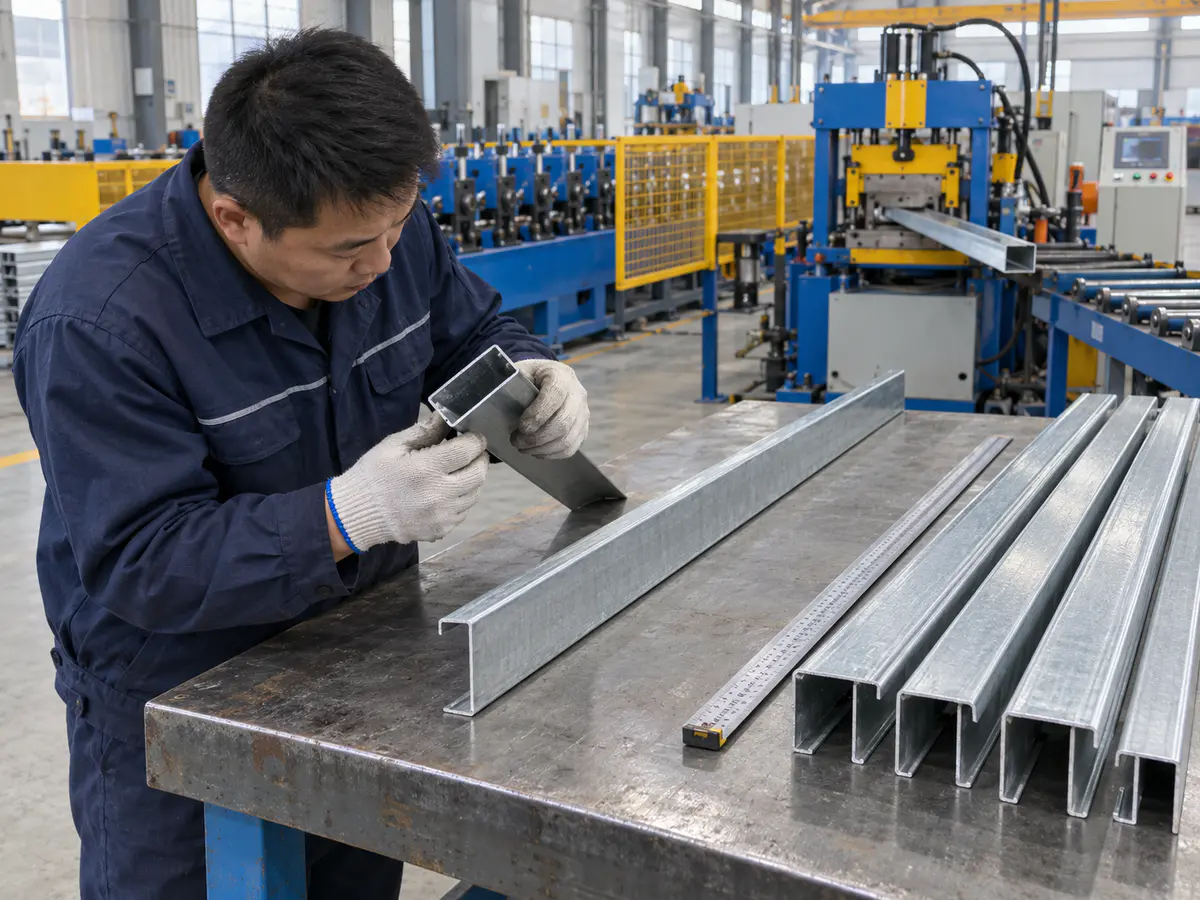
Cutting Length and End Quality
We check finished length, cutting accuracy, end shape and any deformation after cutting.
The cutting method and die support have to match your profile shape. For complex profiles, narrow openings or thick material, the cut end needs enough support to keep crushing, burrs and section distortion away.
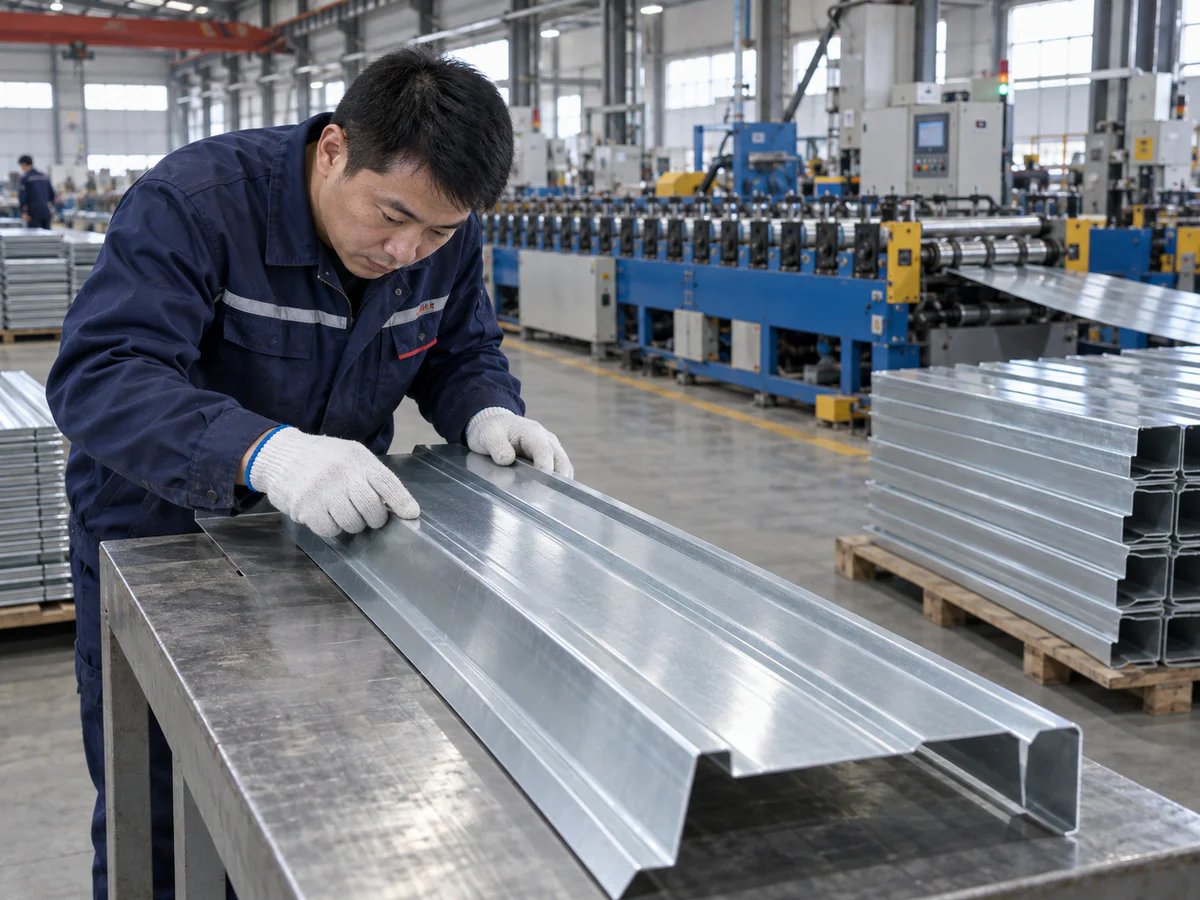
Surface Condition Review
For galvanized, pre-painted, stainless or aluminum profiles, we review the visible surface after forming.
The sample is checked for scratches, coating marks, guide friction, roller pressure lines and any other surface damage that could affect how your product looks or performs.
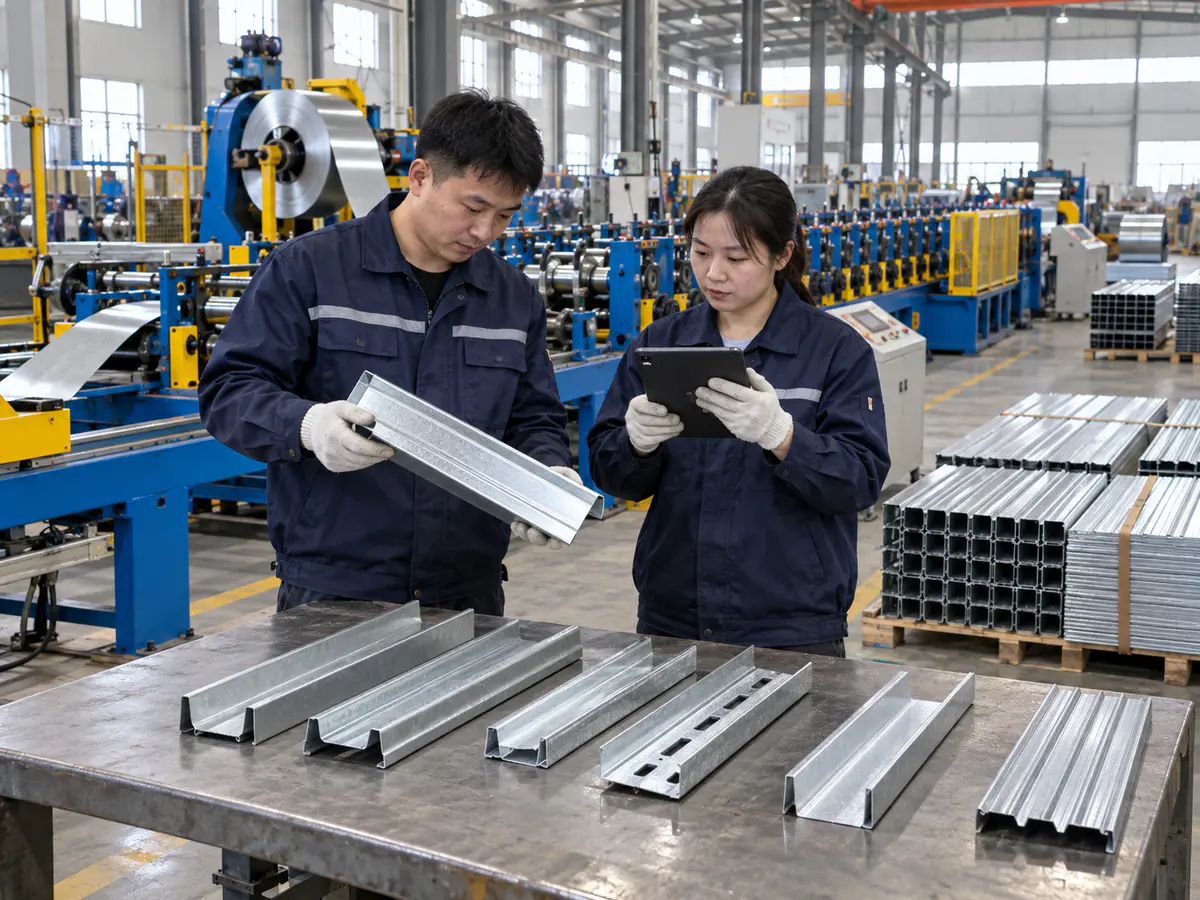
Sample Confirmation
After testing, we use sample photos, videos or sample pieces for your confirmation before shipment.
If the profile still needs work, we check roll gap, guide position, straightening setting, punching die, cutting clearance or machine parameters before final packing.
Pre-Shipment Checklist
We check width, height, flange size, opening size, bend angle and section shape on your finished profile.
For strict assembly requirements, we confirm the checking points before testing so the sample matches your product use.
We review the profile for bowing, twisting, edge wave, side height difference or unstable opening size.
Long, deep, asymmetric and high-strength profiles get extra attention, with straightening and guides adjusted before shipment.
If your profile has holes, slots, notches or embossing, we check position and shape after forming.
Pre-punched holes are reviewed for stretching or shifting; post-punched holes are confirmed against the formed section.
We check finished length, cutting accuracy, end shape and any deformation after cutting.
For complex profiles, narrow openings or thick material, the cut end gets enough support to avoid crushing, burrs and distortion.
For galvanized, pre-painted, stainless or aluminum profiles, we review the visible surface after forming.
The sample is checked for scratches, coating marks, guide friction and roller pressure lines.
After testing, we use sample photos, videos or sample pieces for your confirmation before shipment.
If it still needs work, we check roll gap, guides, straightening, punching die, cutting clearance or machine parameters before packing.
The point of pre-shipment acceptance is simple. Your custom roll forming machine should be confirmed by the finished profile, not just by the equipment list.
More Than a Machine, a Profile Partner
When you buy a custom roll forming machine, you're not just buying a frame, rollers and a control system. You need a factory that understands your drawing, reviews the forming risk, designs the tooling and supports your production after delivery, from the first drawing review to testing before shipment.
 1
1
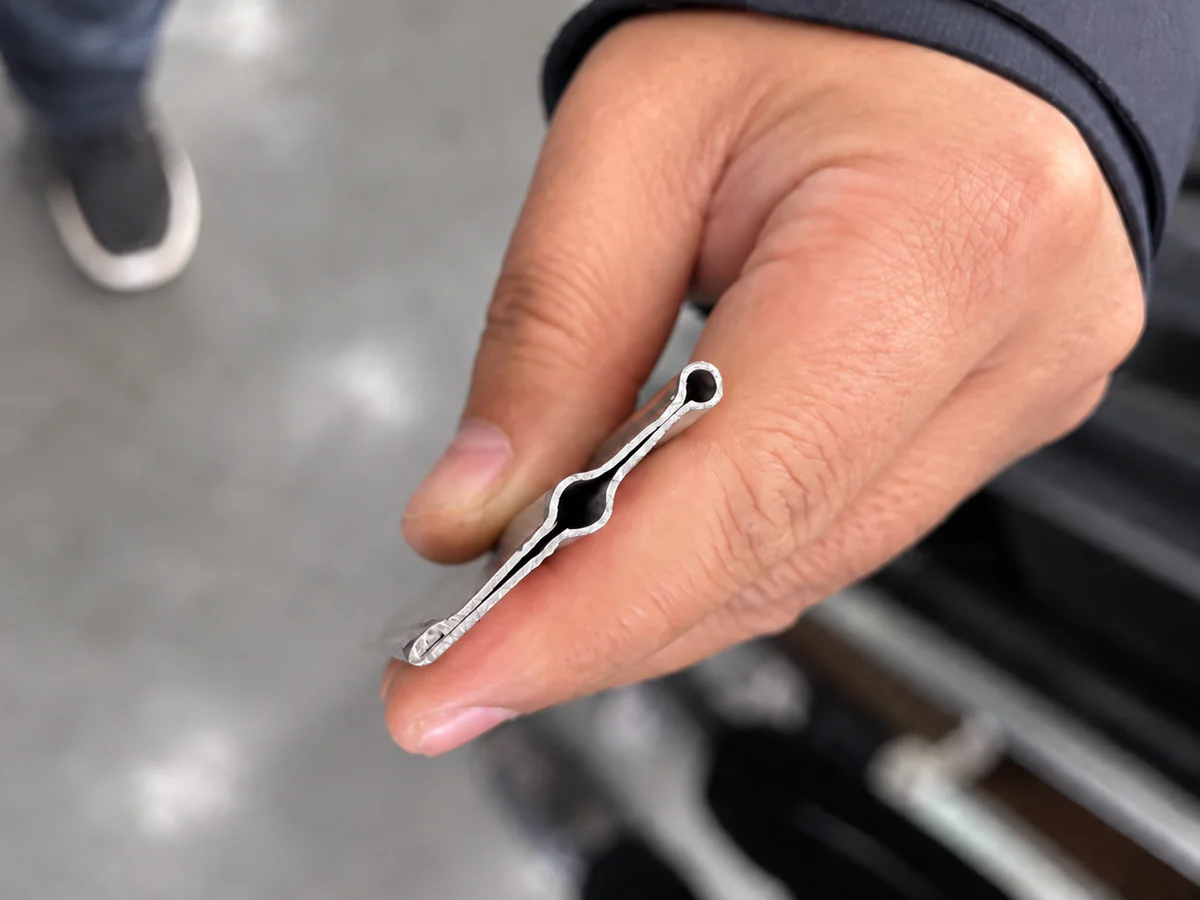
Built Around Your Profile
Your machine is designed from your drawing, not copied from a standard model. We review section shape, thickness, bend radius, hole position, cutting length and production target before confirming the line, so you don't end up with a machine that looks right but can't run your profile steadily.
Practical Roll Forming Experience
For custom profiles, the machine isn't just assembly. Roll tooling design, forming pass arrangement, guide setting and straightening adjustment all shape your final quality. We focus on whether your profile forms repeatedly with stable dimensions, controlled opening size, good straightness and acceptable surface.
 2
2
 3
3
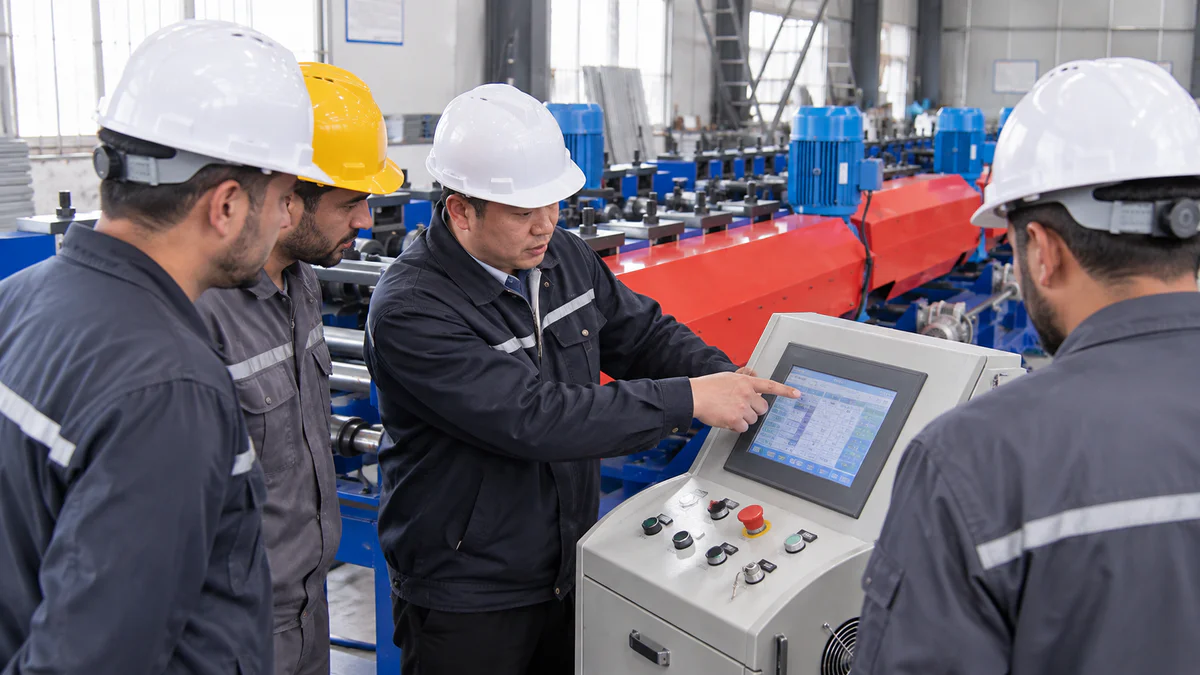
Complete Process Planning
Your line may need decoiling, leveling, servo feeding, pre-punching, roll forming, straightening, post-cutting, flying cutting, saw cutting or stacking. We help you choose by your profile requirement. You don't need every option, you need the right configuration for your product, speed and daily operation.
Testing Before Shipment
Before shipment, your machine is tested with suitable material when available. We check the sample profile for shape, key dimensions, hole position, cutting length, straightness and surface condition. You review testing photos, videos or sample profiles before delivery, and we adjust the machine before packing if needed.
 4
4
 5
5
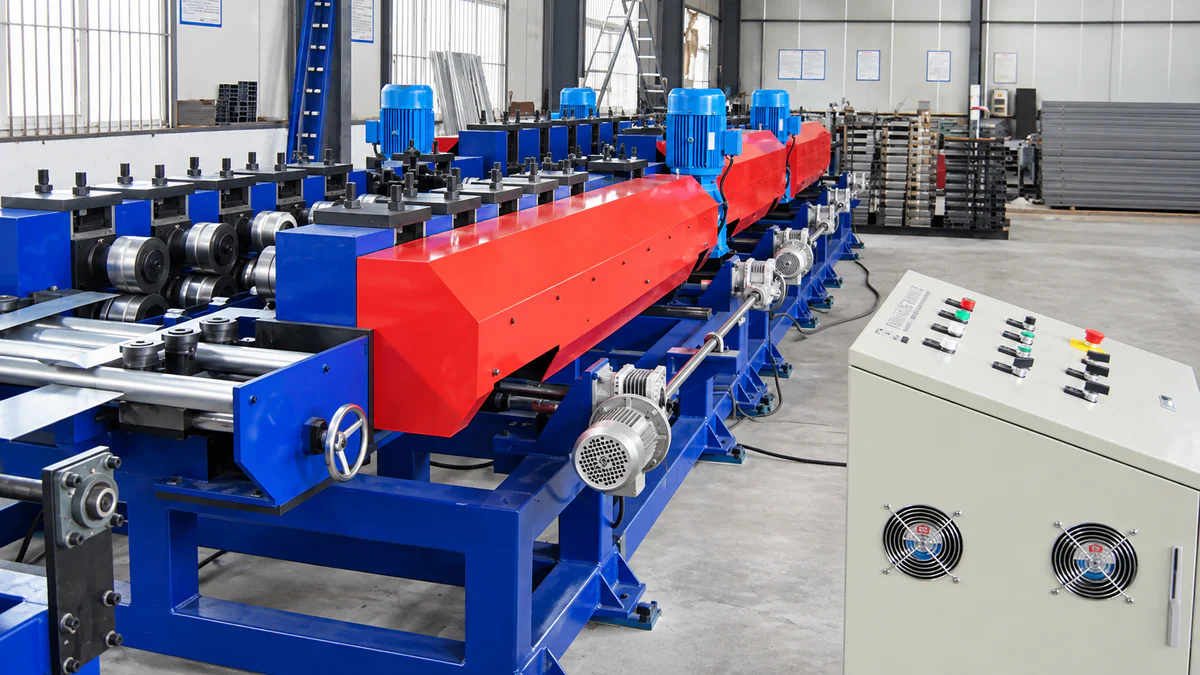
Support for Your Operators
After the machine arrives, your operators may need guidance on roll gap adjustment, straightening, punching setting, cutting length, PLC operation and daily maintenance. We provide technical communication and adjustment support to help your team start production and solve common forming issues during use.
Long-Term Project Support
Custom projects change over time. You may need spare rollers, punching dies, cutting blades, electrical or hydraulic parts, or advice on new profile sizes. We support your machine after delivery, especially when you're improving production, changing material or developing related profiles.
 6
6
Common Questions
Straight answers on forming feasibility, what we need from you, multi-size machines, punching, tooling and support. Don't see your question? Send your drawing and ask directly.
How do I know if my profile can be roll formed?
Send your profile drawing, material type, thickness and tolerance. We review section shape, bend radius, profile depth, opening size, hole position and material behavior to check whether continuous roll forming suits your part.
Some profiles need more forming stations, special tooling, straightening support or process adjustment before they run stably.
What information do you need for a custom machine?
Usually your profile drawing, material type, thickness range, coil width, hole or slot layout, required cutting length, tolerance, surface requirement and target production speed.
No complete drawing yet? Send a sample photo, product use and basic dimensions, and we'll discuss the forming direction first.
Can one machine produce different profile sizes?
Yes, but it depends on how different the profiles are.
Same product family with only width, height or flange changes? Adjustable tooling may work. Different bend positions, section shapes or forming directions usually need interchangeable roll sets, cassette tooling or a separate line.
Should holes be punched before or after forming?
It depends on hole position, profile shape and accuracy requirement.
Pre-punching suits holes, slots or notches made on flat strip before forming. Post-punching may be needed when holes must be on the finished profile, or when pre-punched holes would deform during forming. We review your hole layout with the forming sequence before choosing.
What causes twisting, bowing or unstable opening size?
These can come from profile asymmetry, material springback, too few forming stations, poor roll pass design, guide misalignment, uneven material stress or incorrect straightening.
For custom profiles, we review geometry, material strength, forming sequence and straightening method before production to reduce these risks.
How is the roll tooling designed for my profile?
Tooling is designed around your drawing, material thickness, bend radius, forming sequence, tolerance and surface condition.
The roller design controls how the strip bends through each station. For deep, asymmetric or high-strength profiles, it has to account for springback, stress distribution, opening control, straightness and adjustment convenience.
Can coated or pre-painted steel be roll formed?
Yes, coated and pre-painted steel can be roll formed, but surface protection has to be built into the machine design.
Roller surface, guide structure, contact pressure, material support and roll gap are planned to reduce scratches, coating marks and pressure lines. Tell us your surface requirement before production.
What affects the number of forming stations?
Profile complexity, material thickness, material strength, bend quantity, bend radius, profile depth, tolerance, and whether the profile has pre-punched holes or special features.
Many bends, high-strength material, narrow openings or strict accuracy need more careful station planning than a simple open channel.
Can the machine be tested before shipment?
Yes. For a custom roll forming machine, pre-shipment testing is an important step.
We check the sample profile shape, key dimensions, hole position, cutting length, straightness, end quality and surface condition. If it needs adjustment, we work on the roll gap, guides, straightening unit, punching die or cutting system before shipment.
What support can I get after the machine arrives?
Your team may need support for installation checking, roll forming adjustment, punching setting, cutting length setting, PLC operation and daily maintenance.
We provide technical communication, operation guidance and troubleshooting based on your profile samples, machine settings and production feedback.
Get a Line Configuration
Send your profile drawing, sample photo or product idea. We review the section shape, forming difficulty, punching layout and material before building, and reply with a configuration within 24 hours.
Henry
Roll Forming Sales Engineer
Send me your profile drawing and I'll personally review whether it can roll form cleanly, what tooling it needs and how the line should be configured. No standard model pushed on a non-standard profile.
Not sure where to start? A sample photo and your basic dimensions are enough for me to give you a straight answer on feasibility first.
Henry
RITEC Roll Forming Machinery