China Flat Steel Punching Line Factory
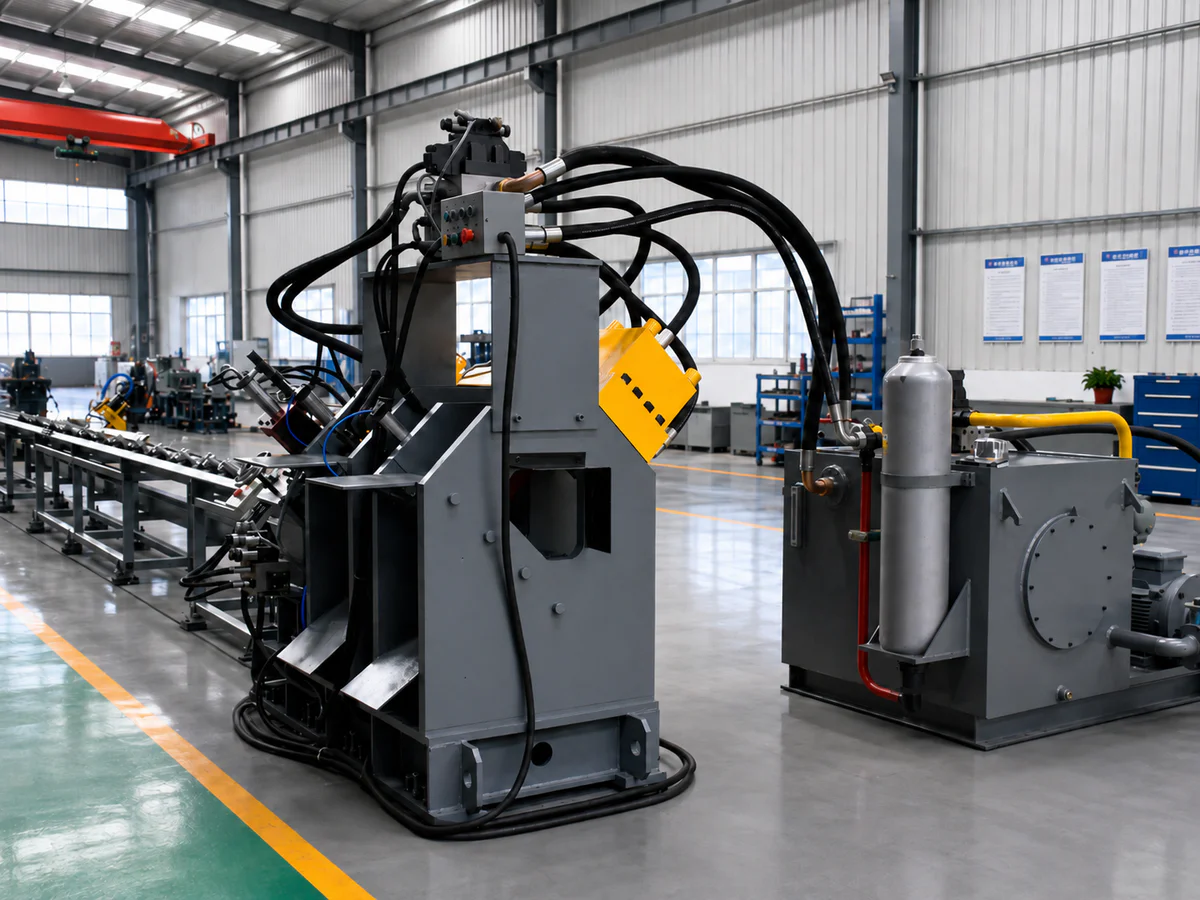
CNC flat steel punching lines built for your transmission tower, power fitting and steel structure production.
From flat steel feeding and positioning through punching, marking and cutting, every line is configured around your material specifications, drawings and production requirements.
Everything You Need to Plan Your Flat Steel Punching Line Project
Jump to any part of the page. Applications, line configuration, capacity, quality, and exactly what to send for an accurate quote.
Flat Steel Applications
Where punched flat steel goes: transmission towers, power fittings, and steel structures.
Production Challenges
The bottlenecks of manual punching, and how an automated line clears them.
Line Configuration
Feeding, punching, marking, and cutting modules matched to your parts.
Processing Workflow
How your flat steel moves from raw stock through to finished parts.
Production Capacity
Output rates and throughput you can plan your production around.
Processing Range
The flat steel width, thickness, and hole specs the line handles.
Combined Solutions
Pair the line with angle steel and drilling lines for a full shop.
Why Choose Us
18+ years, 500+ machines delivered, and support in 50+ countries.
Project Cases
Real installations and the production they run every day.
Installation Support
Setup, commissioning, and getting your line into production.
Operator Training
Get your team running and maintaining the line with confidence.
After-Sales Service
Spare parts, technical support, and long-term backing.
FAQ
Lead time, payment, customization, and shipping, answered.
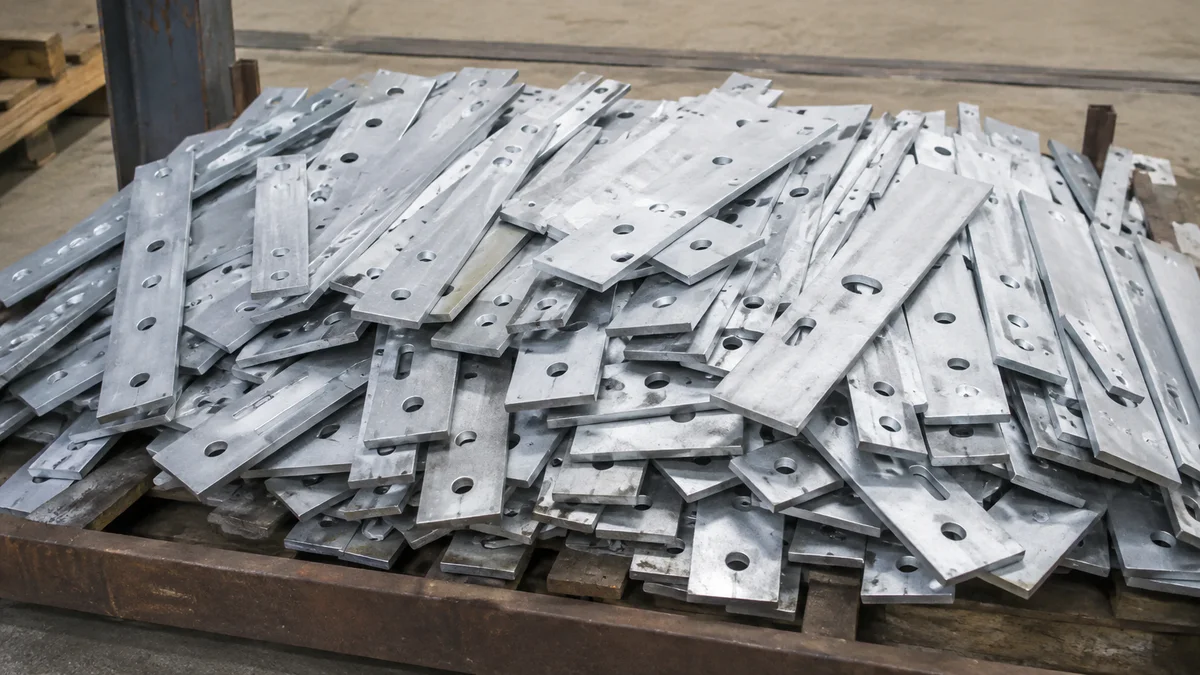
Typical Flat Steel Parts We Punch
Whatever flat steel part you produce, the line is configured to punch it accurately and repeatably, straight from your drawings.
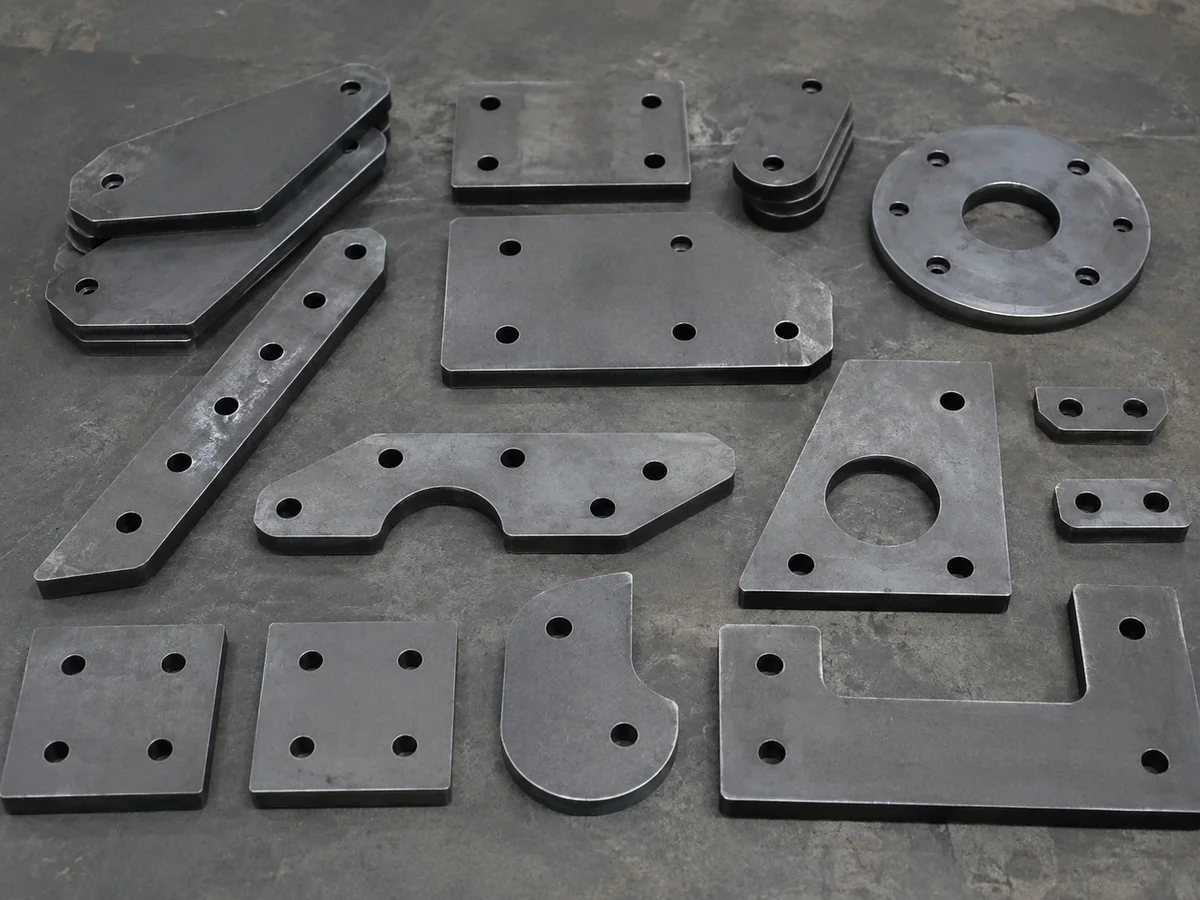
Connection Plates
Flat steel connection plates used in transmission towers, steel structures and industrial assemblies.
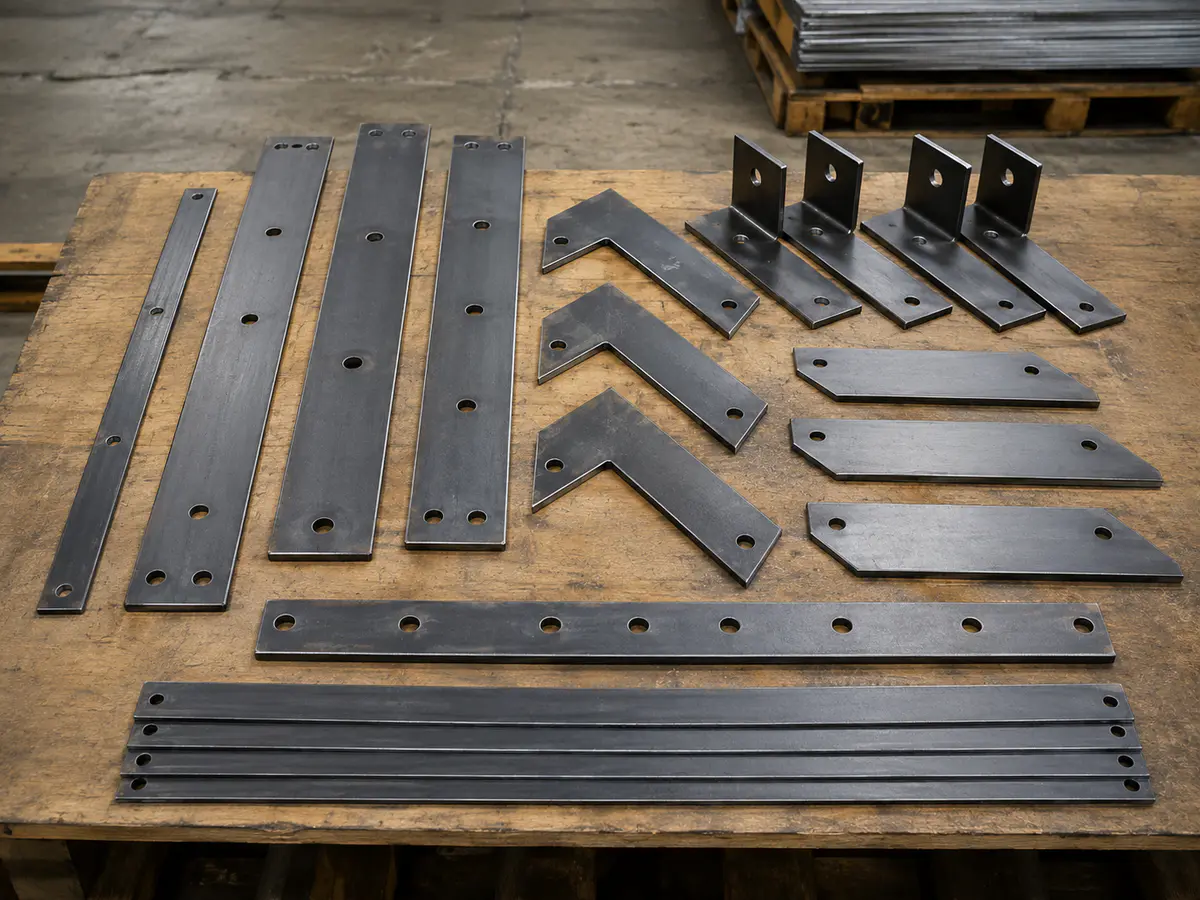
Bracing Components
Flat steel parts used for structural bracing and reinforcement across your projects.
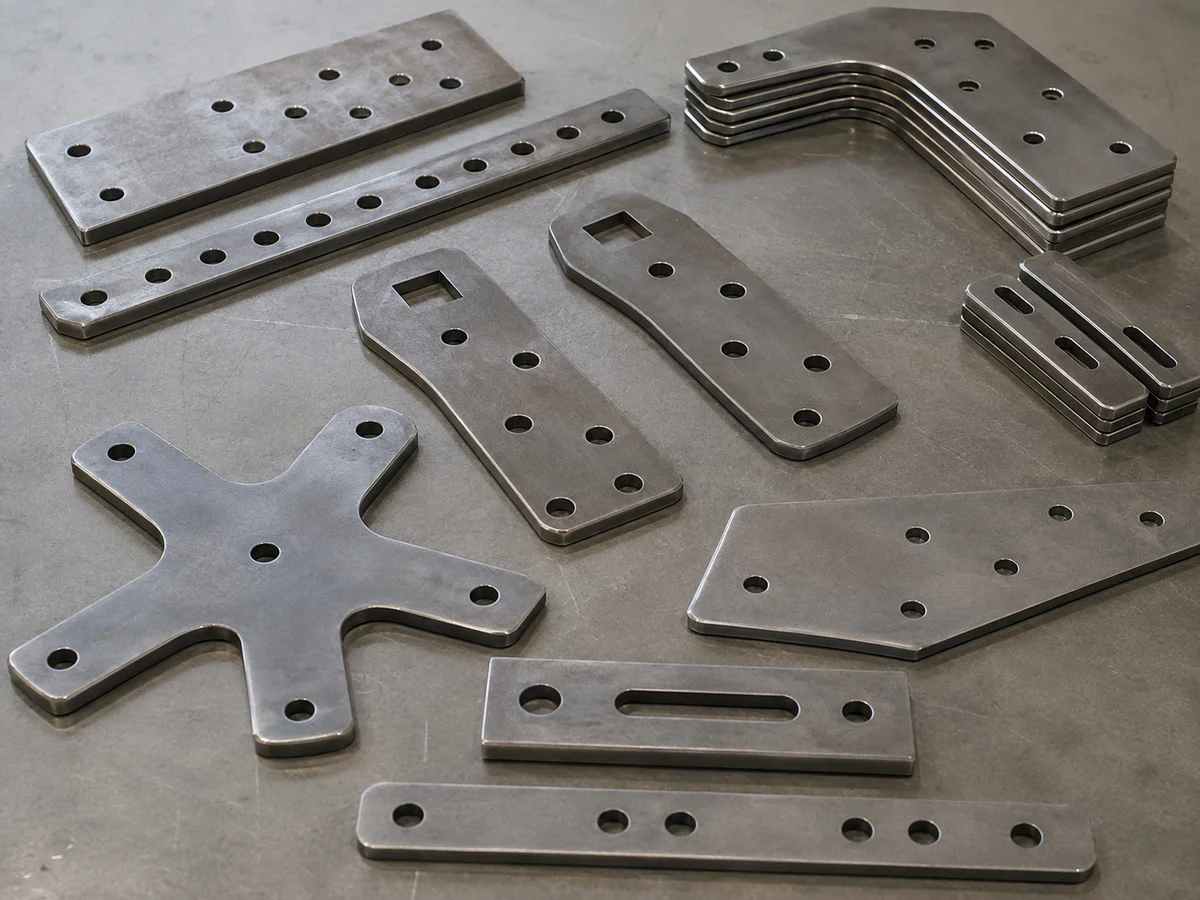
Power Fitting Parts
Flat steel components processed for power transmission and distribution projects.
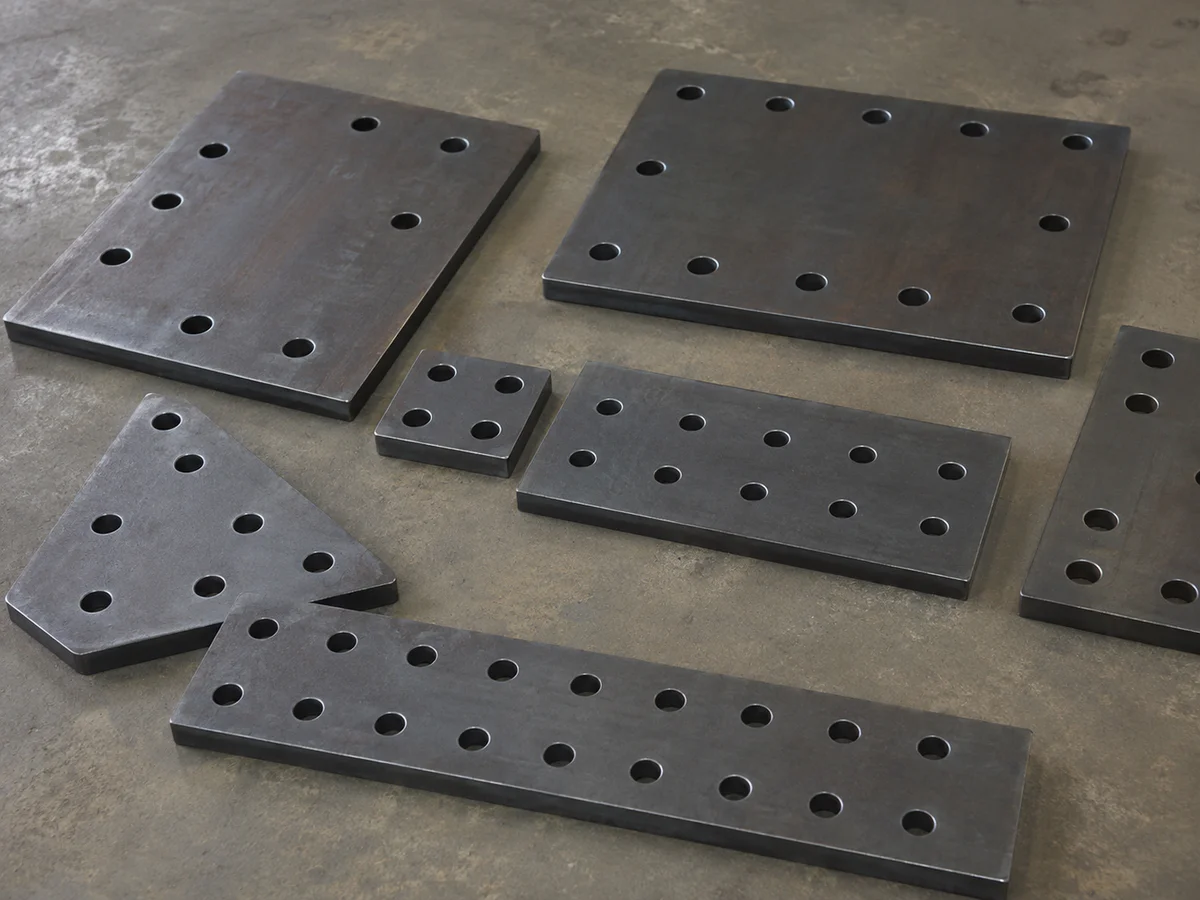
Stiffener Plates
Flat steel stiffeners requiring repeated hole patterns and accurate positioning.
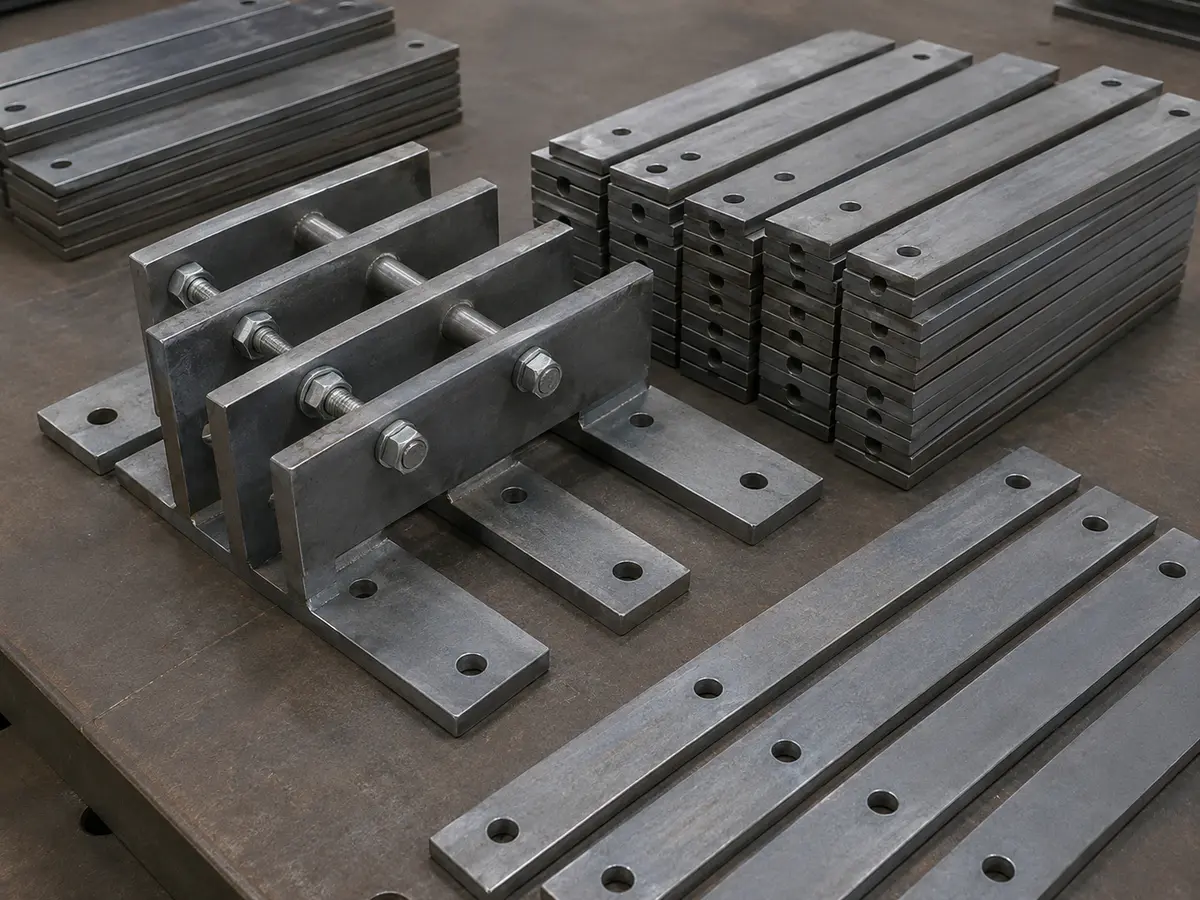
Flat Bar Assemblies
Flat steel parts prepared for your welding, bolting or galvanizing operations.
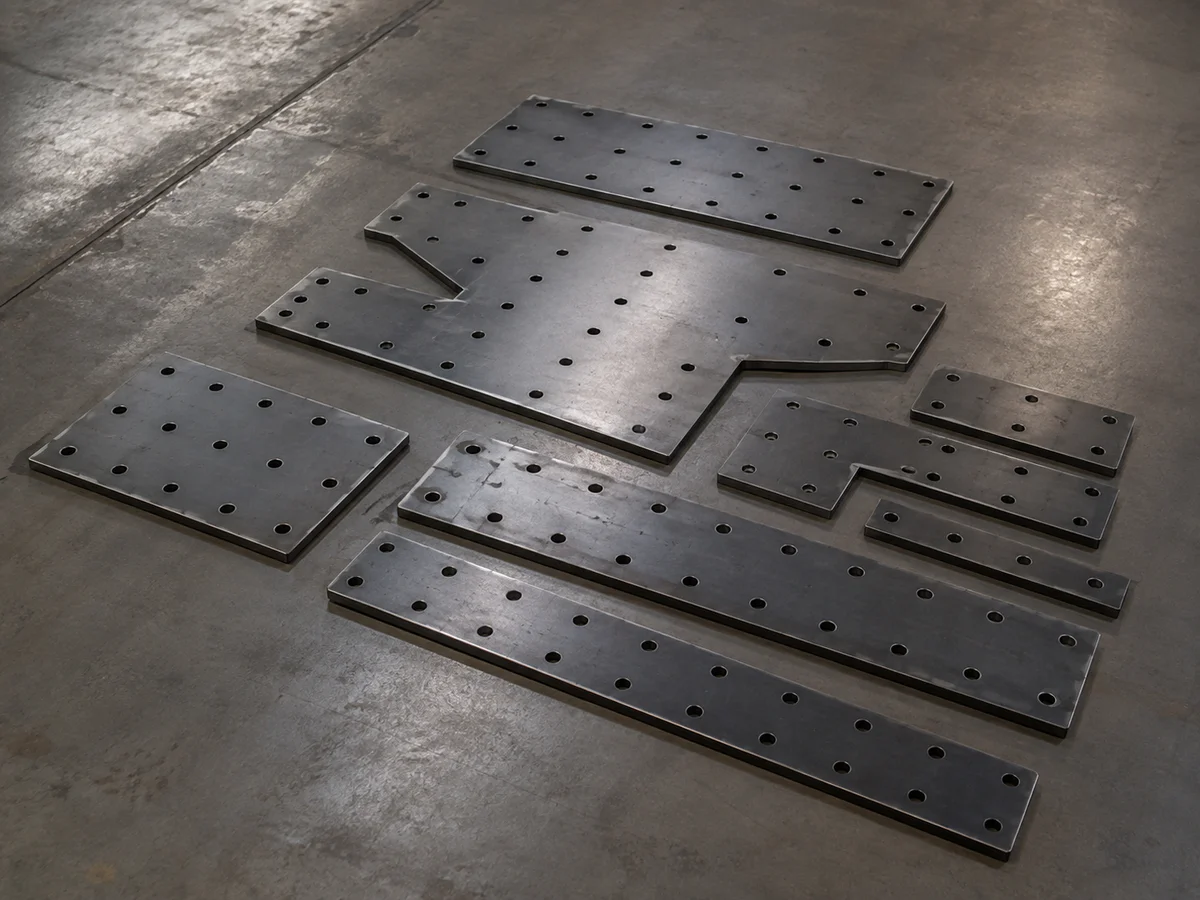
Custom Flat Steel Parts
Flat steel workpieces produced according to your project drawings and production requirements.
Designed for Repeated Flat Steel Production
The line is built for flat steel parts that need punching, marking and cutting according to your project drawings and production schedules, run after run with consistent accuracy.
Challenges in Flat Steel Processing
Your flat steel parts are produced in large quantities for transmission towers, power fittings and steel structure projects. The parts may look straightforward, but daily production gets harder as order volumes grow and drawing requirements become more complex.
Most factories hit the same problems when processing flat steel with varying lengths, hole patterns and production schedules. Here are the six that cost you the most.
Swipe to see all six challenges
Every New Drawing Starts From Measuring Again
Your flat steel parts may share similar shapes, but hole locations, spacing and finished lengths vary from one drawing to the next.
Operators still spend serious time measuring, marking and positioning before punching even begins. As drawings pile up, more time goes into preparing parts than processing them, and parallel projects drag the whole workflow down.
Flat Steel Moves More Than It Gets Processed
In many shops, marking, punching and cutting happen on separate machines, so material is shuttled between stations all day.
Operators wait for free equipment, forklifts move workpieces around, and finished parts get collected from different spots. As volume climbs, material handling becomes one of your biggest sources of lost production time.
One Project Can Mean Hundreds of Part Numbers
Transmission tower and power fitting projects often need a huge variety of flat steel parts.
Different lengths, hole layouts and quantities all land inside the same order, and every drawing still has to be processed correctly. Managing that many drawings by hand only gets harder as projects scale and deadlines tighten.
Production Quality Shouldn't Depend on One Operator
Experienced operators carry a lot of your workshop. They read drawings, know the processing sequence and understand quality from years on the floor.
But leaning on a handful of skilled people creates risk when you expand. Training new operators takes time, and holding consistent quality across shifts becomes critical.
Small Variations Become Bigger Problems
A slight deviation in hole position or part length looks harmless during production.
But across hundreds or thousands of parts, those variations hit assembly, installation and overall project quality. Holding consistent dimensions, hole locations and marking gets more important the more parts you run.
Orders Keep Coming, Production Stays the Same
Many factories keep using the same production methods even as order volume climbs.
Extra workers, overtime and longer hours help for a while, but the bottlenecks stay put. As project requirements keep growing, improving the process matters just as much as adding manpower.
Recognize These Problems in Your Own Shop?
If measuring, material handling and drawing management are eating into your production time, a configured punching line is built to take those bottlenecks off the floor. Send us your drawings and typical order mix, and we will show you exactly how a line would run your parts.
How the Line Is Designed
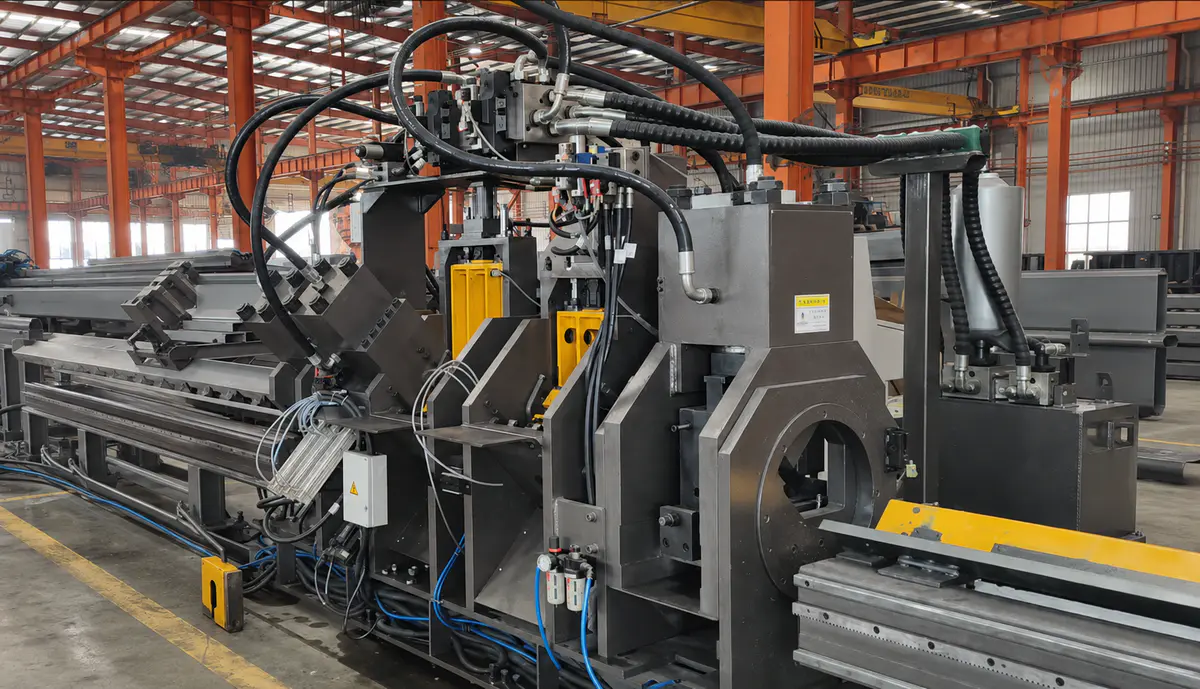
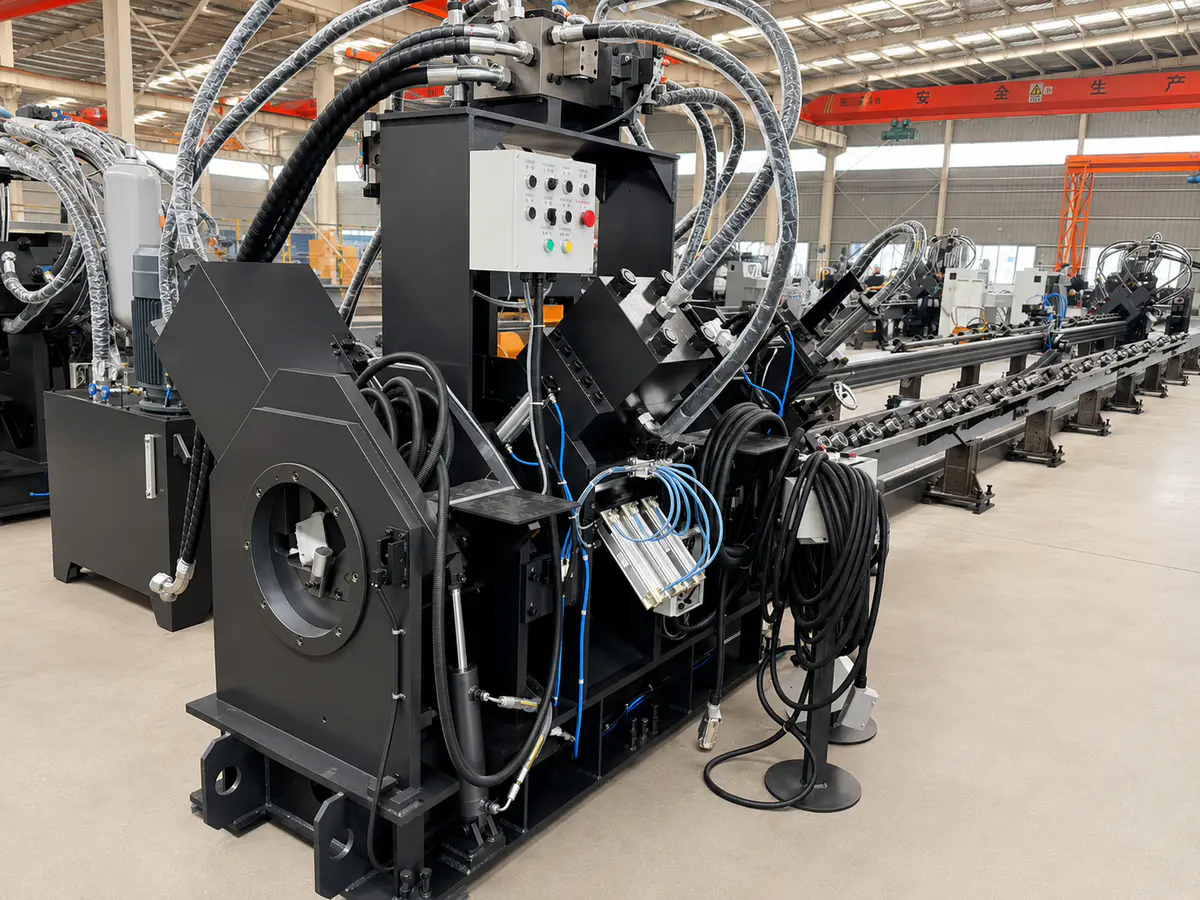
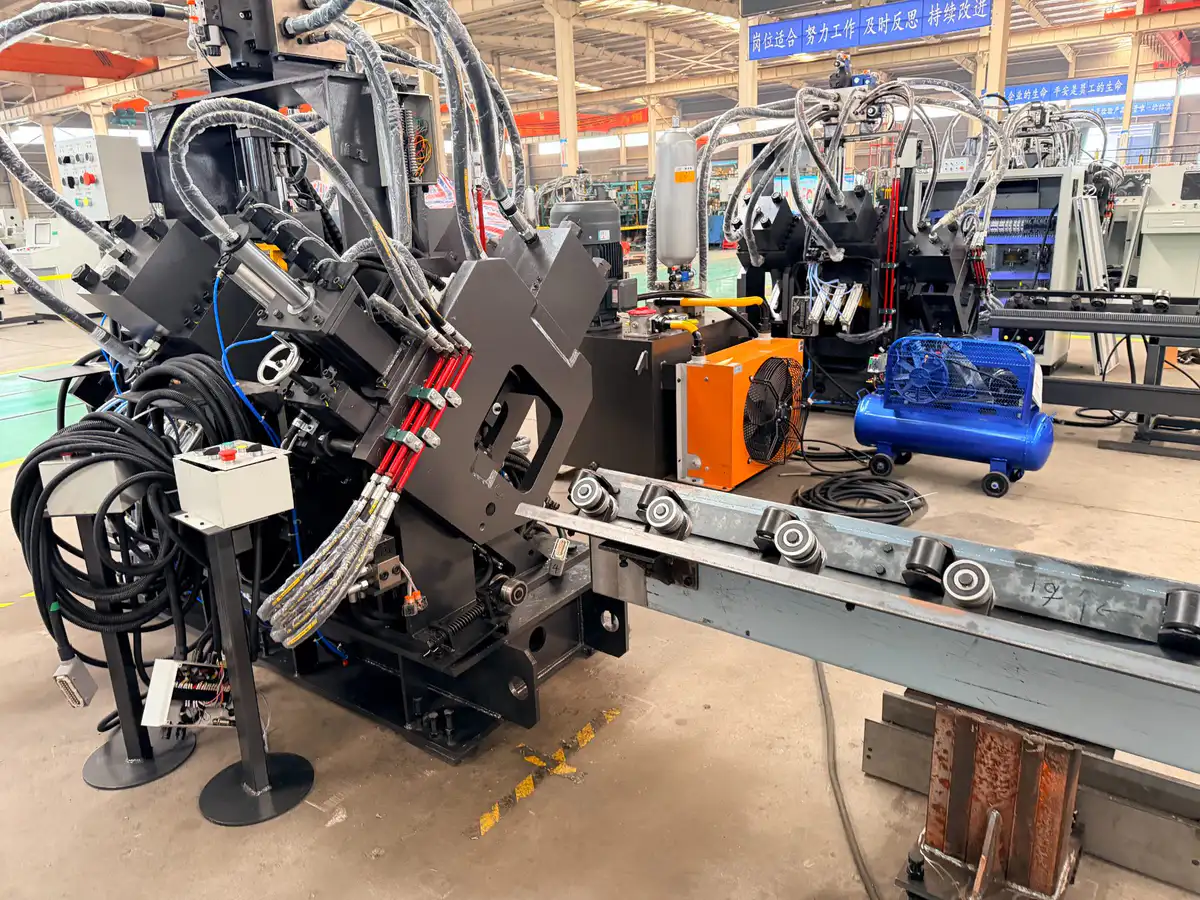
Flat steel production is not only about punching holes. Material feeding, positioning, part identification and cutting all affect your production efficiency and consistency.
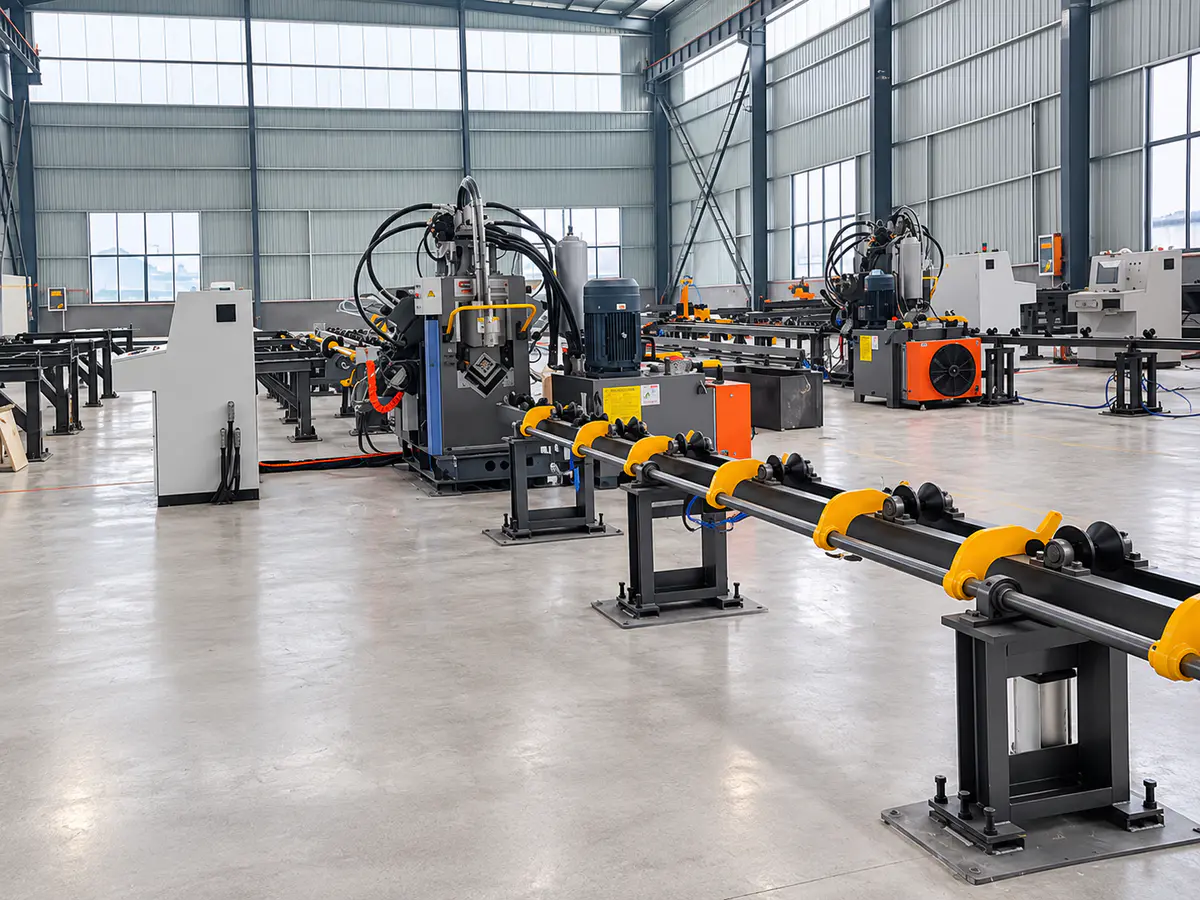
That is why the line is built as a complete processing system rather than a set of separate machines. Each stage is arranged to support continuous production, from raw material loading to finished part collection.
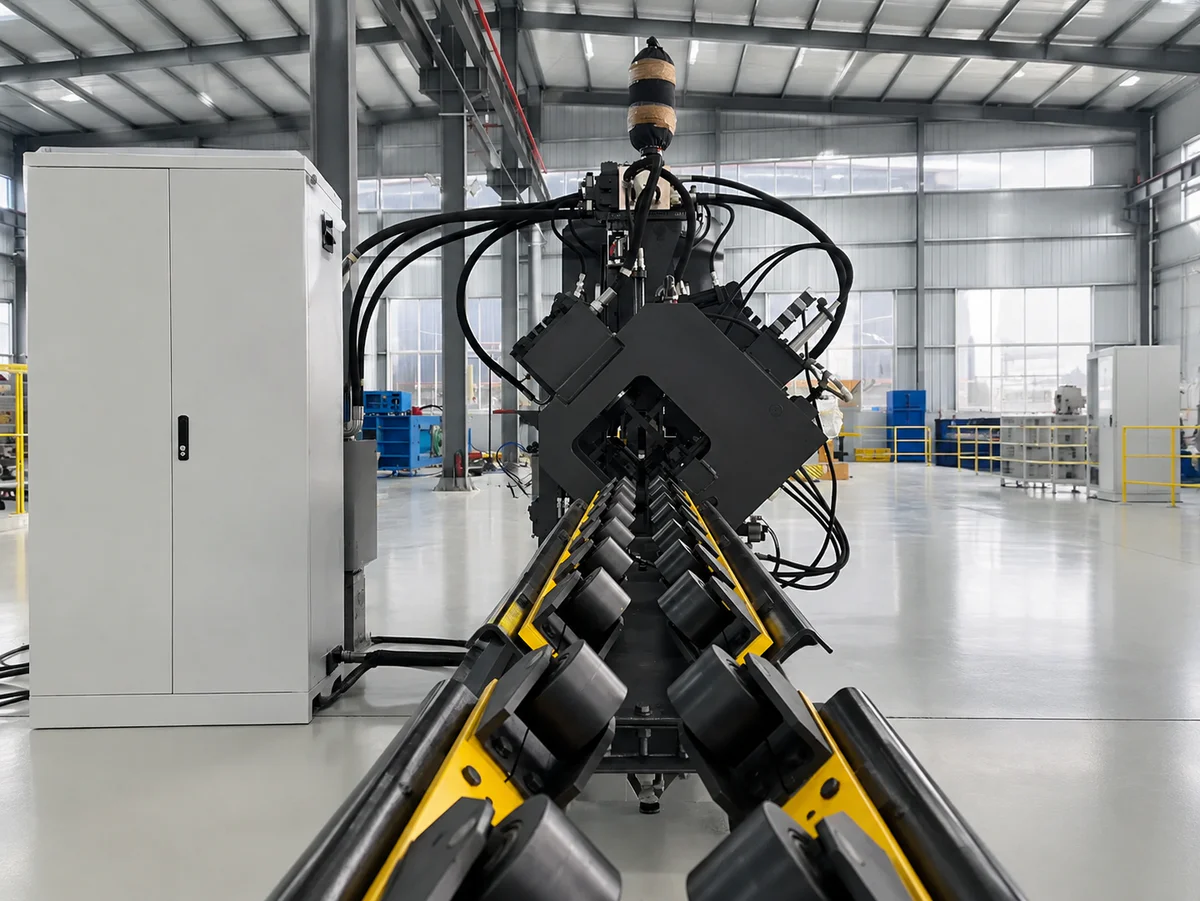
Feeding and Positioning
Repeatable reference before every cycle
Typical Line Configuration
A flat steel punching line is arranged as a continuous workflow, from material loading to finished part collection.
The exact configuration depends on your material specifications, part drawings and production requirements, but most lines are built around the processing sequence below.
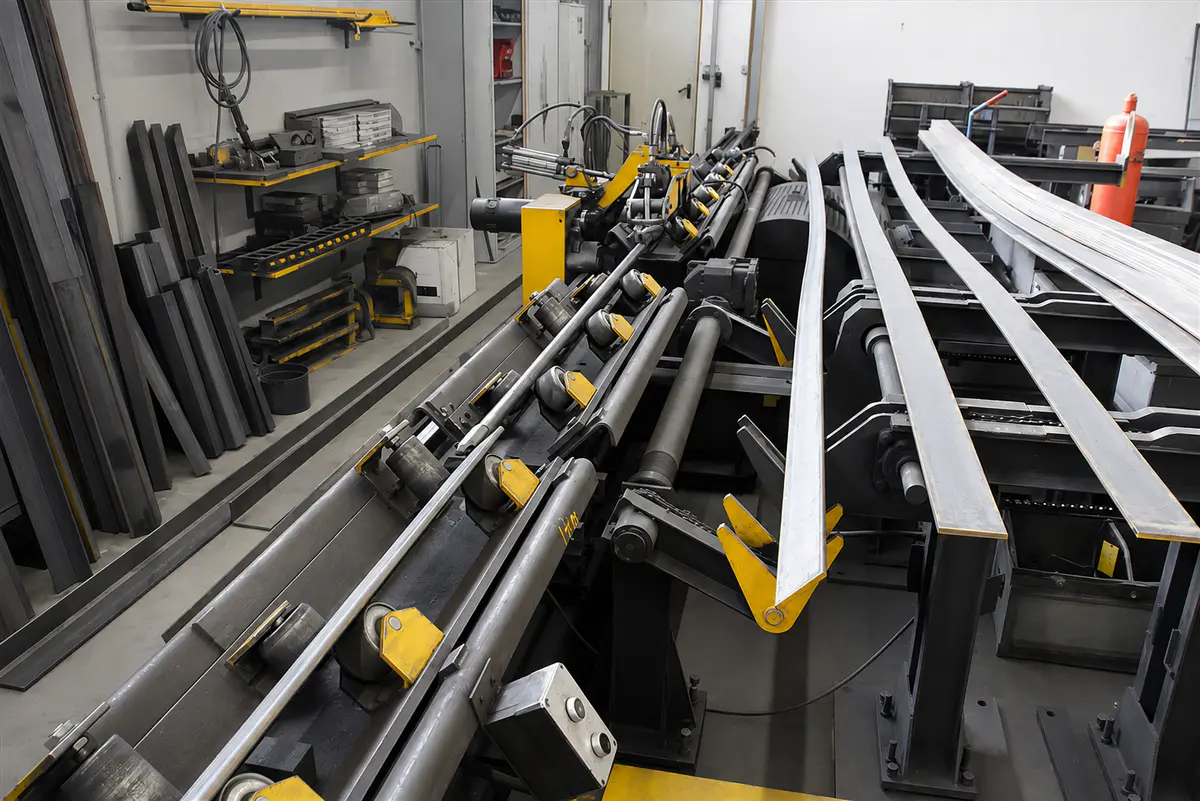 01
01
Loading Section
Raw material is placed into the loading area before it enters production. The arrangement adapts to your material length, volume and workshop layout.
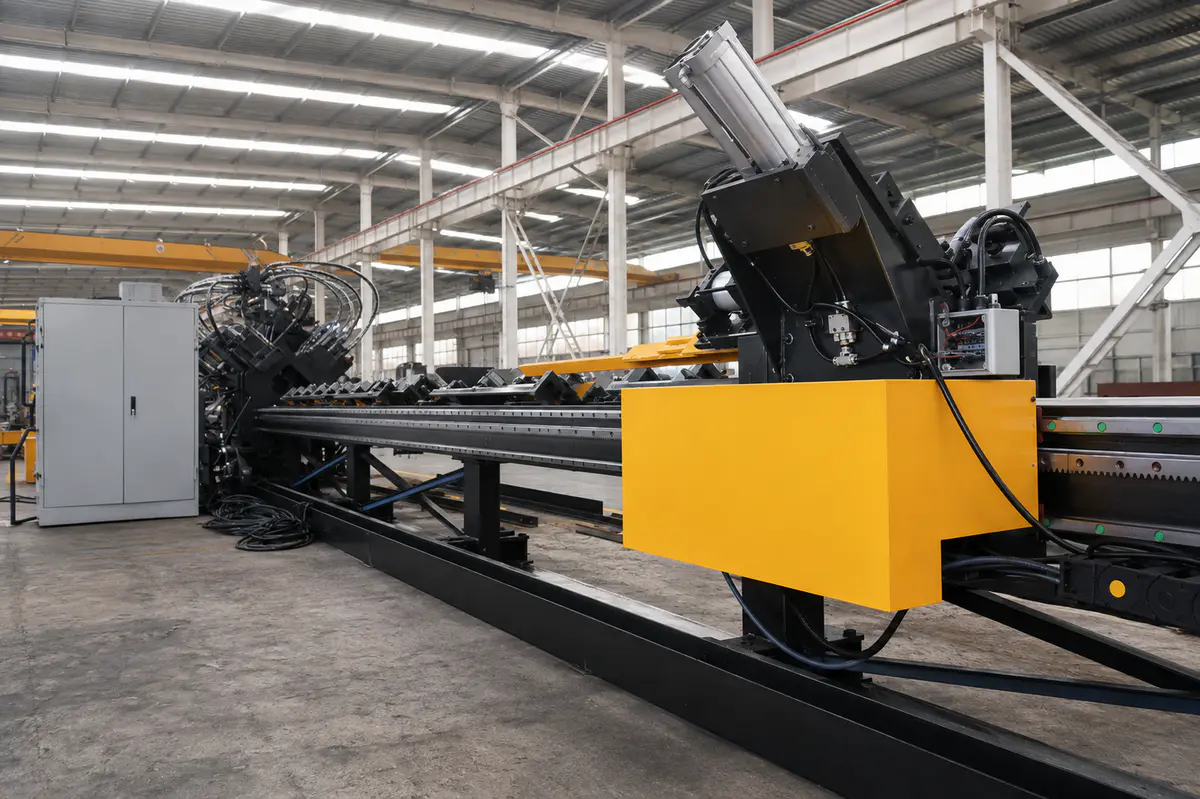 02
02
Feeding System
The feeding system moves flat steel through each stage to the programmed dimensions, holding consistent positioning across different lengths and hole layouts.
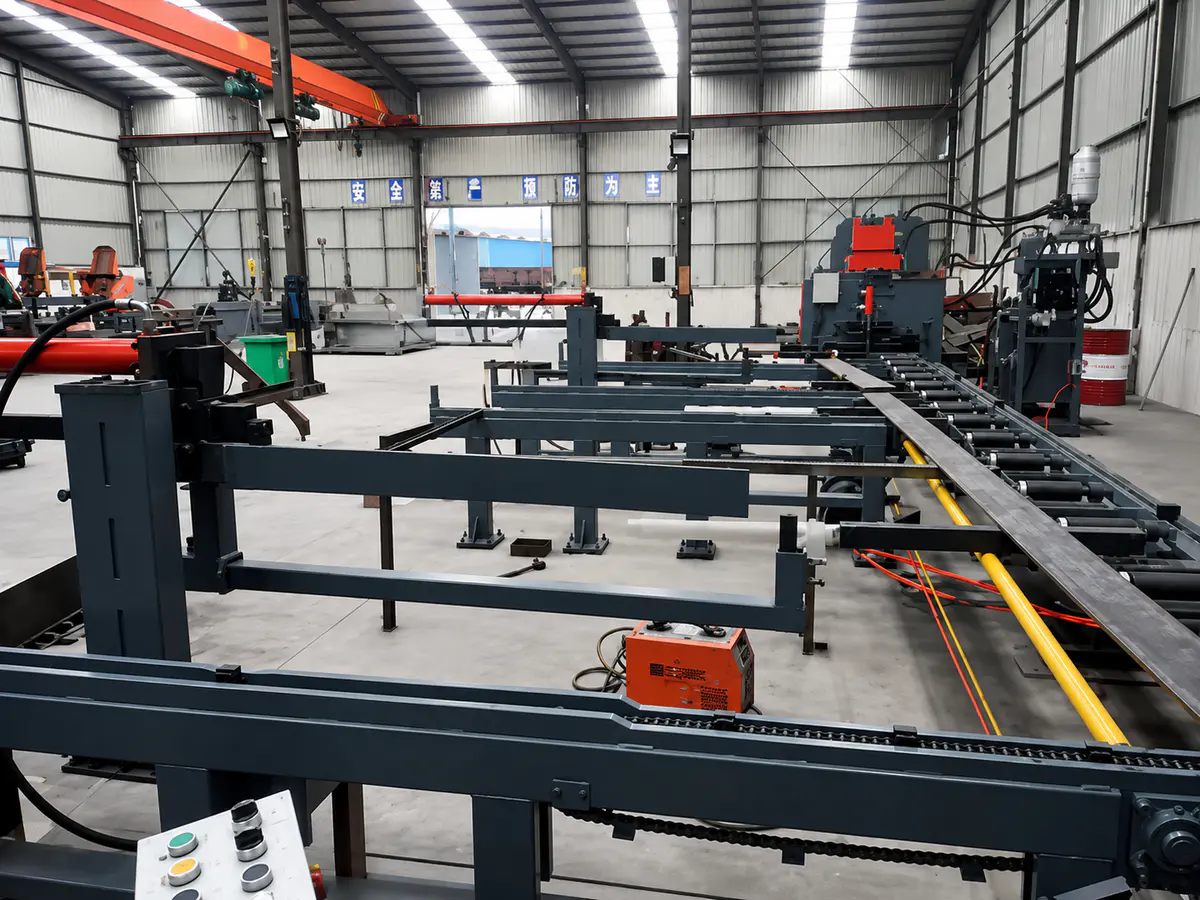 03
03
Positioning Unit
Before processing, material is located to the required reference point. Stable positioning keeps hole locations and dimensions consistent across repeated batches.
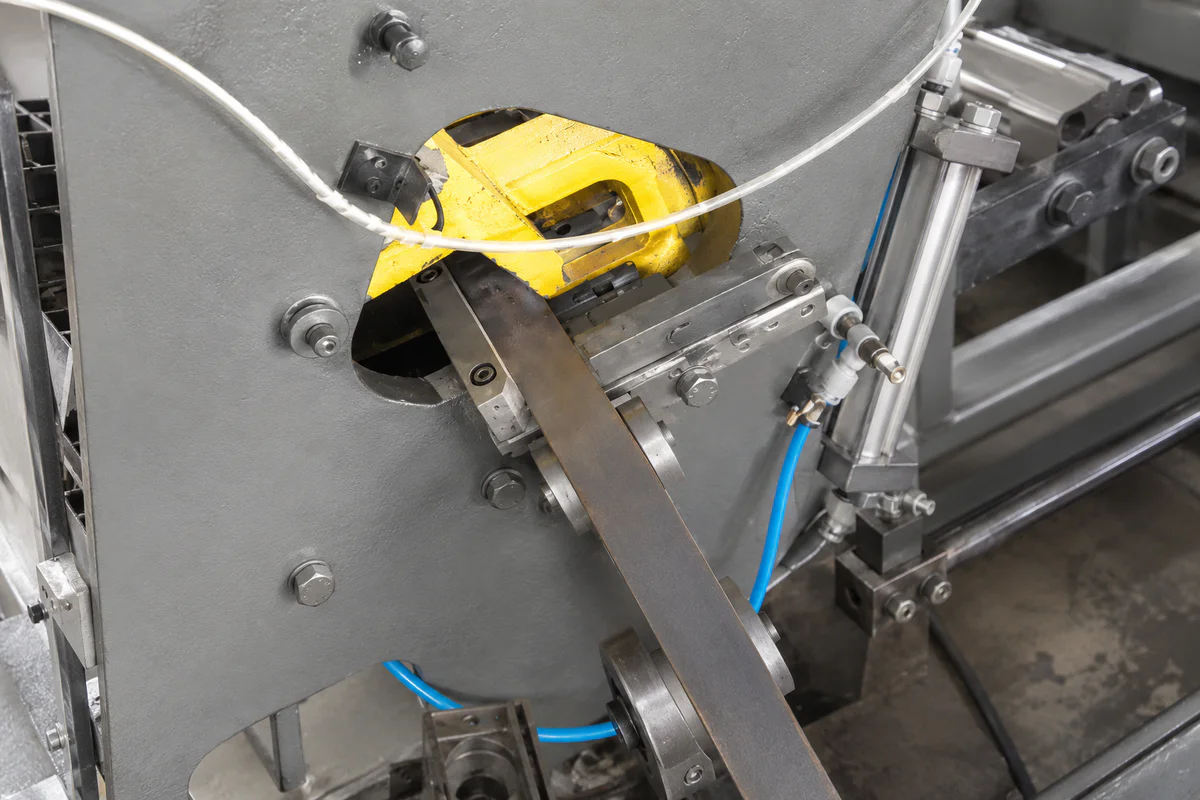 04
04
Marking Unit
When your project needs part identification, a marking unit integrates into the line, supporting production tracking, assembly prep and material identification.
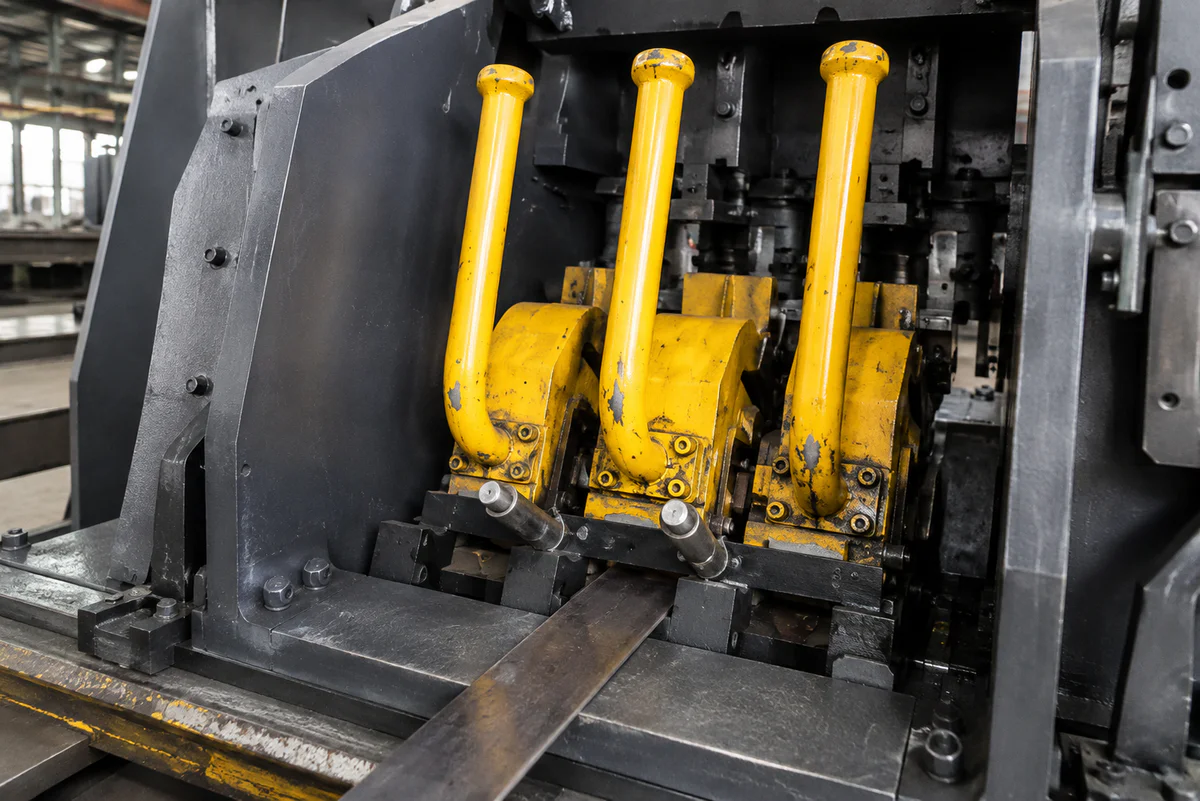 05
05
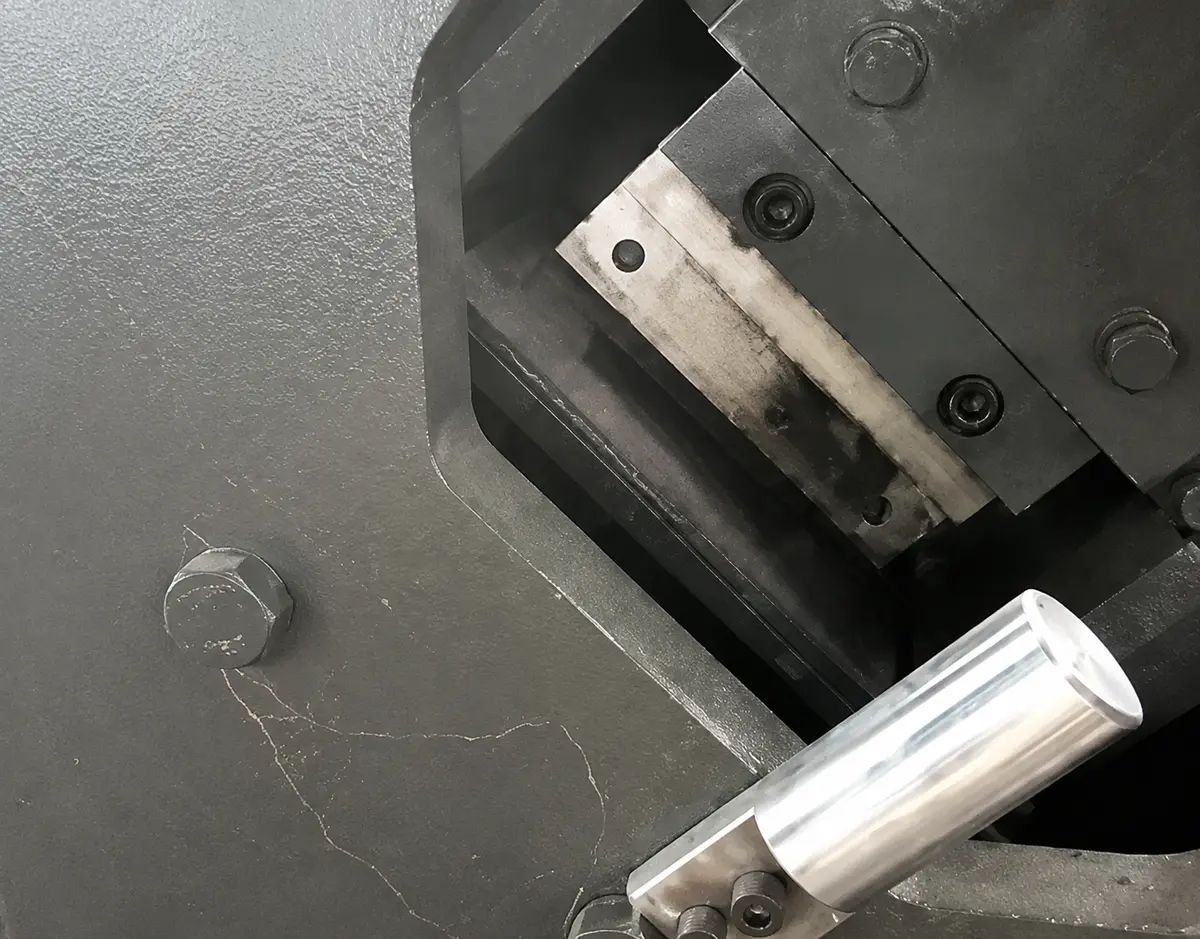
Punching Unit
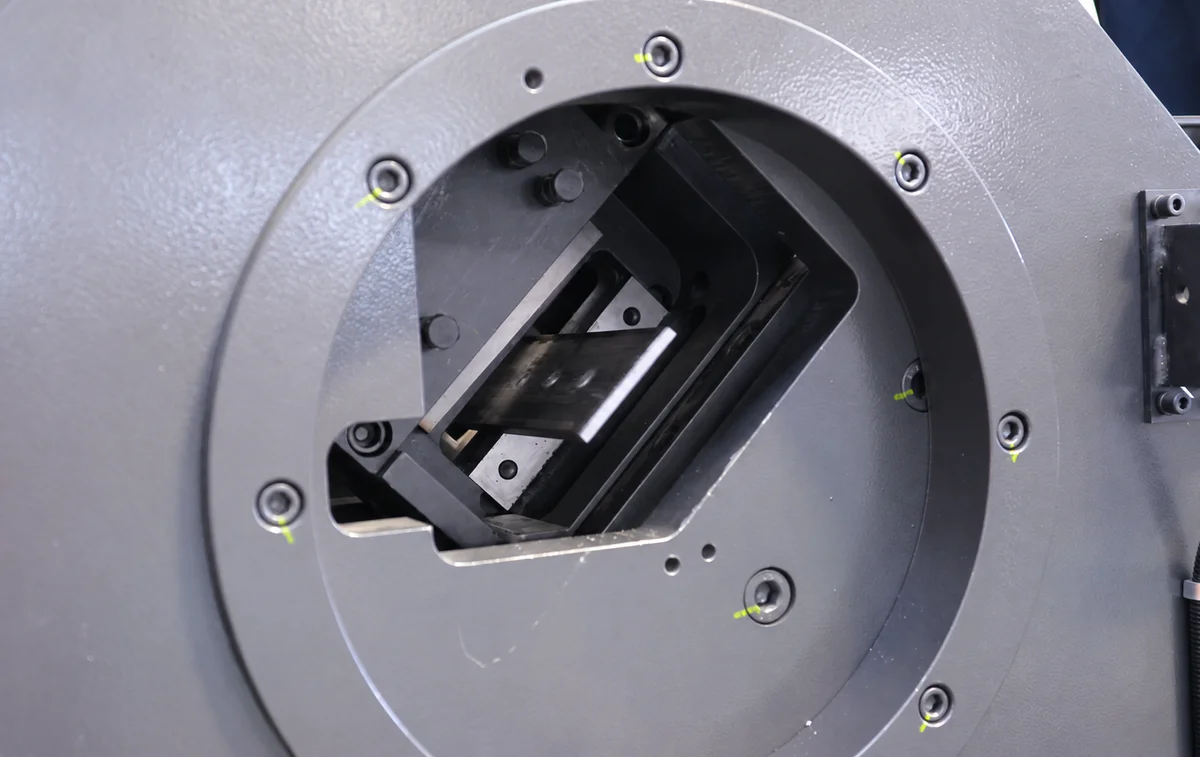
The punching unit processes hole patterns from your part drawings. Configuration depends on material thickness, hole diameter and the tooling your project needs.
 06
06
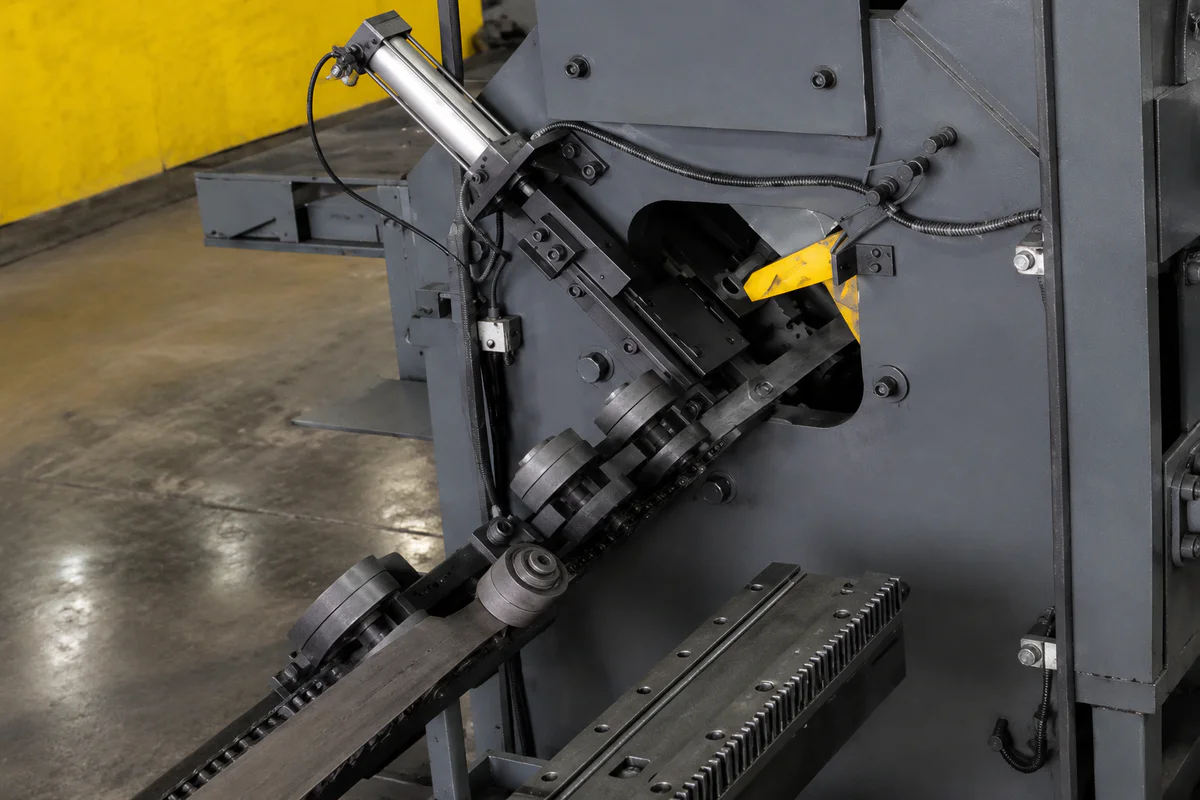
Shearing Unit
After punching, material is cut to the required finished length. The shearing arrangement is selected to match your material size and production requirements.
 07
07
Outfeed Section
Finished parts move to the outfeed area for collection, sorting or further processing, keeping production continuous and cutting unnecessary handling.
Configured Around Your Project
Every project comes with different material sizes, hole layouts and production targets. That is why your final line configuration is determined by the specifics of what you produce, not a fixed package.
Capacity Built Around Your Parts
Every project processes different flat steel parts. Material thickness, hole quantity, part length and drawing complexity all shape your output, so capacity is evaluated against actual processing requirements rather than one theoretical speed figure.
When we review your project, the goal is to balance production rhythm, material flow and processing requirements to support stable batch production.
| Production Factor | Impact on Capacity |
|---|---|
| Flat Steel Thickness | Thicker material generally needs higher punching force and longer processing cycles. |
| Hole Quantity | More holes per part increase punching time. |
| Hole Diameter | Tooling selection and punching force requirements vary with diameter. |
| Part Length | Feeding distance affects production rhythm. |
| Marking Requirement | Additional marking operations add processing steps. |
| Number of Drawings | Frequent program changes affect production continuity. |
| Loading Method | Material preparation influences your overall workflow. |
Share your part drawings and typical order mix, and we will estimate realistic output for your production.
Built for Repeated, High-Volume Runs
Many of your flat steel parts are produced over and over across large project quantities. The line keeps repeated workpieces flowing continuously while cutting unnecessary handling between operations. When a project spans multiple drawings, production can be planned around your material specs, part types and processing sequence.
Every Flat Steel Project Is Different
Material dimensions, hole layouts, production quantities and processing requirements all shape your final line configuration.
Before we recommend a solution, we review a few technical details to make sure the line matches your actual production. The more you can share, the more accurate your configuration and quote will be.
What to Share for an Accurate Quote
- Flat steel sizeWidth, thickness and length
- Material gradeCarbon steel or other material specifications
- Hole diameterRequired hole sizes
- Hole layoutHole spacing and drawing requirements
- Part quantityProduction volume and batch size
- Marking requirementPart identification requirements
- Cutting requirementFinished part length
- Drawing quantityNumber of different part drawings
- Workshop layoutAvailable installation space
- Future expansionAdditional production plans
Need More Than Flat Steel?
Many projects involve more than one steel profile. Flat steel may be your primary material, but some production plans also bring in channel steel, angle steel or other structural components, and that turns equipment planning into a real part of the investment decision.
The right solution depends on your material types, production volume, processing requirements and future plans. Swipe through the options below.
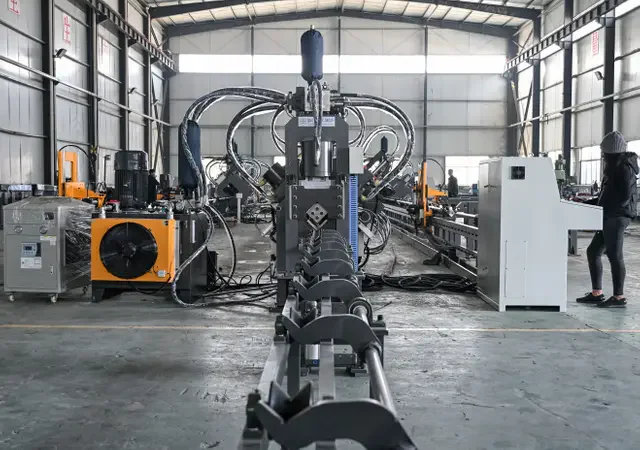
Flat Steel Only
Dedicated LineIf your factory is focused on flat steel, a dedicated punching line is usually the most direct solution. It is configured around your flat steel dimensions, hole layouts, marking requirements and production targets.
Flat + Channel Steel
Two ProfilesSome power fitting and steel structure projects need both flat steel and channel steel parts. Depending on your material specs and quantities, we can evaluate a shared processing solution or separate production arrangements.
Flat + Channel + Angle
Full SystemLarge transmission tower projects sometimes run several profile types in one production system. With flat, channel and angle steel parts, the configuration is evaluated around processing requirements, production balance and your workshop layout, building a practical arrangement, not just one crowded line.
Starts With Your Project
TailoredThere is no single solution that fits every factory. Some projects are best served by a dedicated flat steel line, others by a broader multi-profile setup. Our recommendation is based on your material specs, part drawings, quantities and long-term plans, not a fixed model.
Why Choose Us
Choosing a flat steel punching line is not only about the equipment. Material specs, drawings, installation, operator training and long-term support all shape how well the line performs after delivery. These are the areas worth weighing before you decide.
 1
1
Configuration Based on Your Project
Send one inquiry, get back one fixed model. That is what most buyers dread. Every project processes different parts, so thickness, hole layouts, quantities and workshop conditions vary a lot. We review your requirements before proposing a solution, so the line matches your actual production, not a standard spec sheet.
Solves: buying the wrong machineClear Technical Communication
A salesperson who knows the quote but not the equipment makes evaluation painful. Equipment talks involve drawings, material specs, hole layouts and production requirements. Clear communication up front cuts misunderstandings and shortens the time to confirm a suitable configuration. We review your technical questions alongside the project info before anything is finalized.
Solves: communication cost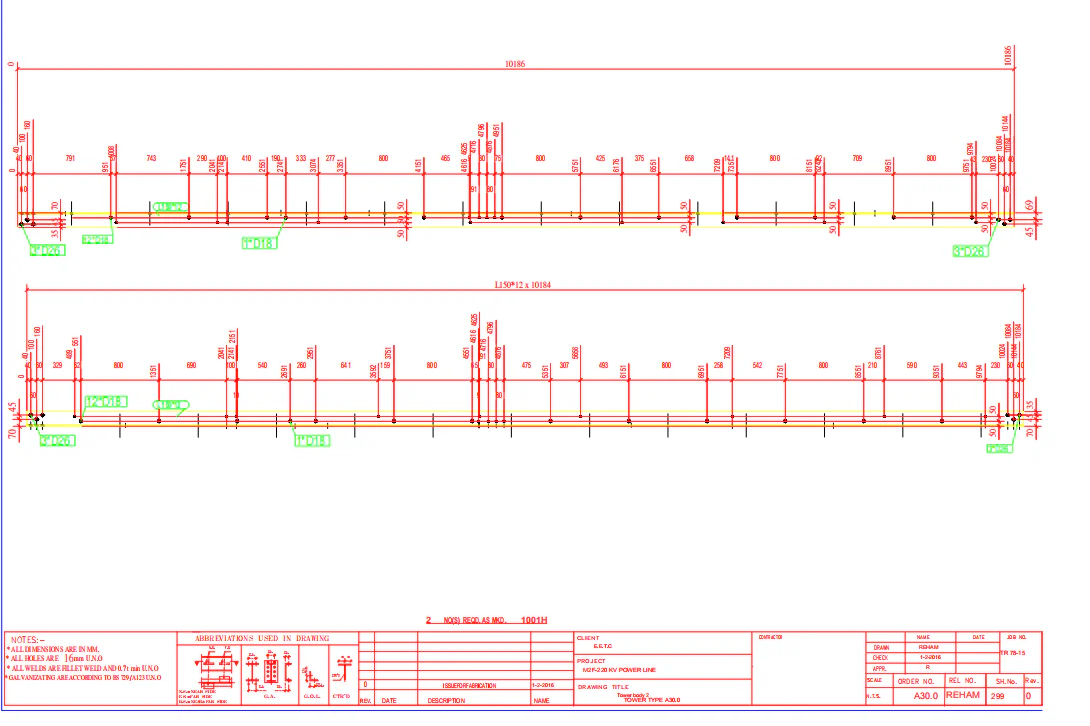 2
2
 3
3
Factory Testing Before Delivery
Before shipment, the line is assembled and tested to the agreed configuration. The point is to verify the major processing functions work as expected before equipment leaves the factory. Testing reduces installation risk and gives one more chance to review the production arrangement before delivery.
Solves: arrives but won't runSupport Beyond Installation
The worst fear: once it is installed, nobody answers. A production line becomes part of your daily manufacturing for years, and questions come up during installation, operator training, maintenance or later production changes. Technical support stays available after delivery to help with operational and maintenance needs as production continues.
Solves: after-sales risk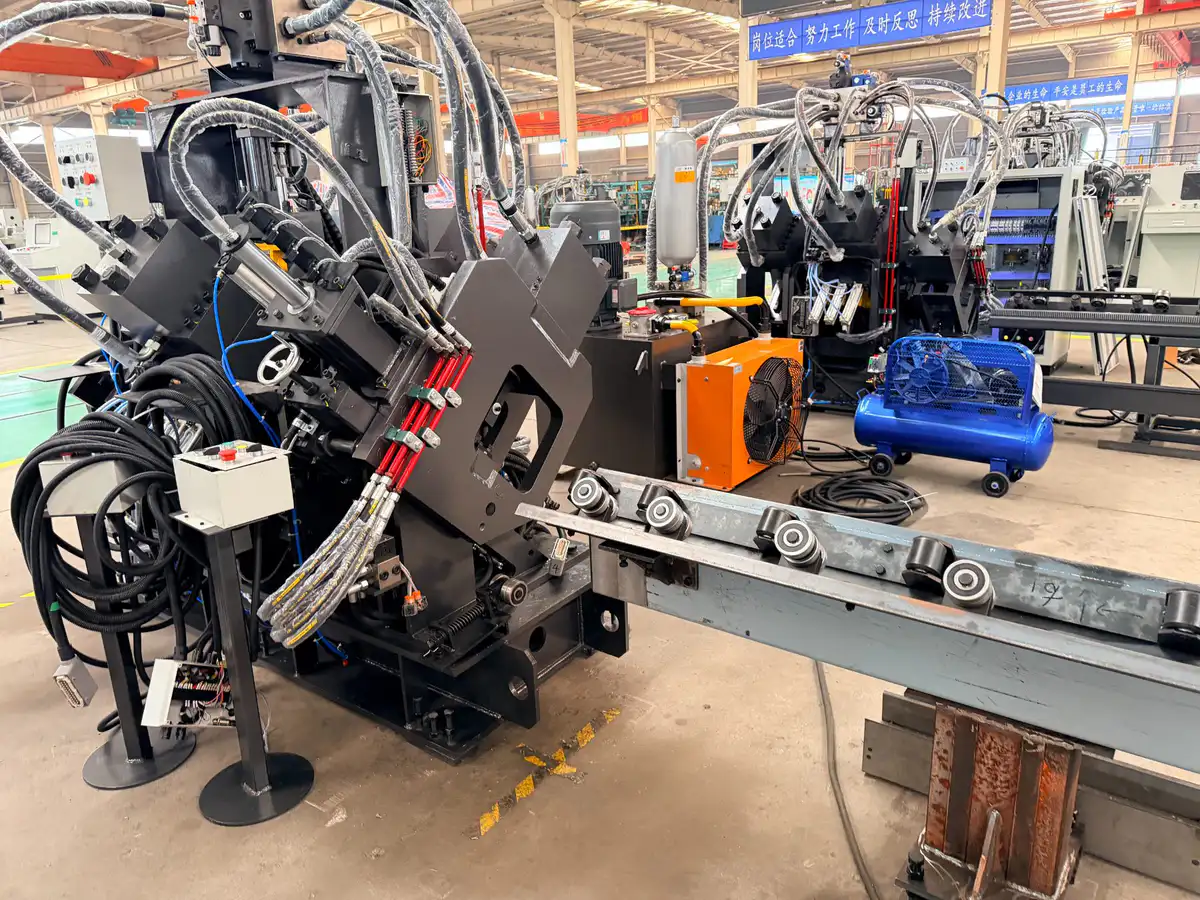 4
4
Experience With Project Production
A lot of flat steel is produced for transmission tower, power fitting and steel structure projects. These applications mean repeated workpieces, multiple drawings and batch production. Understanding how these environments actually run is what makes equipment planning, configuration and long-term operation work in practice, not just a number of years on a banner.
Solves: industry understandingBuilt for Long-Term Operation
Performance matters, but daily operation and maintenance matter just as much, and most factories never mention it. Routine inspection, tooling replacement and production adjustments should stay practical across the whole service life of the line. The goal is stable production not just during commissioning, but through years of operation.
Solves: long-term usabilityProject Cases
Flat steel punching line projects for transmission tower, power fitting and steel structure production.
Swipe to browse all 12 projects
Transmission Tower Project
Flat steel punching line
Power Fitting Production
Punching and marking
Steel Structure Workshop
Connection plate batches
Angle + Flat Combined Line
Multi-profile setup
Substation Components
Batch production
Bracket & Connection Plates
Repeated hole patterns
Export Project, SE Asia
Installation support
High-Volume Flat Bar Run
Continuous production
Marking + Punching Line
Part identification
Custom Drawing Production
Multiple part numbers
Tower Manufacturer Upgrade
Capacity expansion
Multi-Profile Fab Shop
Full system layout
Have a Project Like These?
If your transmission tower, power fitting or steel structure project runs flat steel parts in volume, send us your drawings and typical order mix. We will review them and come back with a line configuration and pricing built around your production, usually within 24 hours.
Installation Support
Installing a flat steel punching line is more than placing equipment inside your workshop. Foundation preparation, utility connections, machine positioning and commissioning all shape how smoothly your production can begin after delivery.
To help cut installation delays, support starts before the equipment even arrives.
Before the Equipment Arrives
Preparation before delivery shortens your installation time and heads off surprises on site. Before shipment, we give you the information to get ready, so work starts efficiently the moment the line arrives. The earlier you prepare, the faster you reach production.
- Equipment layout
- Installation space
- Foundation requirements
- Power supply requirements
- Air supply requirements
- Material flow planning
During Installation
Once the equipment is positioned, installation moves to mechanical assembly, electrical connection, hydraulic systems and operational checks. Support runs throughout to verify each part is set up right. It is not simply moved in and switched on, the goal is a line ready for stable commissioning.
- Equipment positioning
- Electrical connections
- Hydraulic operation
- Feeding movement
- Punching operation
- Shearing operation
- Safety functions
Commissioning and Trial Production
Once installation is done, the line enters commissioning and trial production. Processing functions are checked and adjusted against your agreed configuration. This is the stage that answers your biggest worry, will it actually produce parts, and confirms the line is ready for daily production.
- Feeding accuracy
- Material positioning
- Hole location consistency
- Marking operation
- Punching performance
- Cutting operation
Flexible Support Options
Different projects need different levels of installation support. Depending on your requirements, support can take several forms, and we match the approach to your location, schedule and production, built around the real situation of overseas buyers rather than a one-size-fits-all promise.
- Remote installation guidance
- Video-based troubleshooting
- Technical documentation
- Online commissioning assistance
- On-site support arrangements
Installation Is Part of the Project
A successful installation is not only about assembling equipment. It is about preparing your workshop, completing commissioning and helping production begin as planned, which is why we treat installation support as part of the overall project, not a separate step after delivery.
Operator Training
Your line delivers its best results when operators understand both the equipment and the production process. Training covers daily operation, routine maintenance and common production tasks, so your team is familiar with the line before regular production begins.
Swipe through the 5 training modules
Line Operation
Operators are guided through the main functions, feeding, positioning, punching, marking and cutting, so your team understands the full process from raw stock to finished part.
- 01System startup and shutdown
- 02Program selection
- 03Production workflow
- 04Material handling procedures
- 05Daily operating checks
Program and Drawing Management
Your projects involve different parts with different hole layouts and dimensions. Training covers program management and drawing-based production, so operators switch between parts efficiently.
- 01Program loading
- 02Drawing verification
- 03Part selection
- 04Production sequence planning
- 05Job change procedures
Daily Maintenance
Routine maintenance keeps your line performing over the long run. Training walks operators through the checks that support stable operation and cut unnecessary downtime.
- 01Lubrication checks
- 02Tool inspection
- 03Wear part replacement
- 04Hydraulic system checks
- 05Electrical inspection points
- 06Cleaning procedures
Basic Troubleshooting
Your operators are first to notice changes during production. Training covers basic troubleshooting for common situations, so you resume faster when minor issues come up instead of waiting on the factory.
- 01Sensor checks
- 02Material positioning issues
- 03Tool wear inspection
- 04Alarm response procedures
- 05Basic fault identification
Supporting New Operators
As your production team changes over time, new operators may need to learn the line after installation. Training materials, operating procedures and technical support shorten that learning curve.
The result: consistent production standards across different shifts and personnel changes, not knowledge that walks out the door with one experienced operator.
Want Your Team Production-Ready From Day One?
Training is built around your line, your drawings and your operators, not a generic manual. Tell us about your team and production plan, and we will put together a training approach that gets your people running and maintaining the line with confidence.
Long-Term Production Support
Buying a flat steel punching line is only the start of the project. The equipment becomes part of your daily production for years, processing different orders, drawings and changing requirements over time.
That is why support continues long after installation, commissioning and operator training are done.
When Production Cannot Wait
Your production schedule is tied to project delivery. When a machine stops unexpectedly, the impact reaches well beyond the equipment, hitting production plans, delivery schedules and downstream operations.
When you need support, the goal is to find the cause fast and get you producing again. Photos, videos, operating information and machine records all help speed up troubleshooting and communication.
Support Throughout the Lifecycle
Your production requirements rarely stay fixed. A line that starts with one product range may later run different part sizes, hole layouts or new project requirements.
As your production evolves, support can extend to process adjustments, production discussions and configuration recommendations for new applications, keeping the equipment useful as your needs change.
Spare Parts and Wear Components
Every production line has components that need periodic replacement during normal operation. Planning ahead for wear parts and critical spares reduces unexpected downtime and simplifies your maintenance planning.
Support can include spare parts recommendations, replacement guidance and technical assistance for your maintenance activities.
Supporting New Production Teams
Your production team may change over the years. New operators, maintenance staff and supervisors often need to learn equipment that was installed long before they joined.
Technical documents, operating information and production support help maintain continuity through personnel changes, so standards hold across shifts and teams.
A Long-Term Partnership
After-sales support is not just about solving the occasional technical issue. It is about keeping your equipment productive, supporting changing requirements and backing your factory across the full operating life of the line, from the first production run to future expansion.
Frequently Asked Questions
Common questions on configuration, processing range, capacity and what to send for an accurate quote. Still unsure? Send your drawings and we will review them with you.
How do I know if this line is suitable for my flat steel parts?
The most reliable way is to review your part drawings and material specifications.
Flat steel width, thickness, hole diameter, hole layout, part length and production quantity all influence the final configuration. A drawing review confirms whether the line matches your actual processing requirements.
Can the same line process different flat steel parts?
Yes. Many projects include multiple flat steel parts with different dimensions, lengths and hole patterns.
The line processes different workpieces according to production programs and project requirements, as long as they fall within the configured processing range.
What information is needed before discussing a configuration?
The following usually helps: flat steel width and thickness, material grade, part drawings, hole diameter and layout, part length, marking requirements, and expected production quantity.
The more complete your information, the easier it is to evaluate a suitable configuration.
What affects the final line configuration?
Several factors: material size, material strength, hole diameter, production volume, marking requirements and workshop conditions.
Two factories producing similar parts may still need different configurations depending on their production plans.
Can future production requirements be considered during configuration?
Yes. Some factories plan to process additional part types or expand capacity later.
These requirements can be discussed during the evaluation stage and considered when reviewing the overall line arrangement.
How are projects with many different drawings handled?
Projects with multiple drawings are common in transmission tower, power fitting and steel structure production.
During configuration discussions, drawing quantity, part variation and production planning are reviewed to help organize your processing requirements more efficiently.
Is material condition important?
Yes. Material straightness, dimensional consistency and general condition can affect feeding stability and positioning performance.
That is why material specifications and condition are usually reviewed during project evaluation.
Does production capacity depend only on machine speed?
No. Actual output is influenced by material size, hole quantity, hole diameter, part length, marking requirements, production organization and material handling methods.
Capacity is best evaluated against your actual workpieces, not a single speed value.
What if I am not sure which configuration is needed?
That is a common situation. Many projects begin with drawings and production targets rather than a predefined machine model.
By reviewing your material specifications, drawings and production requirements, we can discuss a suitable configuration before any equipment decisions are made.
Can this line be evaluated with channel steel or angle steel requirements?
Yes. If your project involves multiple profile types, the processing requirements can be reviewed together.
Depending on materials, production volume and workshop conditions, we may be able to discuss a broader processing solution alongside flat steel production.
Henry
Sales & Project Contact, RITEC
Hi, I'm Henry. If you're producing flat steel parts for transmission tower, power fitting or steel structure projects, I'll help you figure out the right line, configured around your drawings, not a fixed model.
Send me your part drawings, material specs and typical order mix. I'll review them personally and come back with a line configuration and pricing, usually within 24 hours. No pressure, just a clear answer to whether this line fits your production.
Get a Line Configuration
Tell us about your flat steel parts and we'll send back a configuration and quote.