China Roll Forming Machine Factory
Custom roll forming lines built around your profile drawing, coil material, thickness, punching layout, cutting length and production target.
Send us your profile drawing, and our factory team helps you check the forming process, tooling plan, line configuration and sample testing before production starts.
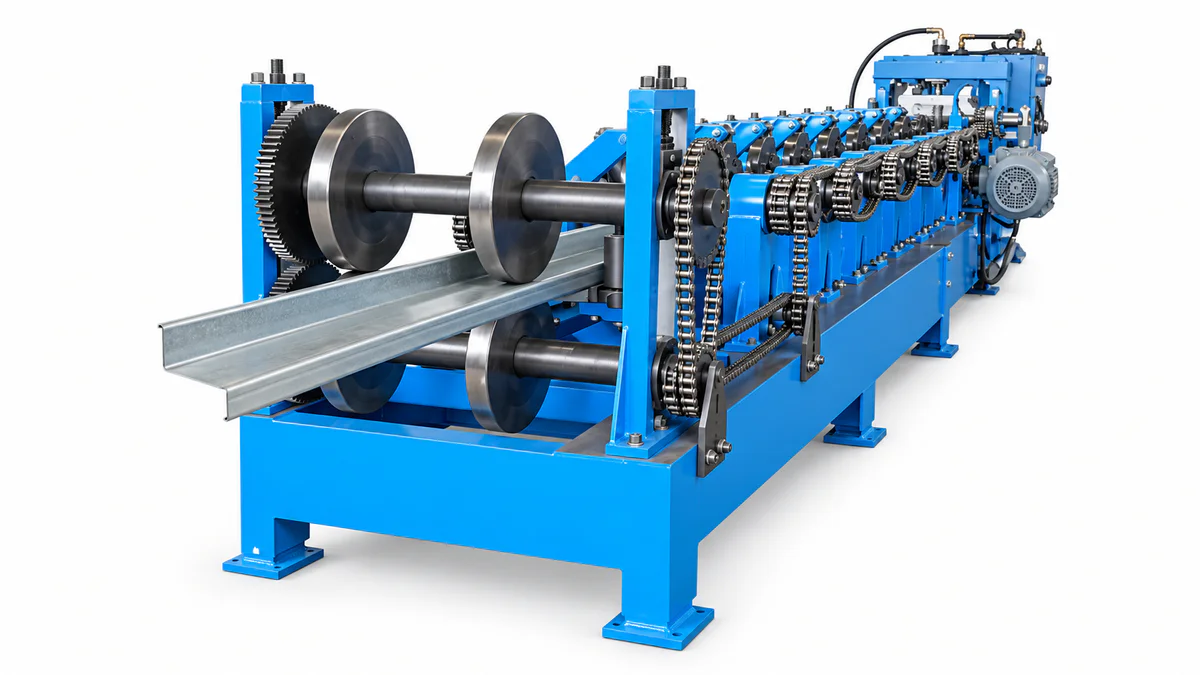
Explore Your Line
Jump straight to what matters for your custom line, from profile types and feasibility through tooling, punching, testing, and the final checks before your machine ships.
Profile Types
See the open and closed profiles your line can roll form.
Feasibility Review
We check your section forms cleanly before any tooling.
Roll Tooling Design
Roller stations and forming passes built for your shape.
Punching & Cutting
Hole pattern and cut length matched to your part.
Material Requirements
Coil type, thickness and width your line will handle.
Changeover Range
Run several profile sizes and widths on one line.
Shipment Testing
We trial your parts and tune the line before it ships.
Why Our Factory
Years of building custom forming lines worldwide.
FAQ
Lead time, payment, shipping, and sending drawings.
Send Cutting Requirements
Send your profile and cutting list, get a line config in 24h →
Choose Your Profile Type
Different profiles need different roll tooling, punching methods, cutting systems and line layouts. Pick the profile family you want to produce, and our factory team helps you match the right roll forming machine configuration.
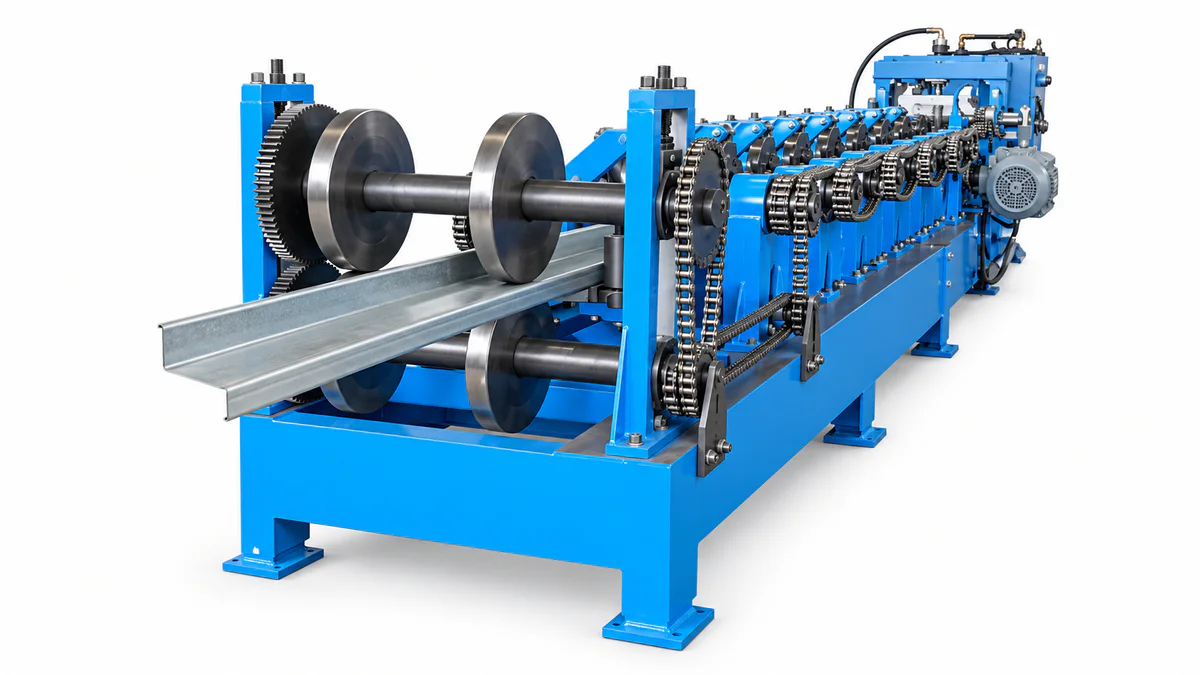
C & Z Purlin Profiles
Produce C purlins, Z purlins and C/Z interchangeable purlins for steel structures, warehouses, workshops and roofing systems.
Add automatic size adjustment, online punching, hydraulic cutting and quick C/Z changeover, with hole layouts from your drawings.
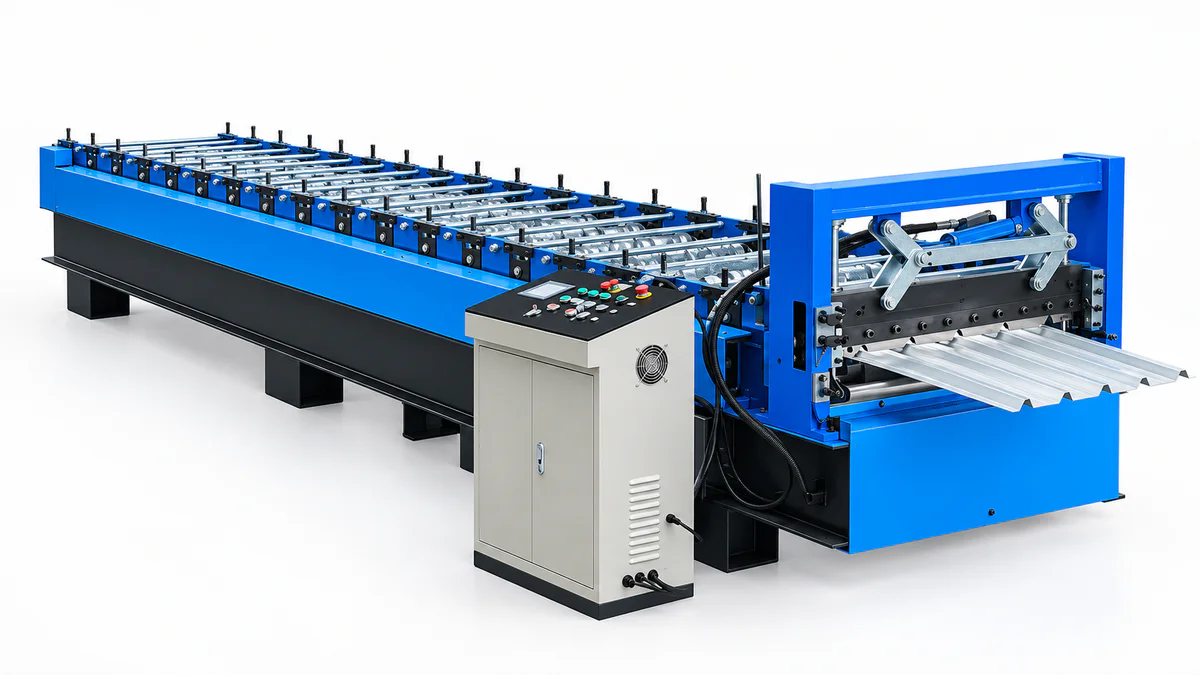
Roof & Wall Panel Profiles
Run metal roofing sheets, wall cladding panels, corrugated sheets, standing seam and decorative building panels.
We configure the line to your coil width, panel shape, rib height, surface coating, cutting length and target production speed.
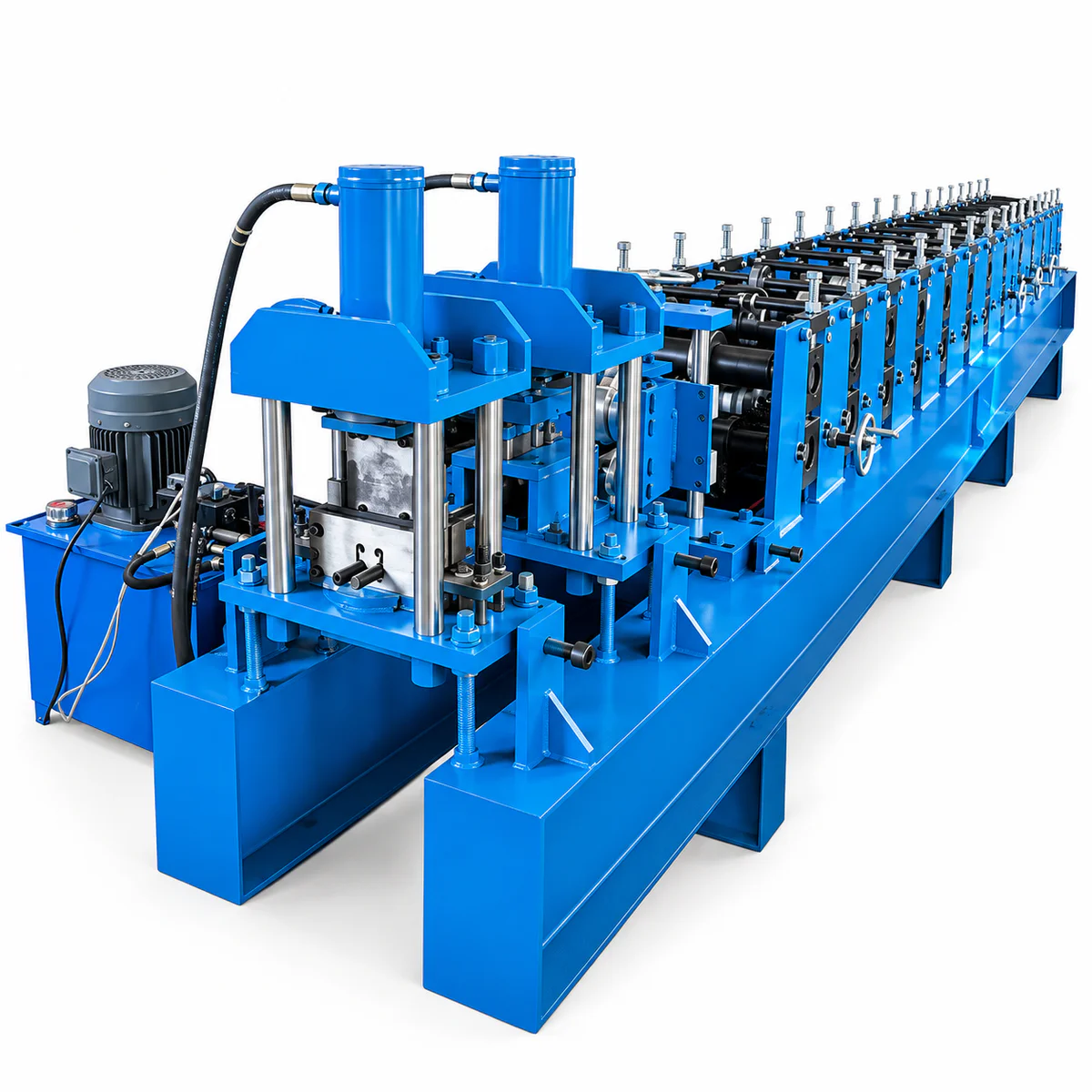
Solar & Energy Profiles
Form solar mounting rails, PV brackets, strut channels, battery rack profiles, cable supports and energy storage frame sections.
Need multiple holes, slots or assembly positions? We plan punching, forming and cutting in one continuous line.
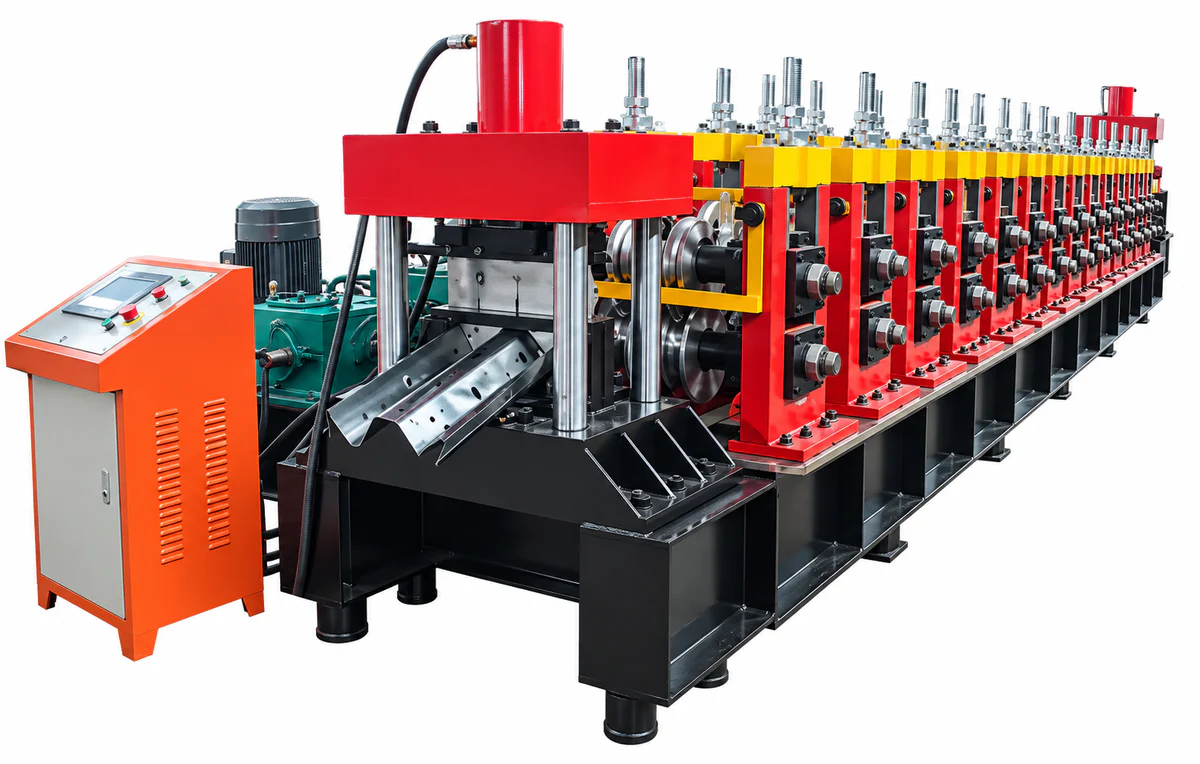
Highway Guardrail Profiles
Make W beam guardrails, thrie beam guardrails, posts, spacer blocks and road safety barrier components.
Built for heavy-gauge material, accurate hole positioning, stable wave forming and clean cutting for infrastructure production.
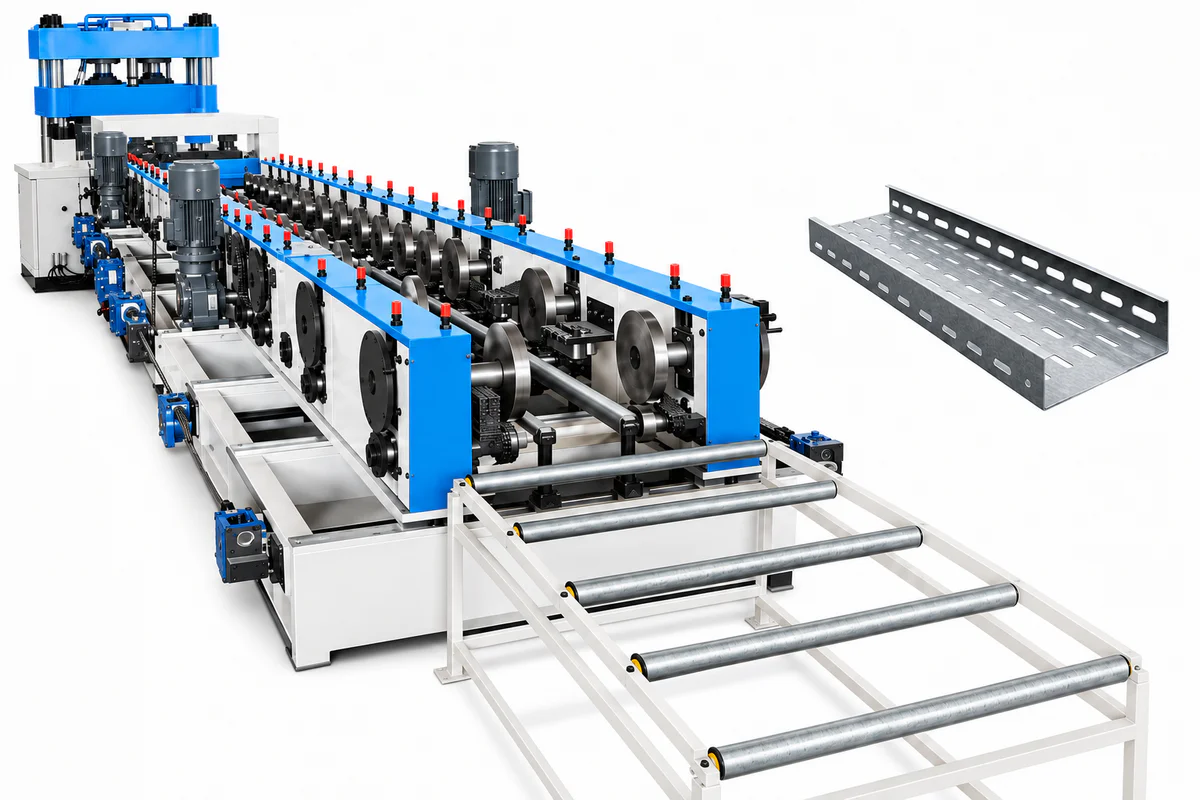
Cable Tray & Electrical Profiles
Produce cable trays, ladder trays, electrical channels, cabinet frame profiles and power distribution support sections.
We add punching, embossing, bending, forming and cutting to match your tray width, side height, hole pattern and load requirement.
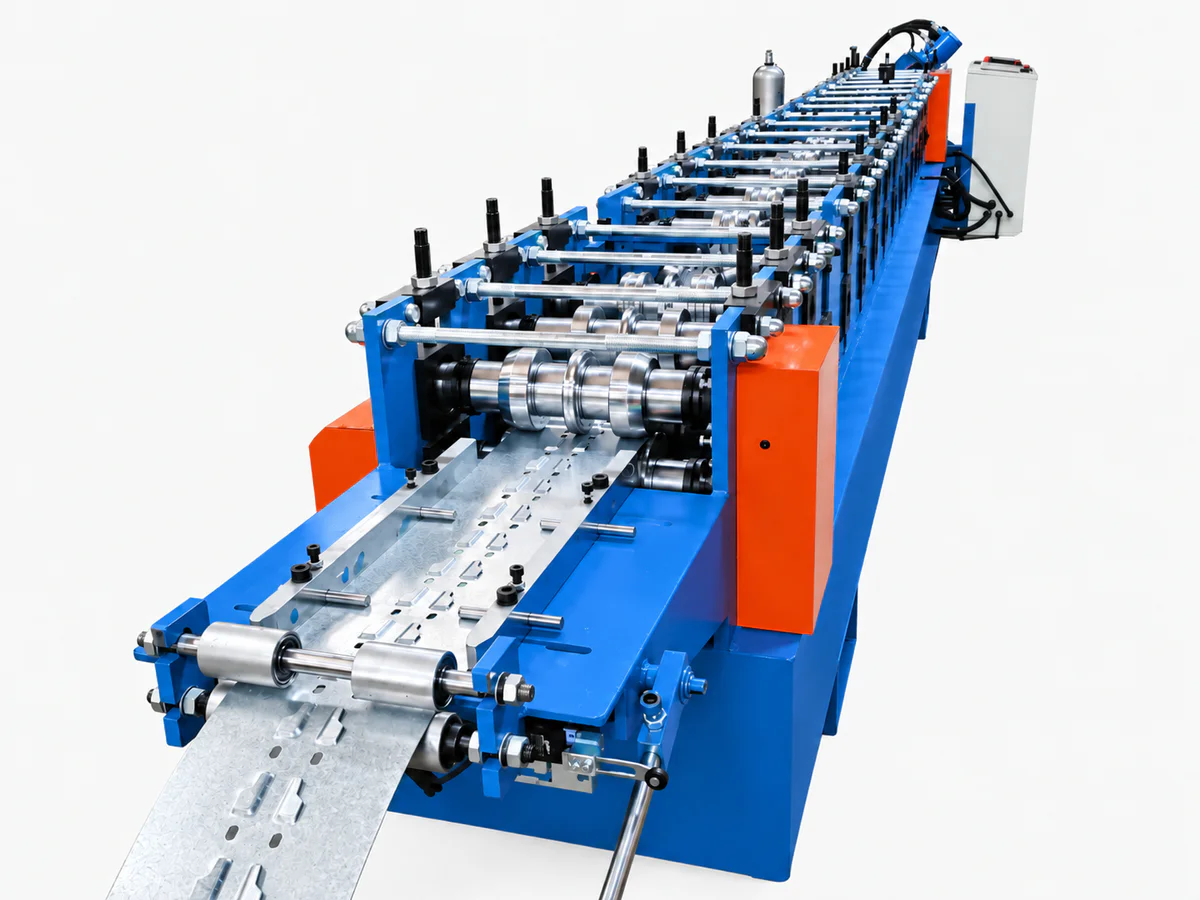
Storage Rack Profiles
Form rack uprights, shelf beams, pallet rack profiles, warehouse shelving and logistics support sections.
These profiles need accurate punching and repeatable dimensions, so the line matches your hole pitch, thickness and changeover needs.
Automotive Profiles
Form bumper beams, seat rails, roof rails, reinforcement profiles, battery tray sections and other automotive metal profiles.
Careful profile review, tooling design, material confirmation and sample testing keep your dimensions stable and consistent.
Custom Industrial Profiles
Machinery frames, door frames, appliance profiles, elevator components, HVAC sections and more. Send your drawing, material, thickness, hole layout and cutting length, and we check if it suits roll forming and suggest a practical line.
Not sure which line fits your profile?
Send your profile drawing, material type, thickness, hole layout and cutting length. We help you check the forming process and suggest the right machine configuration.
Profile Feasibility Review
Before we recommend a roll forming machine, we review your profile drawing, material, thickness, hole layout, cutting length and tolerance. It keeps you from choosing a line that looks workable on paper but creates problems in production.
We Start From Your Drawing
Your drawing shows the section shape, bending angles, flange and lip size, hole position and final length. We check these first, so the forming process is planned around the product you need.
Check If the Profile Fits Roll Forming
Not every metal profile suits continuous roll forming. We review shape, bending radius, material strength and open dimensions to see whether your section forms smoothly and consistently.
Confirm Material and Thickness
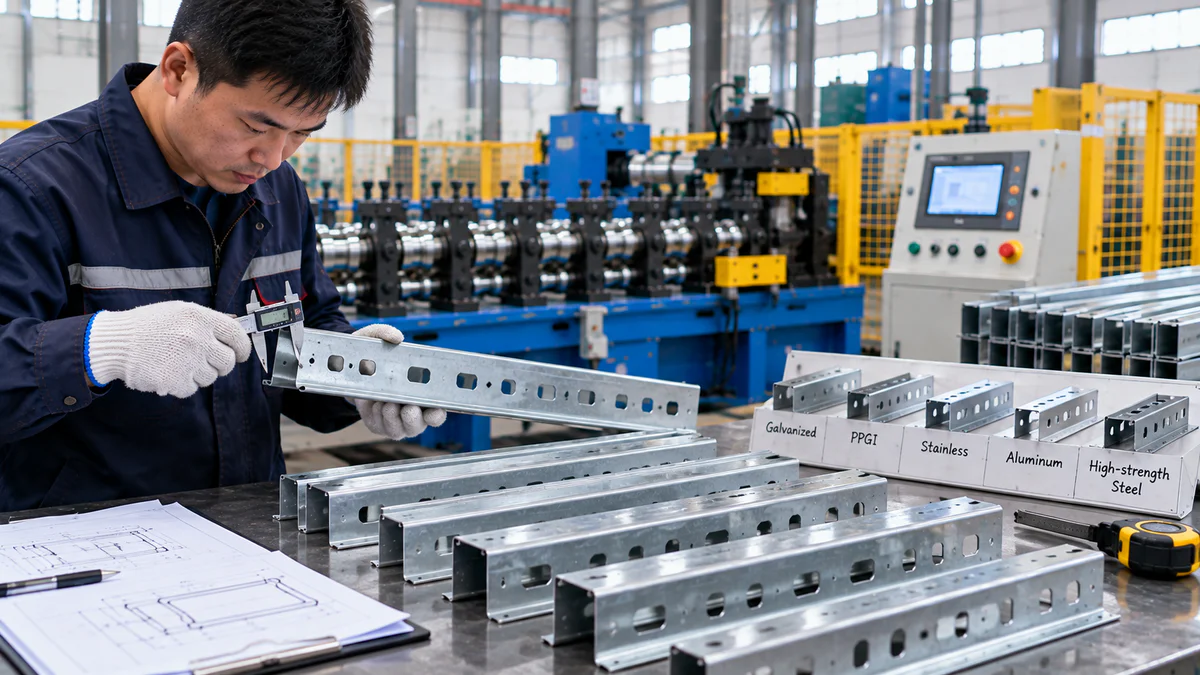
Material and thickness drive the machine frame, roll tooling, shaft size, drive system, punching force and cutting method. Galvanized, PPGI, stainless, aluminum and high-strength steel can each need a different line design.
Review Holes, Slots and Cutouts
If your profile has holes, slots, notches or installation points, we check whether they go before forming, after forming or through an integrated punching system, so hole accuracy and assembly fit stay protected.
Match Cutting Method to Your Profile
Different profiles need different cutting. Some run stop cutting, others need flying cutting, post-cutting or custom cutting dies to reduce deformation and keep the finished section clean.
Identify Possible Forming Risks
We look for twisting, bowing, springback, surface scratching, end flare, hole distortion and cutting deformation. Catching these early improves the line design before manufacturing starts.
Prepare a Practical Line Proposal
Once your profile is reviewed, we suggest the machine structure, forming stations, tooling plan, punching system, cutting method, control system and production speed range for your project.
Send your drawing for a free feasibility review
Share your profile drawing, material, thickness, hole layout and cutting length. Our factory team checks the forming process and replies with a practical line configuration, usually within 24 hours.
Roll Tooling Design
Roll tooling is the core of a roll forming line. A good tooling design forms your profile step by step, reduces forming stress, protects the material surface and keeps the finished section stable through continuous production.
Designed Around Your Profile Shape
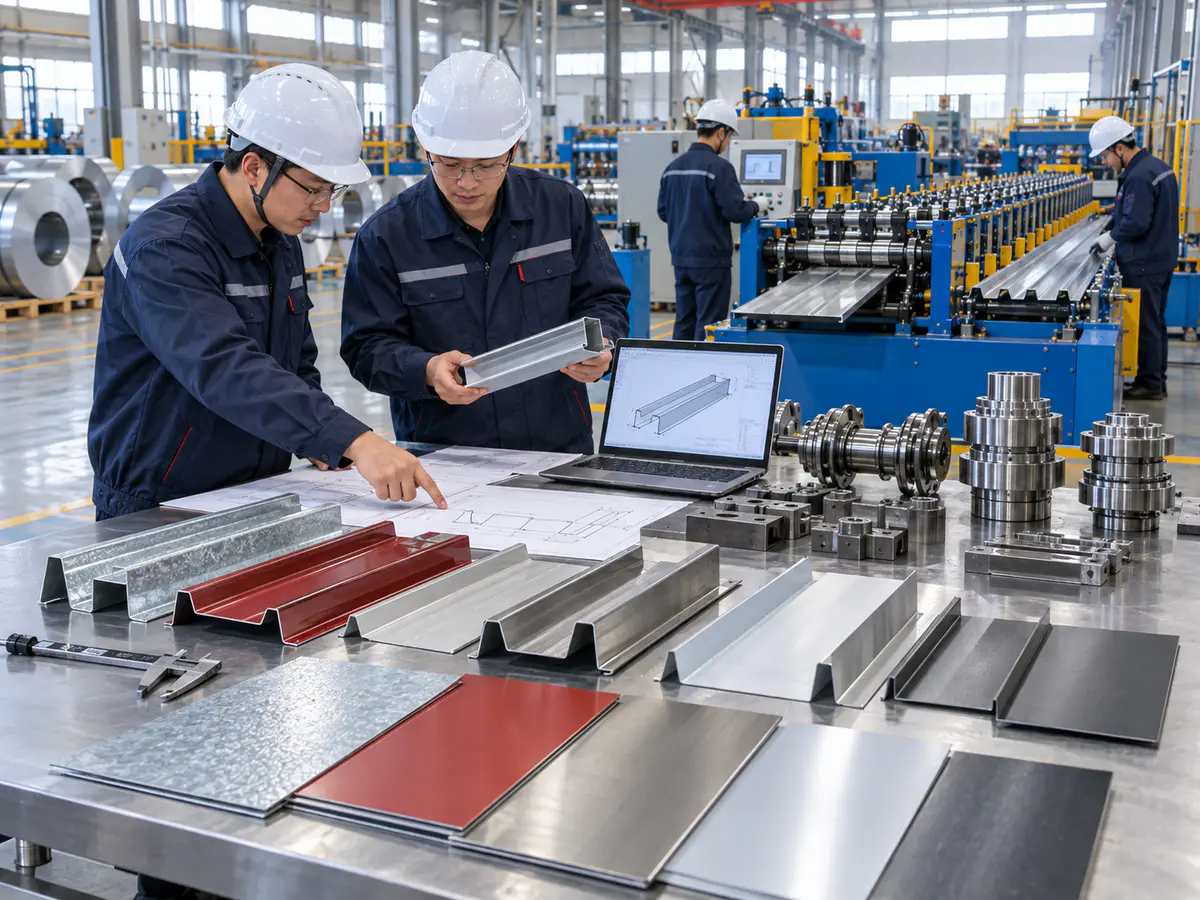
Every tooling plan starts from your drawing. We review section width, height, lips, flanges, bending angles, radius, holes and open dimensions before designing the forming sequence.
Roll Pass Design for Stable Forming
The profile is shaped gradually through multiple forming stations, not in one step. A proper roll pass design controls material flow, reduces stress concentration and improves dimensional consistency.
Forming Stations Matched to Material
Thickness, yield strength and profile complexity drive the station count. Heavy-gauge steel, high-strength steel, deep sections and complex profiles usually need a stronger structure and more careful forming arrangement.
Springback and Twist Control
Springback, bowing and twisting are common risks, especially with high-strength steel, asymmetric profiles and profiles with many holes. Tooling design accounts for forming balance, roller pressure, guide position and adjustment space.
Surface Protection for Coated Materials
For galvanized steel, PPGI, aluminum, stainless and decorative surfaces, tooling contact is controlled carefully. Roller design and line adjustment reduce scratches, pressure marks and coating damage during production.
Tooling Accuracy and Adjustment
Roller machining accuracy, shaft alignment, spacer control and station adjustment all shape the final profile. A practical design makes installation, testing and later adjustment easier for your operators.
Prepared for Production Testing
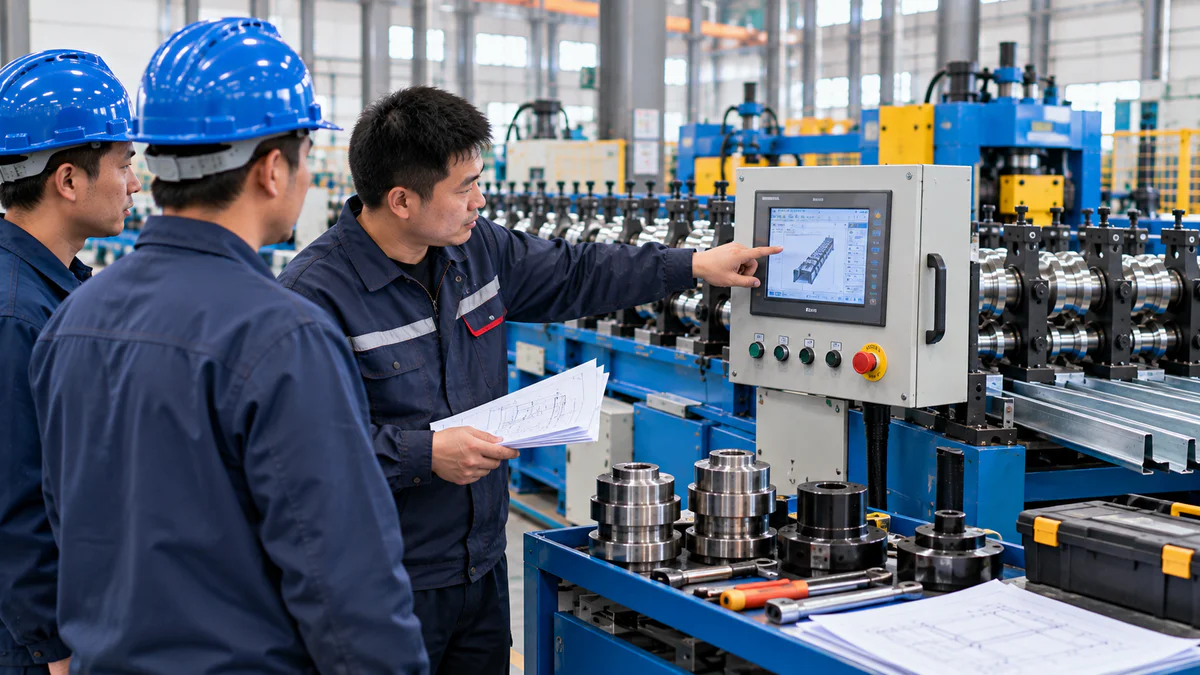
Once tooling is installed, we test the line with your agreed profile, checking size, straightness, visible twisting, surface condition, hole position and cutting result before shipment.
Punching, Cutting & Line Integration
A roll forming line often needs more than forming rollers. For many profiles, punching, notching, embossing, cutting and stacking have to work together with forming. We plan the line layout around your drawing, hole pattern, cutting length and production speed.
Punching Before or After Forming
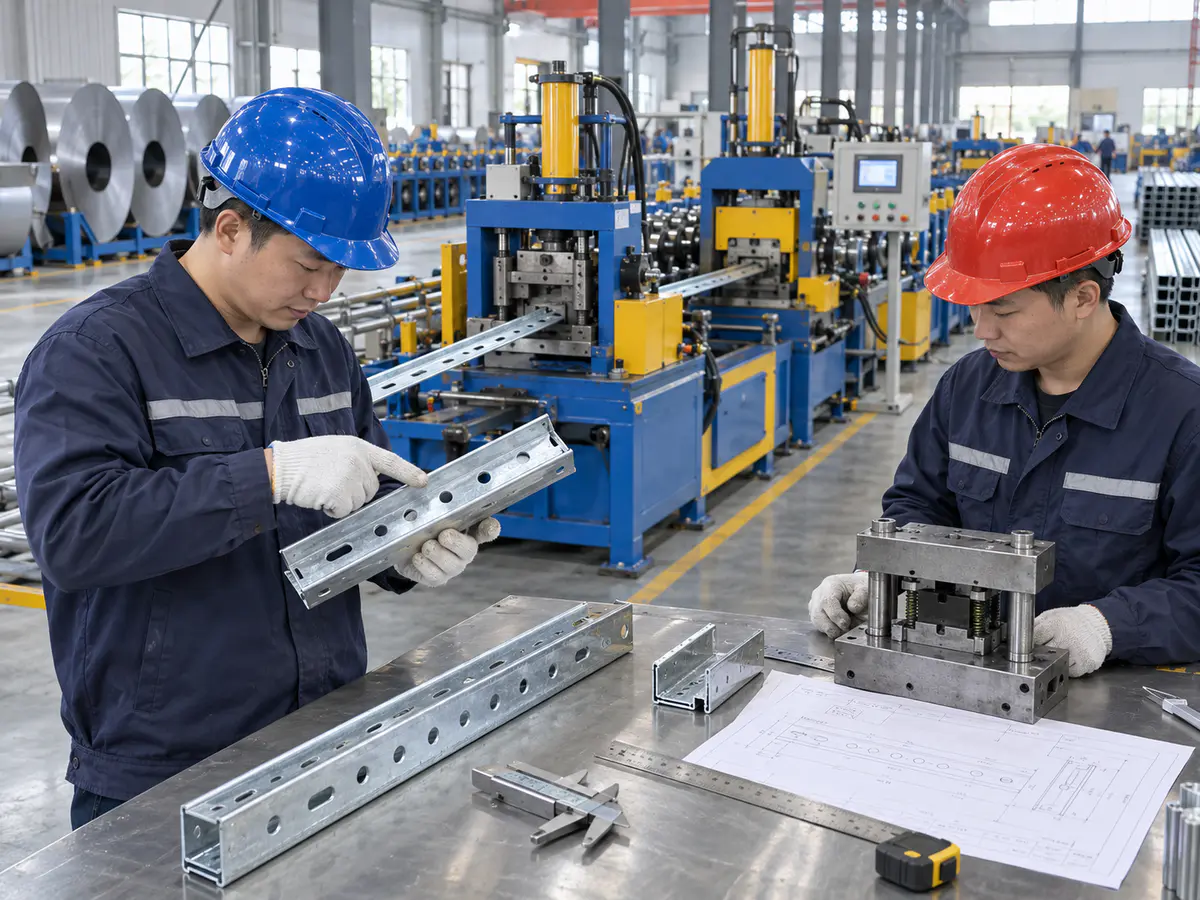
Some profiles need holes before forming, others after the shape is formed. The right choice depends on hole position, thickness, profile shape, tolerance and final assembly use.
Accurate Hole Positioning
For solar brackets, cable trays, guardrails, rack uprights and C/Z purlins, hole accuracy drives installation fit. We configure servo feeding, hydraulic punching, multi-hole dies or custom stations to your drawing.
Cutting Method Selection
Different profiles need different cutting. Stop cutting, flying cutting, post-cutting and profile cutting dies are selected by shape, thickness, speed and acceptable cutting deformation.
Reduce End Deformation
Cutting can affect the profile end, especially on closed, deep, heavy-gauge or high-strength sections. We review shape and cutting position to reduce end flare, burrs, collapse and visible deformation.
Integrated Line Control
Punching, forming and cutting need stable coordination. The control system manages feeding length, punching position, cutting length, batch quantity and production data, so operators run the line with fewer manual adjustments.
Custom Dies for Your Product
Punching and cutting dies match your drawing. Hole size, slot shape, pitch, edge distance, profile width and material strength are all reviewed before die design.
One continuous line, built from the modules you need
Depending on your product, the line can combine any of these stages into a single continuous flow. Tell us your profile and output target, and we plan the right module sequence for you.
Material & Coil Requirements
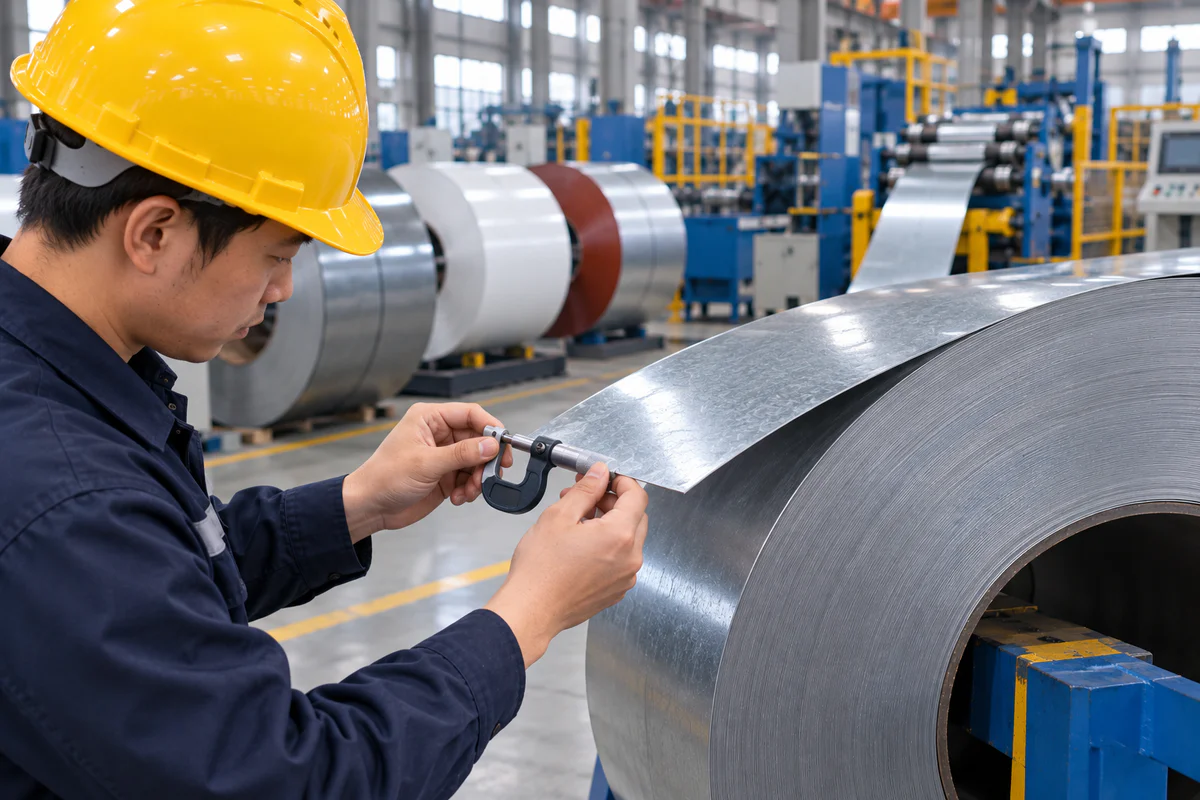
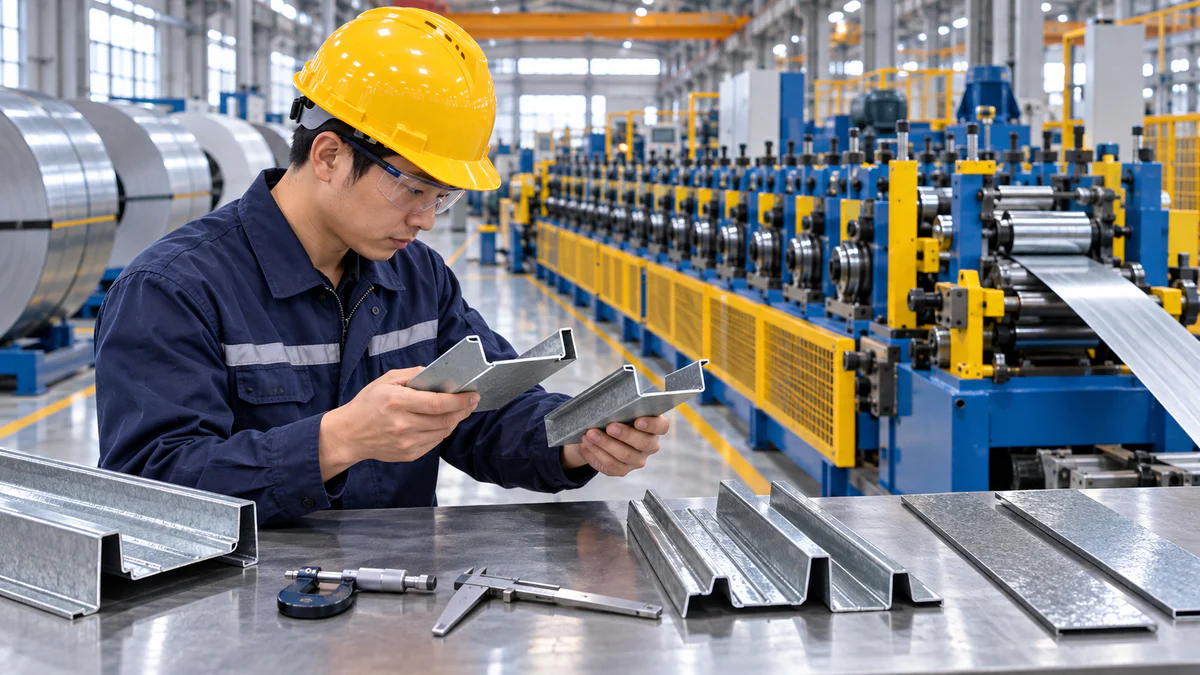
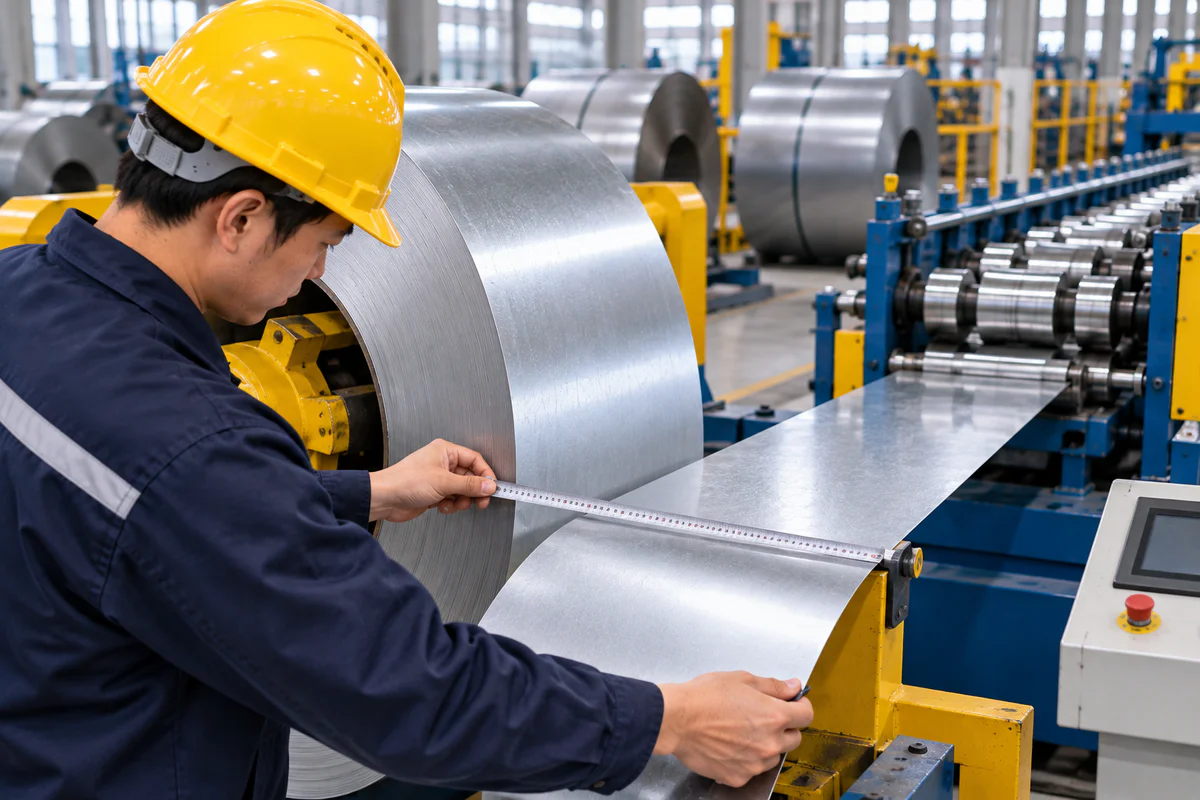
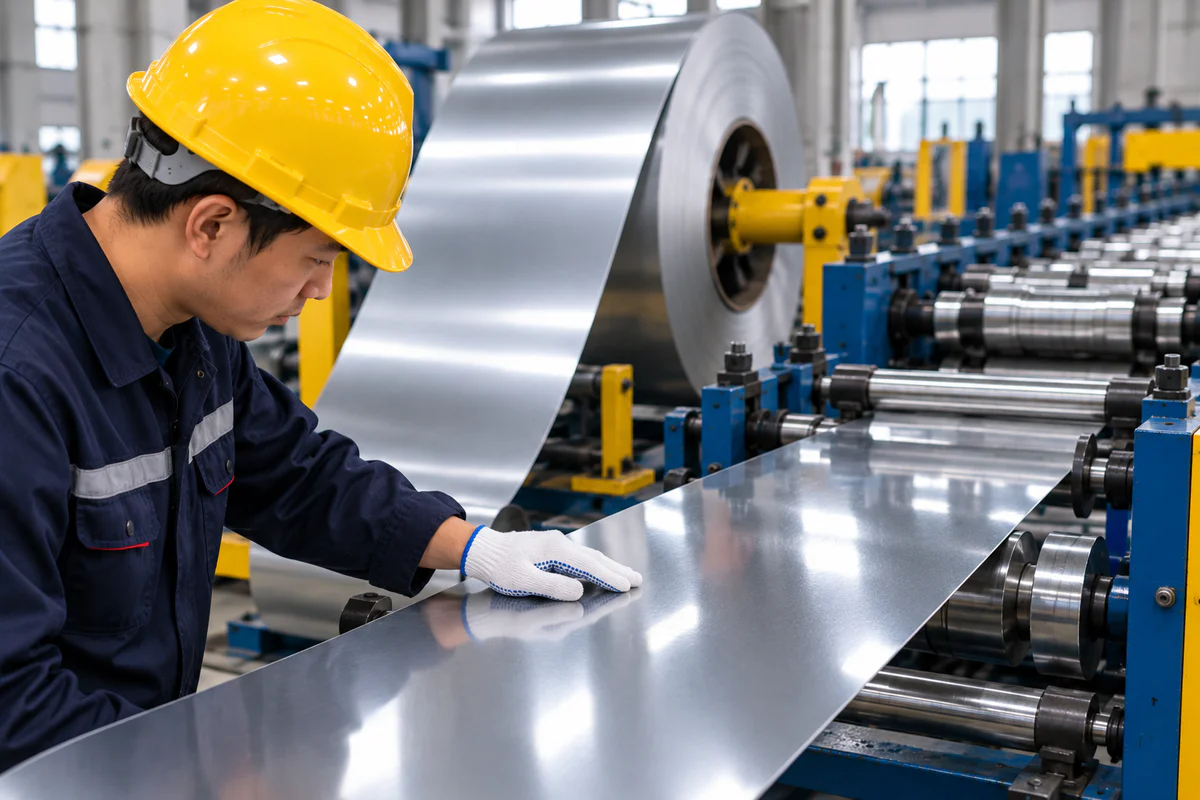
The same profile can need a different line design once the material changes. Before we recommend a machine, we confirm your coil material, thickness, strength, width, surface finish and production target, so you get a line built around your product, not a general machine.
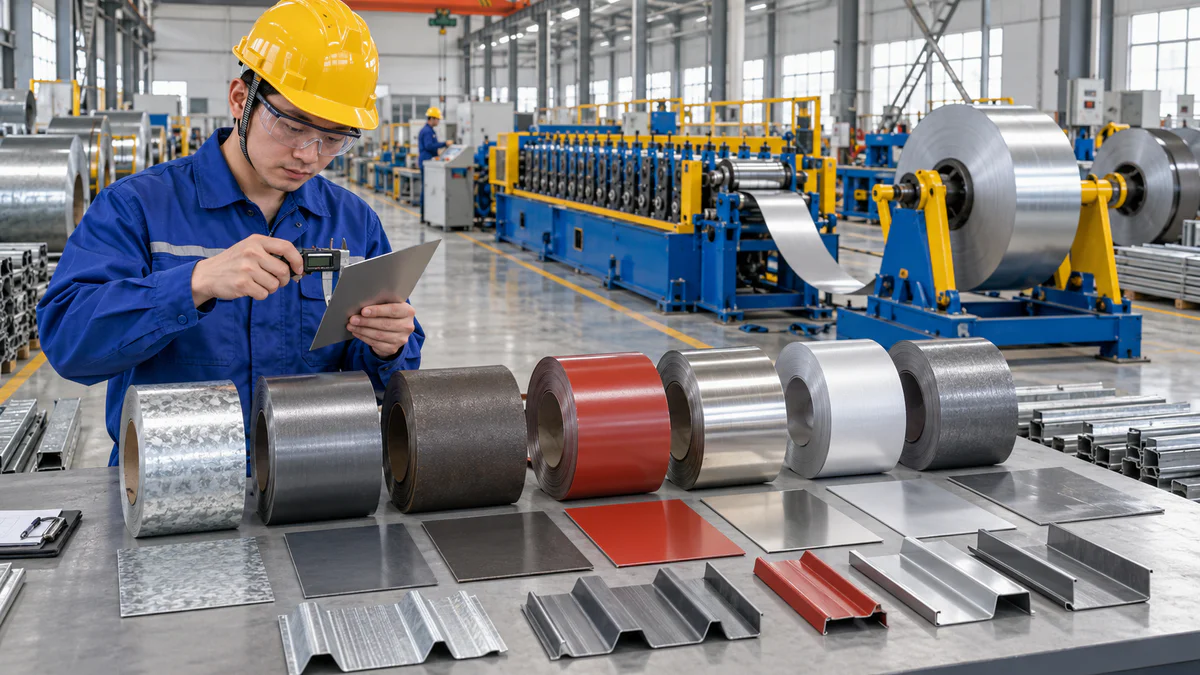
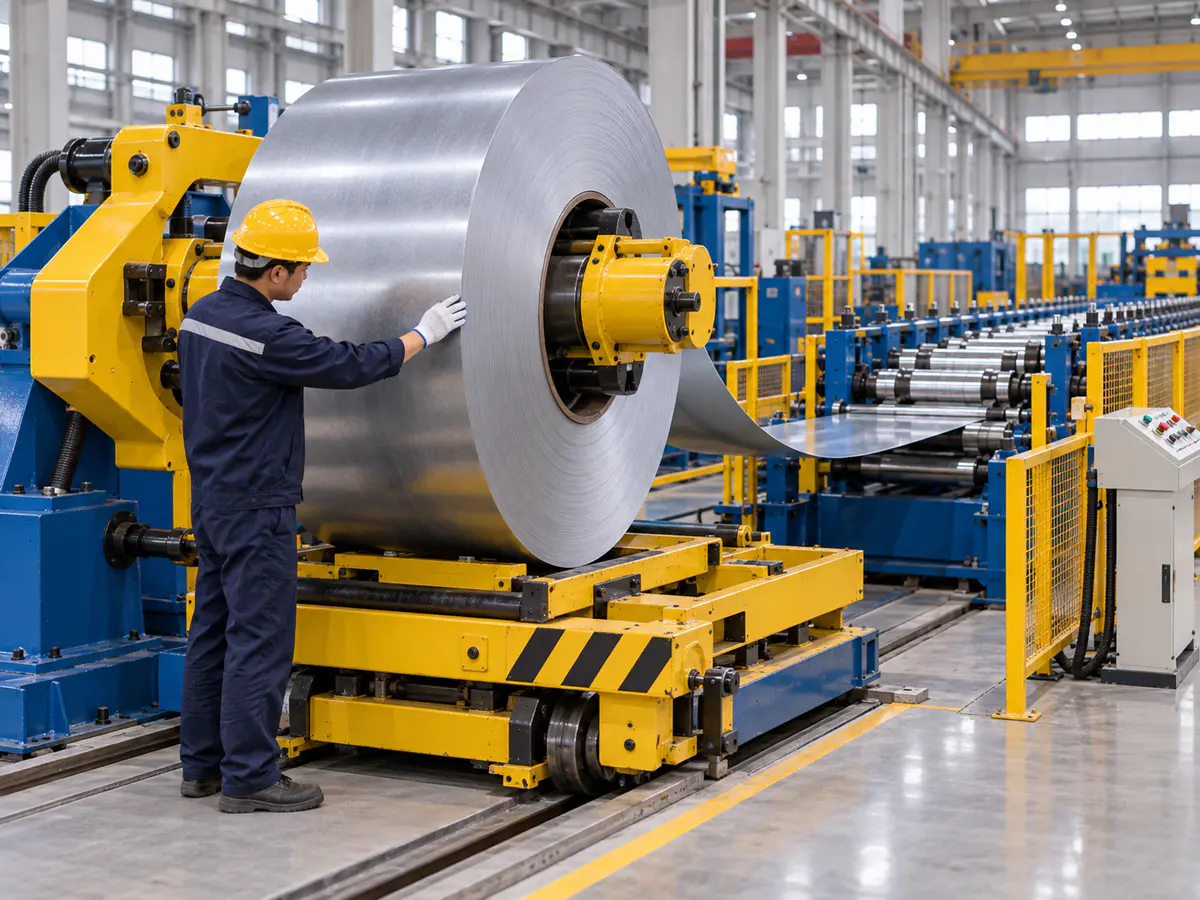
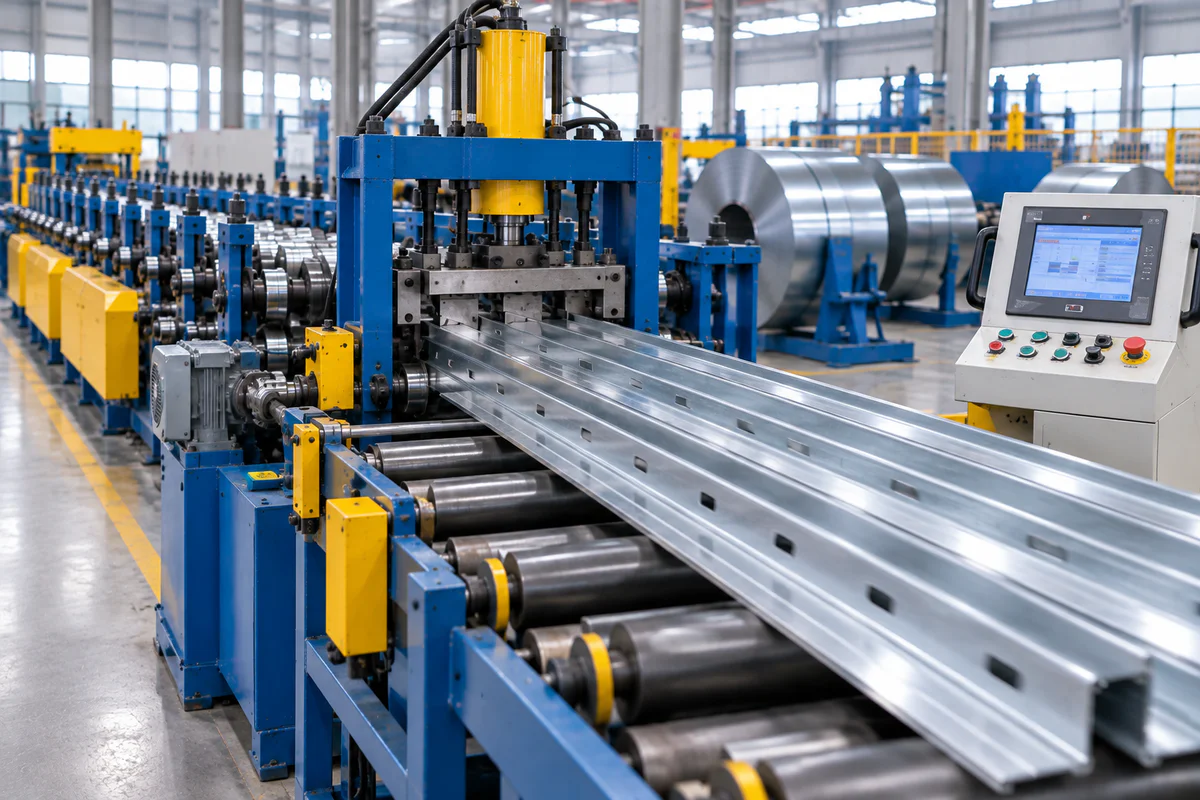
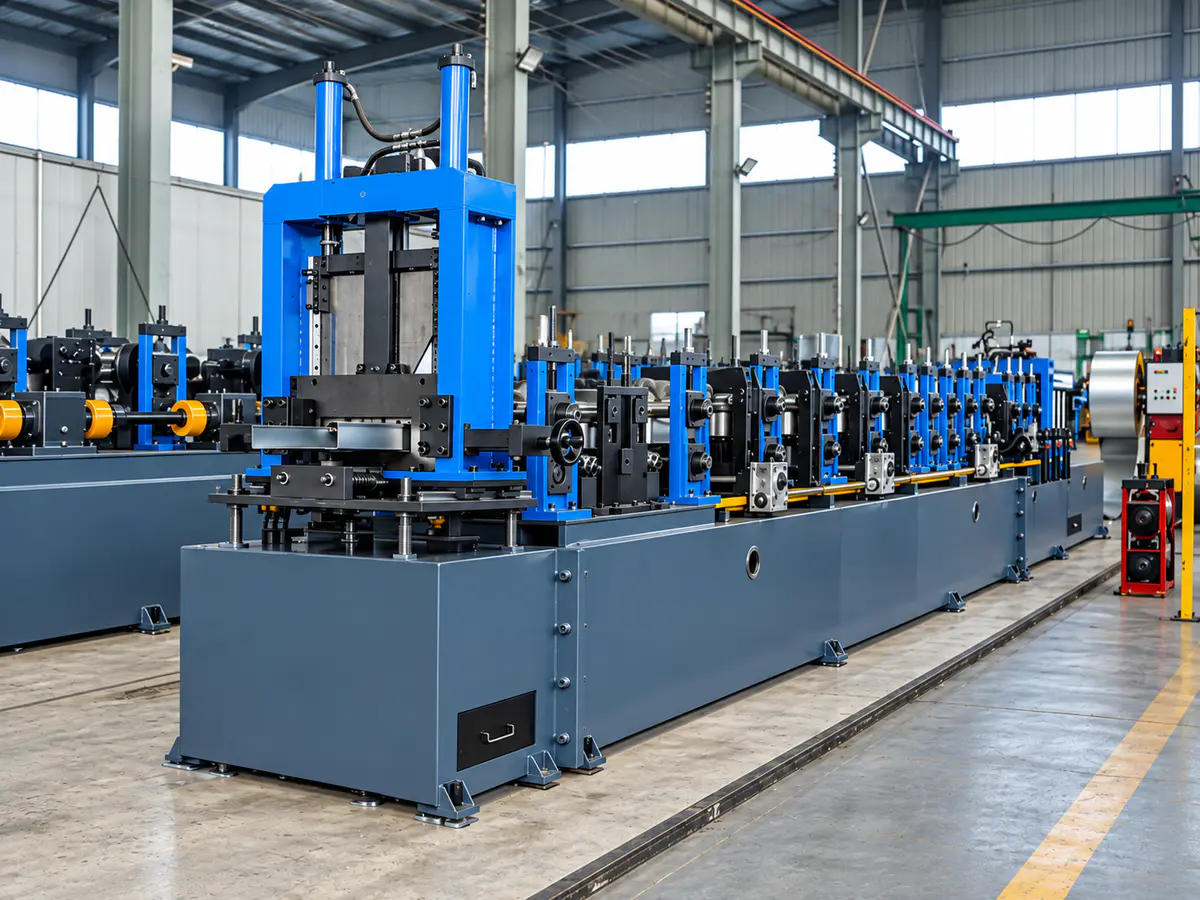
Information We Need for Material Review
Send these details and we check your material against the right line design, then come back with a practical configuration. Missing some? Send what you have and we'll guide the rest.
Changeover & Product Range
If you need different sizes or similar profile families, the line should be planned before manufacturing starts. We review your product range, size list, hole patterns, thickness and production plan to help you choose a practical changeover solution.
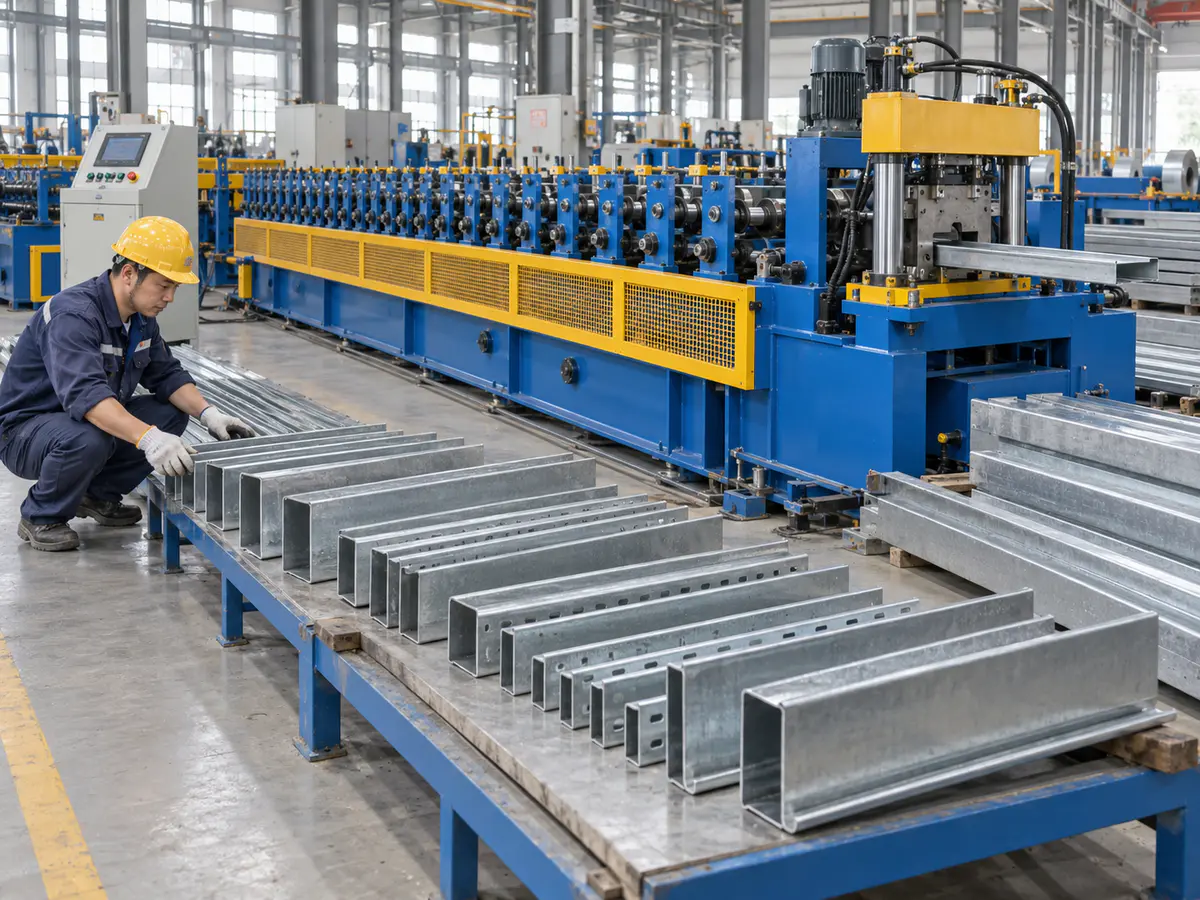
One Line, Multiple Sizes
Some profile families share one line when the section shape is similar and the size range is planned correctly. You reduce investment, save factory space and handle different project orders on one production system.
Common examples: C/Z purlins, solar mounting rails, strut channels, rack uprights, cable trays and some custom industrial profiles.
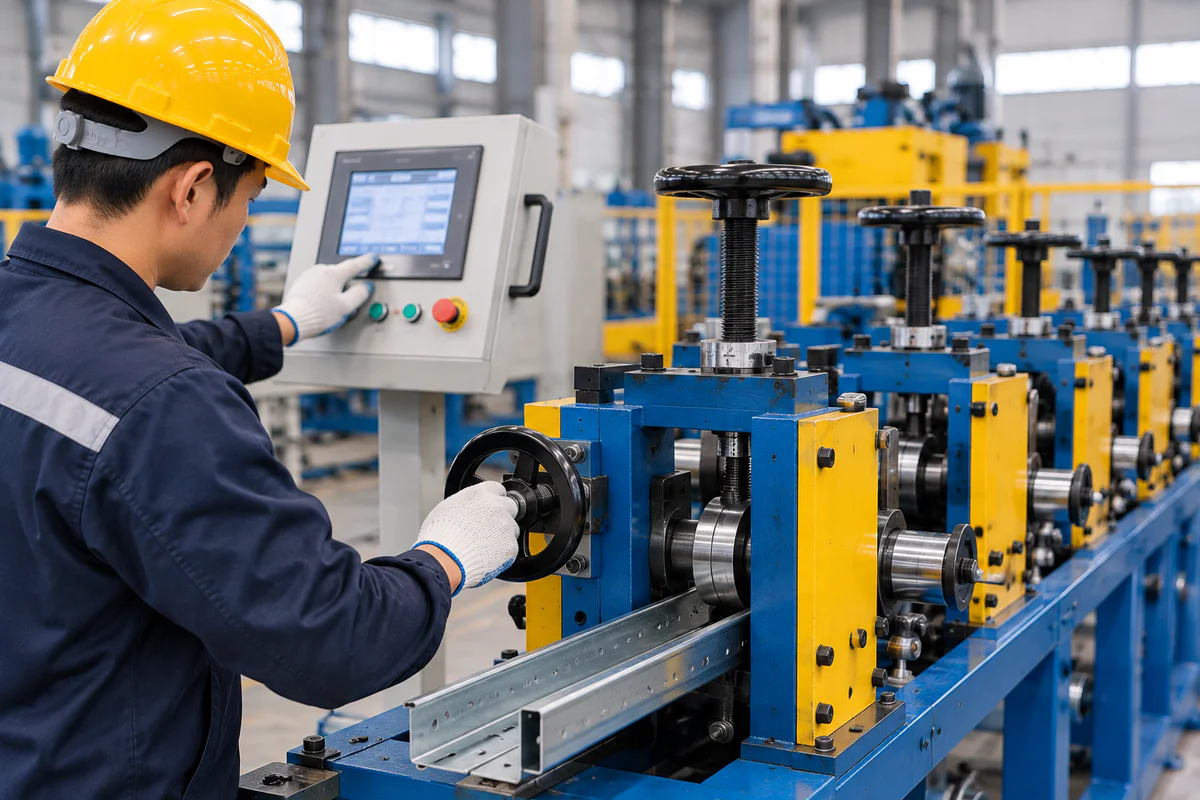
Manual or Automatic Adjustment
Manual suits limited ranges or infrequent size changes. Automatic suits many sizes, short batches or project-based orders that need faster changeover. The method follows your product range and order frequency.
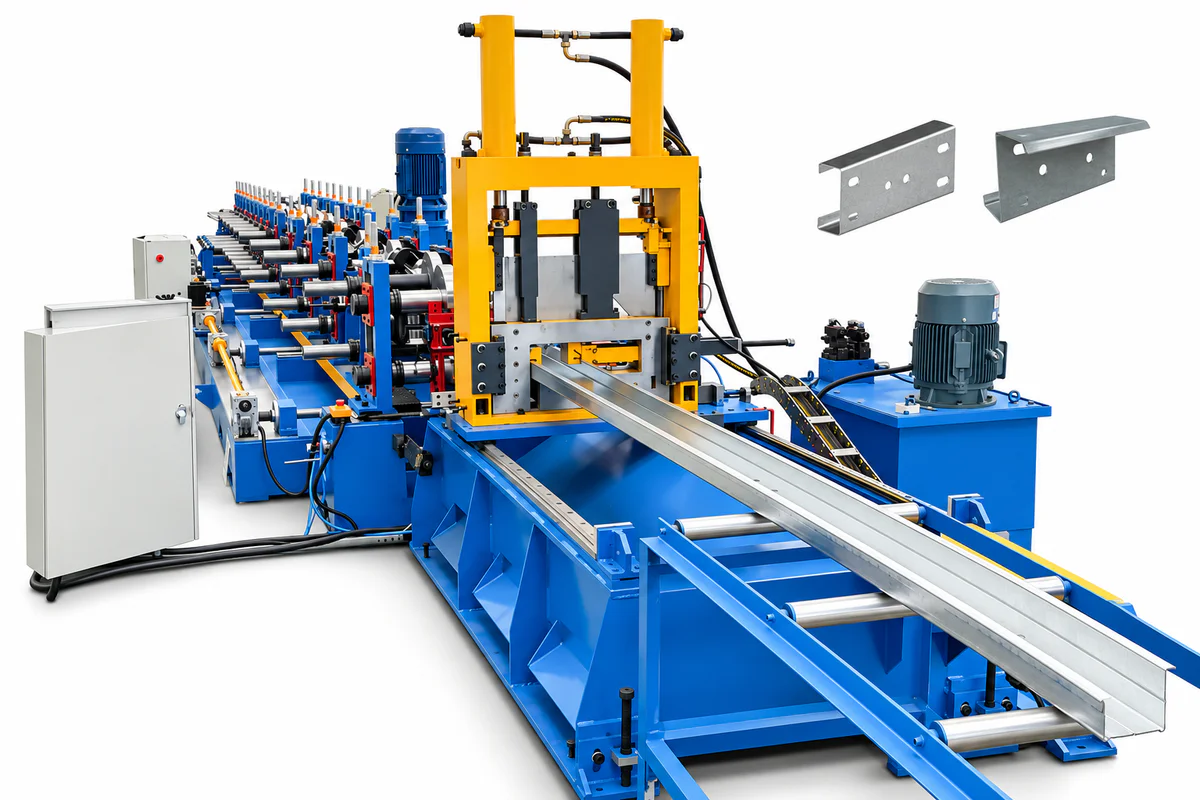
C/Z Purlin Changeover
The line can handle size adjustment, C/Z profile switching, online punching and length cutting. We first confirm web height, flange width, lip size, thickness range, hole position and whether C and Z share one line.
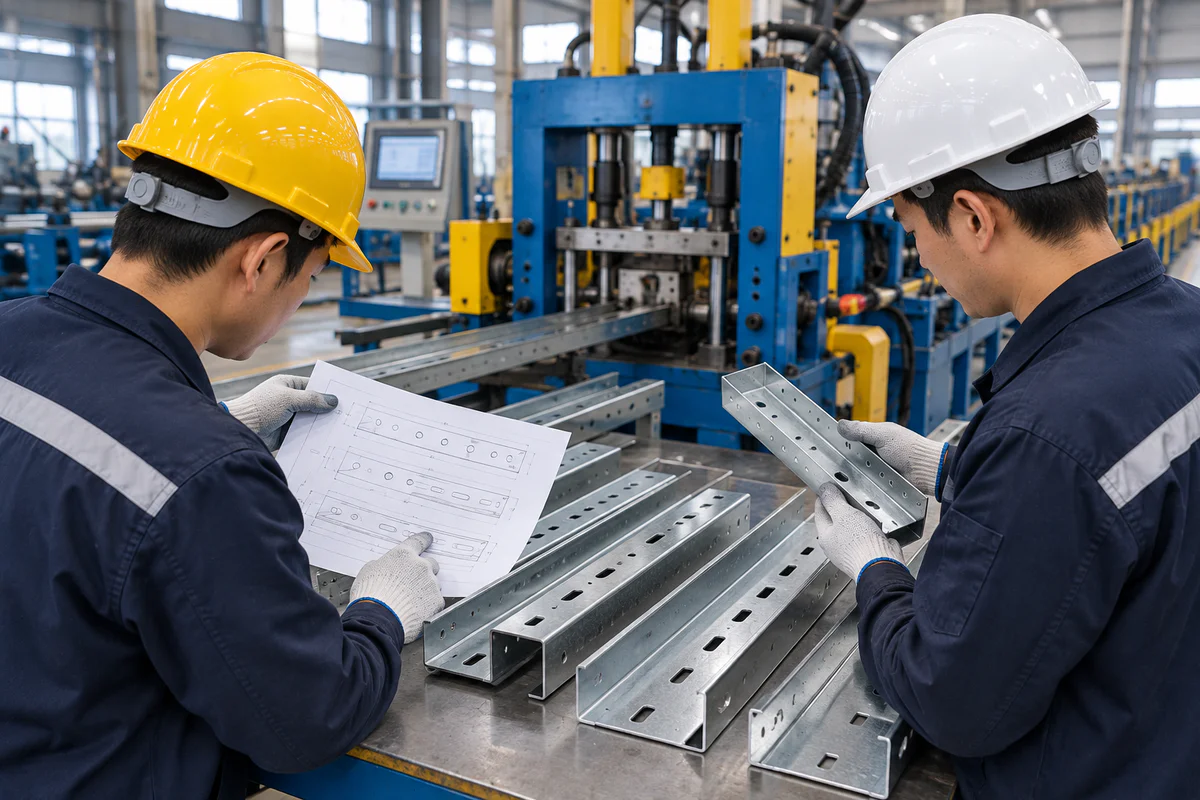
Hole Pattern Changeover
When sizes use different hole positions or slots, punching is planned carefully. We review your hole drawings, pitch, edge distance, quantity, shape and tolerance to decide between adjustable punching, replaceable dies, multiple stations or servo feeding.
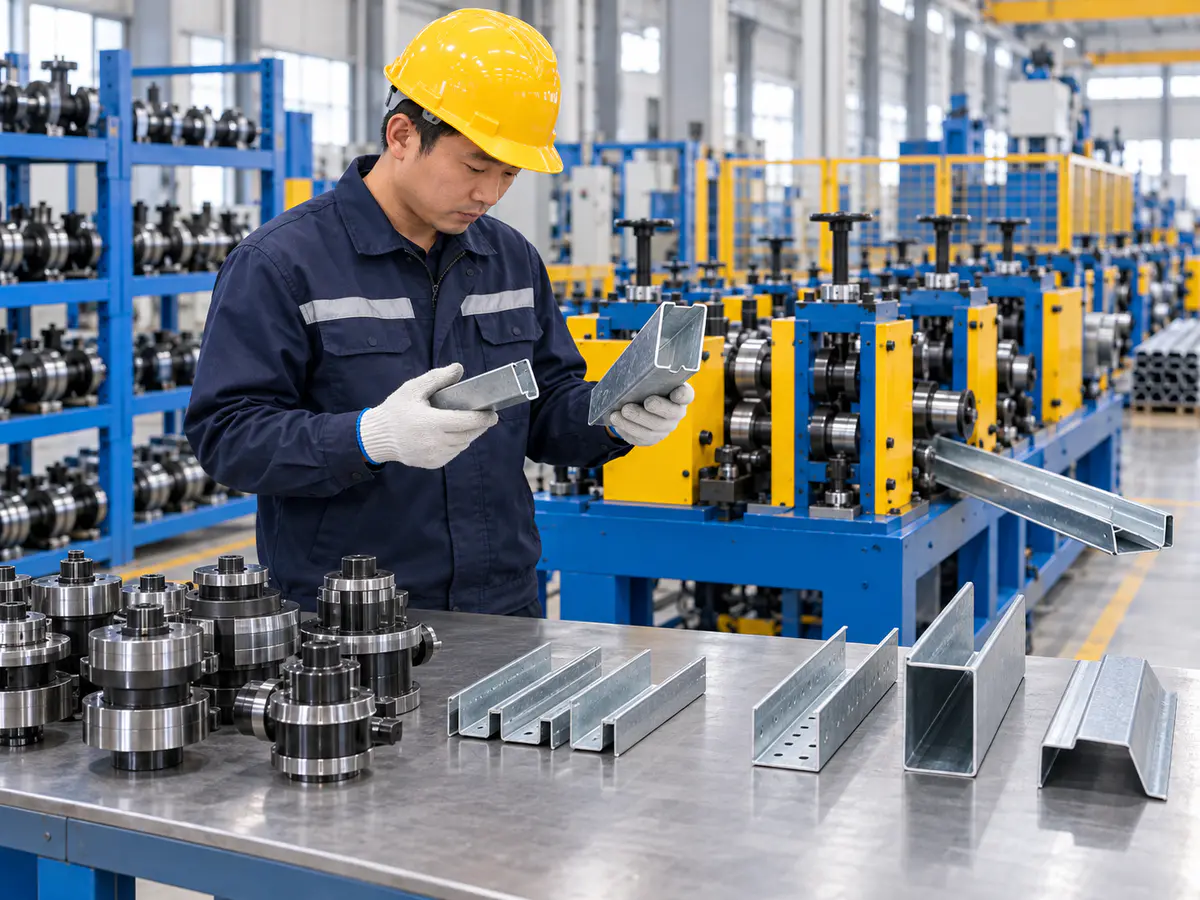
Tooling Change or Shared Tooling
Not every profile can share tooling. If the shape changes too much, a dedicated tooling set is safer than forcing products onto one line. We check which profiles share rollers, which need adjustment and which need separate tooling.
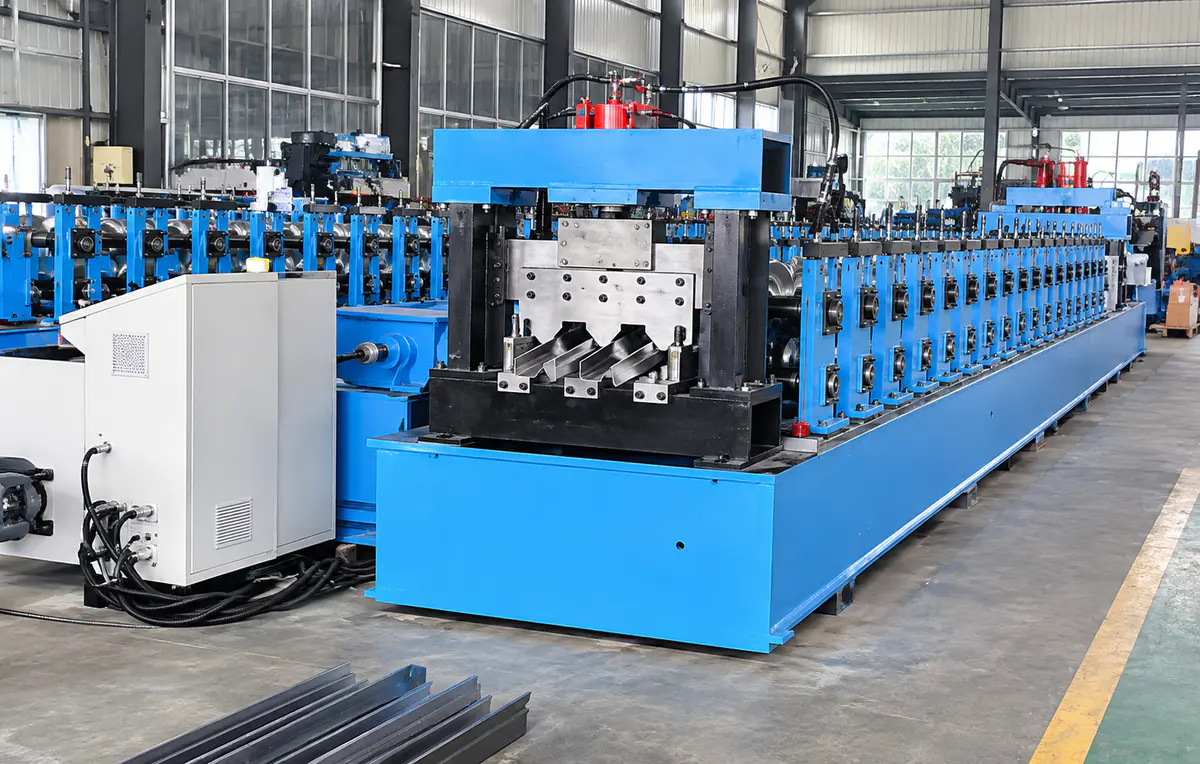
When a Dedicated Line Is Better
High-volume runs, heavy-gauge profiles, tight tolerance parts, automotive profiles, guardrails or special punching and cutting often need a dedicated line. If one product takes most of your volume, it improves stability and cuts changeover risk.
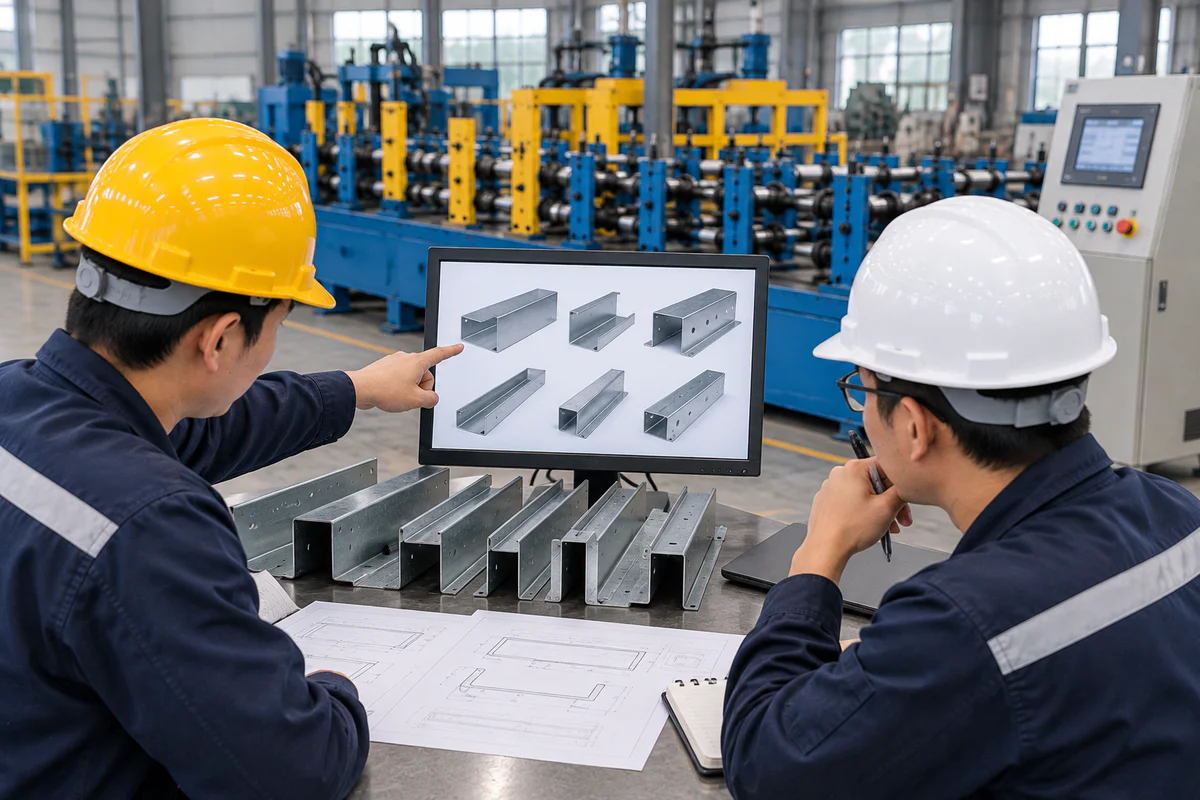
Plan for Future Profiles
Adding new sizes or profiles later? Share your future product plan during the design stage. When the profile family allows it, we leave suitable adjustment space, control options or tooling upgrade room for you.
Not sure if one line can cover your full size range?
Send us your product list, size range and hole patterns. We tell you which profiles can share one line, which need separate tooling and what changeover solution fits your production plan best.
Profile Testing Before Shipment
Before your line leaves our factory, we test it against the agreed profile drawing, material condition and production requirements. The goal is simple: you confirm the line can produce your profile before it ships.
We install the tooling, run the machine and check the finished profile point by point, so the setup you sign off on is the setup that arrives.
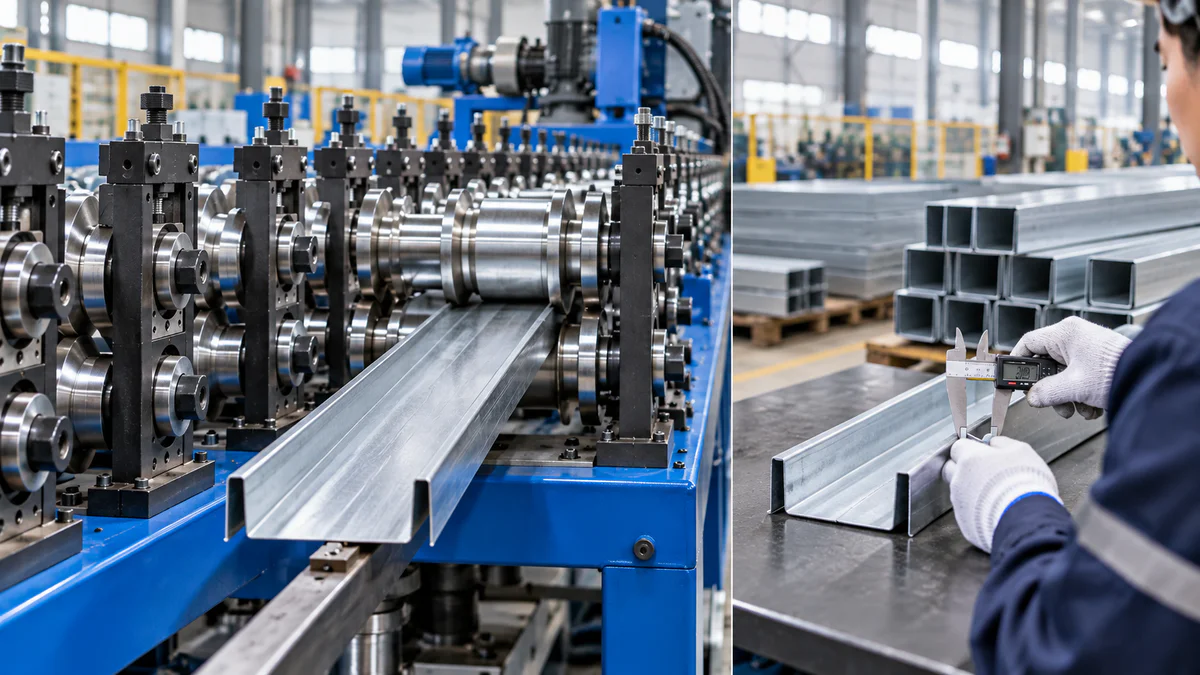
Test With the Agreed Profile
We install the roll tooling, adjust the forming stations and run the machine to your profile drawing. When sample material is available, we run the test with the agreed material type and thickness.
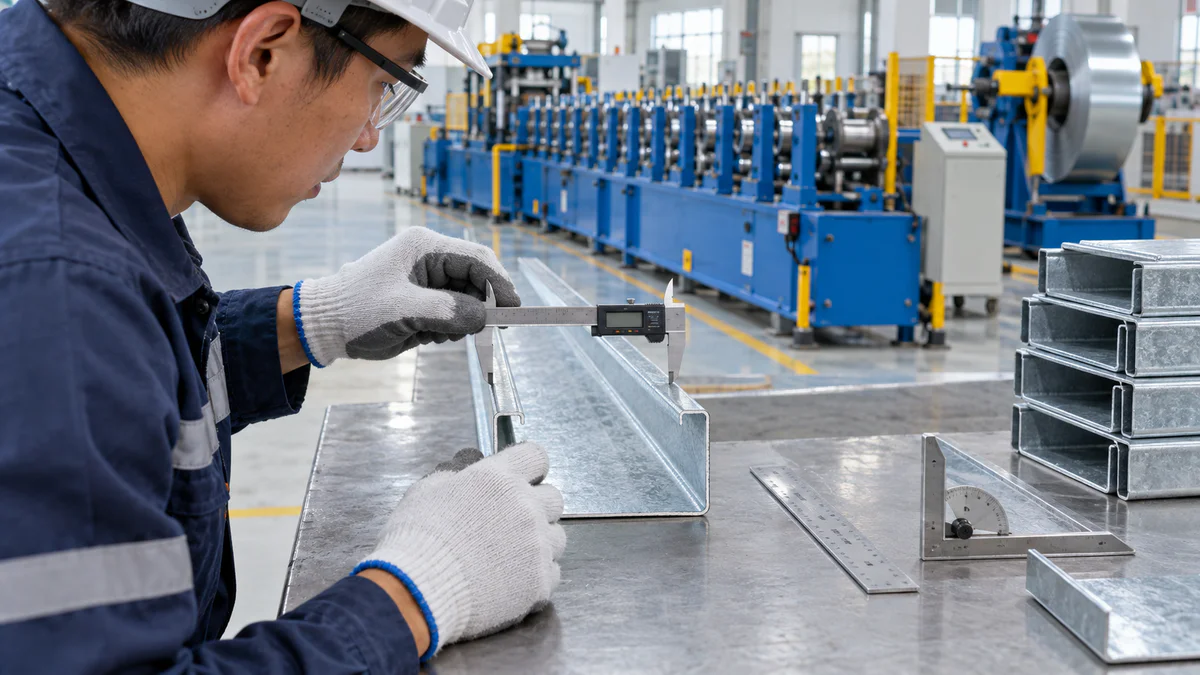
Check Profile Dimensions
We check the key dimensions, width, height, flange size, lip size, bending angle and open size, to confirm the finished profile matches your drawing.
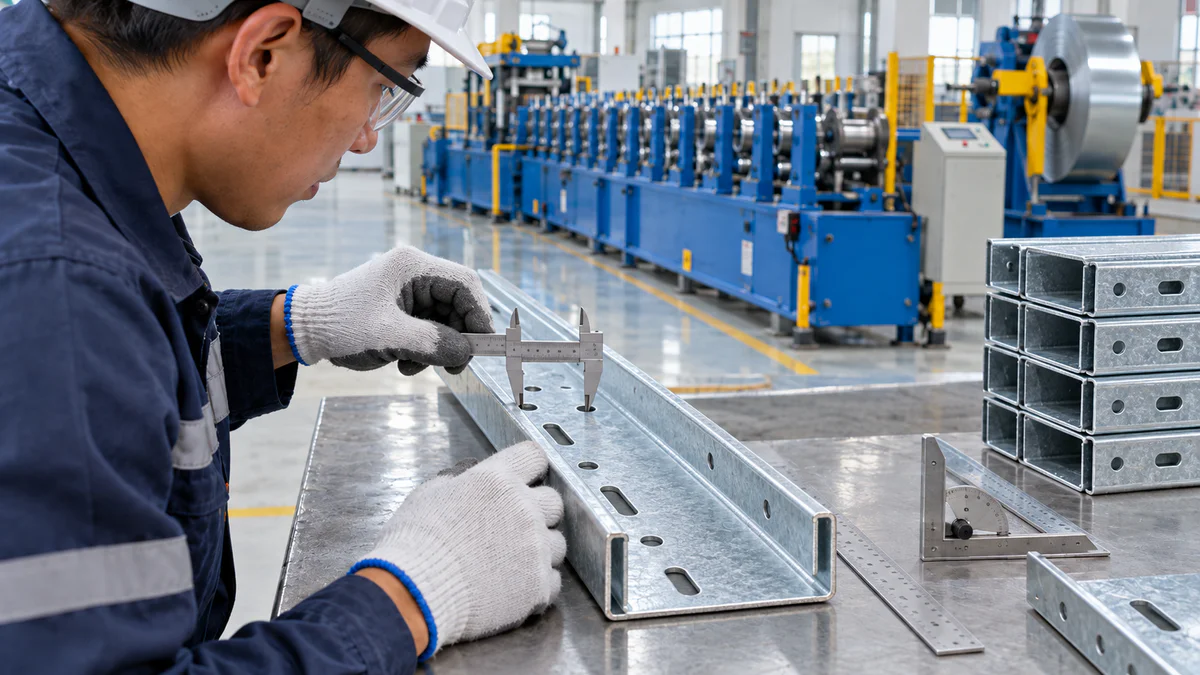
Verify Hole Position
For profiles with holes, slots or notches, we check punching position, hole pitch, edge distance and alignment after forming. Accurate hole position keeps your installation, assembly and later project use on track.
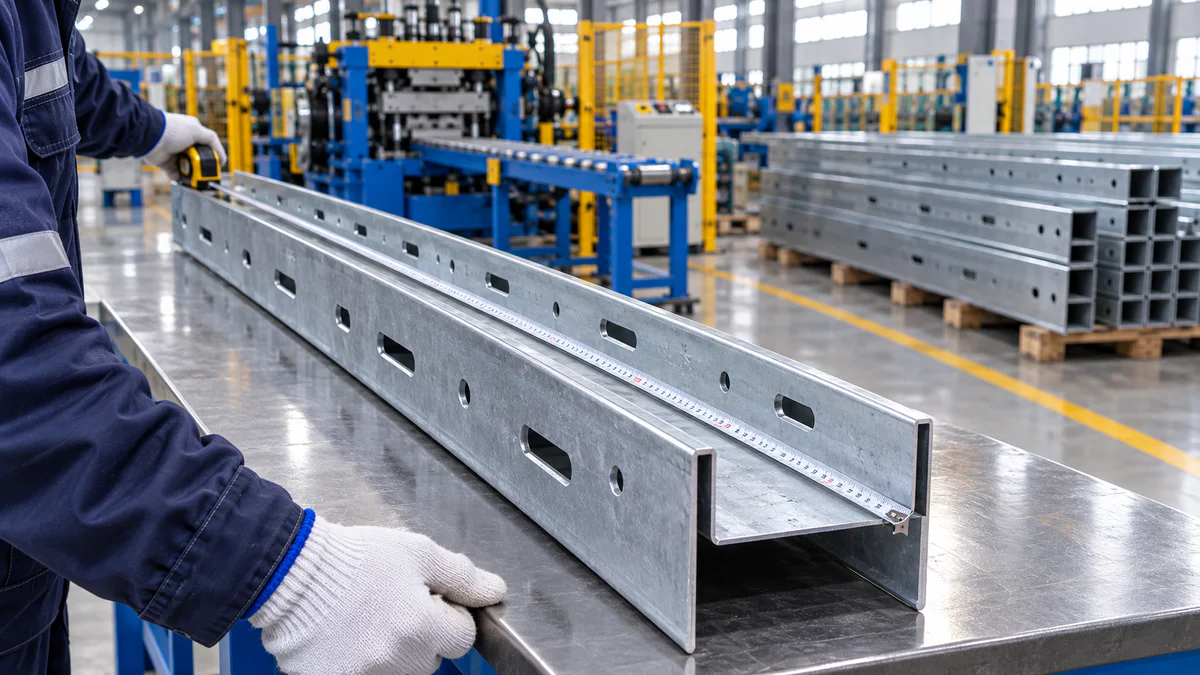
Confirm Cutting Length
We test the cutting system to your required product length, checking cutting accuracy, edge condition and visible end deformation, especially on heavy-gauge, deep or high-strength profiles.
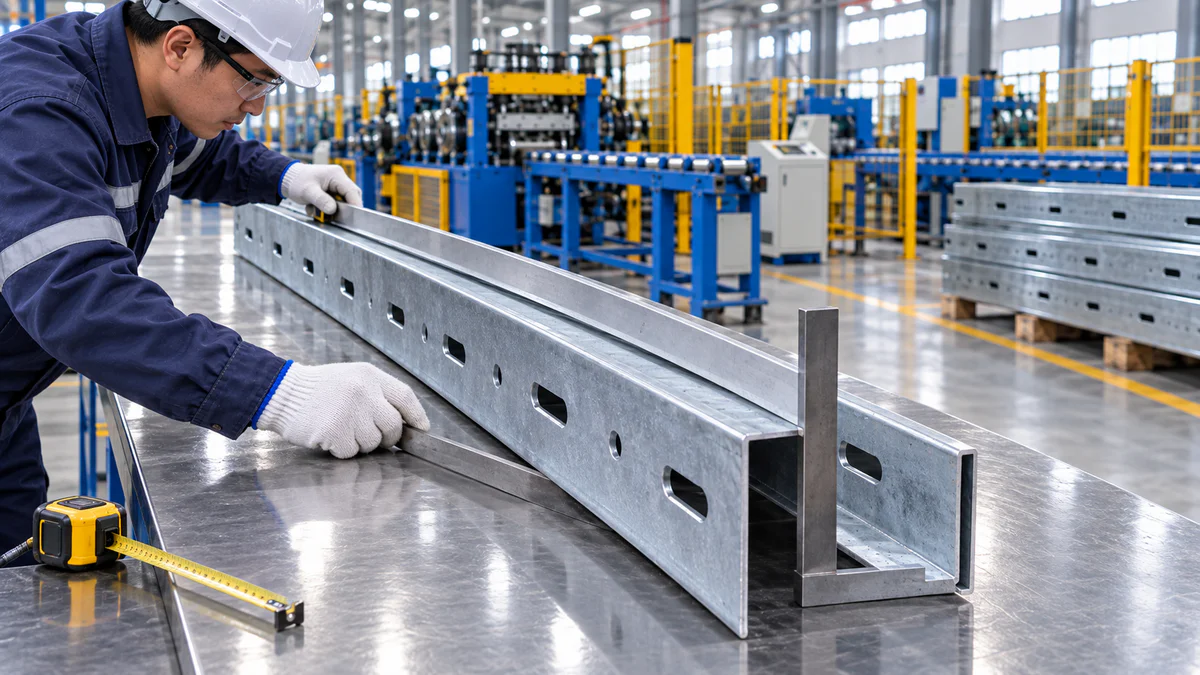
Inspect Straightness and Twist
Roll formed profiles can show bowing, twisting or springback. During the test we inspect the finished profile and adjust the line where needed to improve production stability.
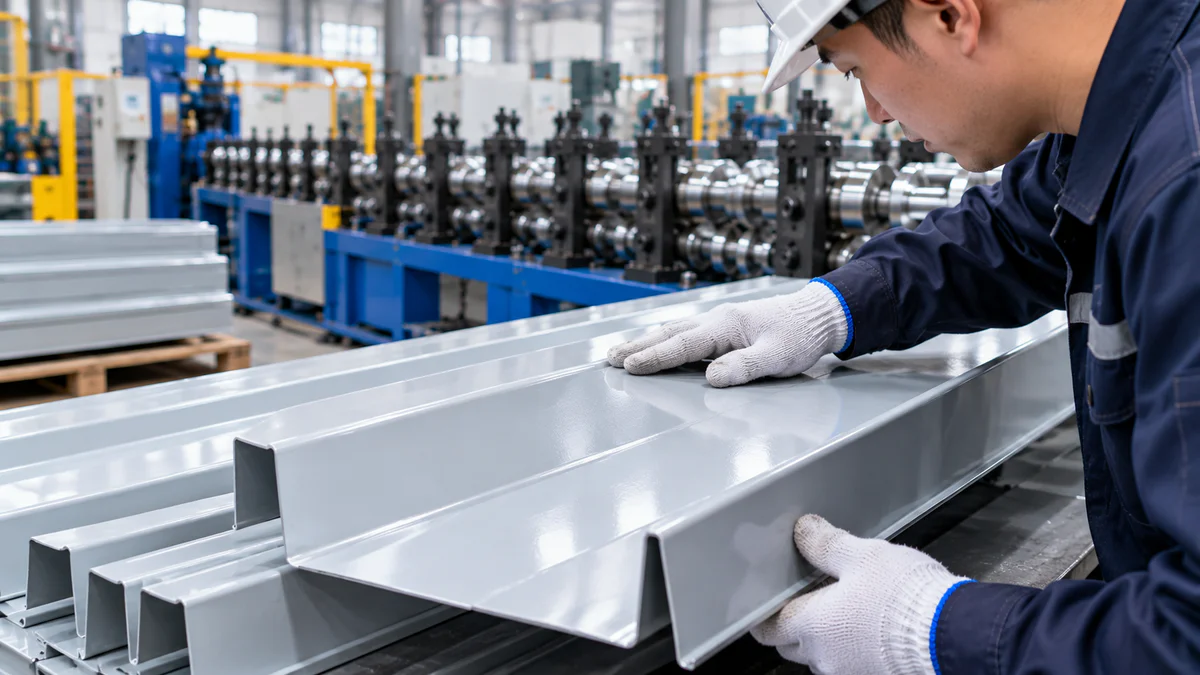
Check Surface Condition
For galvanized, PPGI, stainless, aluminum and other coated materials, we inspect the surface after forming. Roller pressure, guide position and material handling are adjusted to reduce scratches and pressure marks.
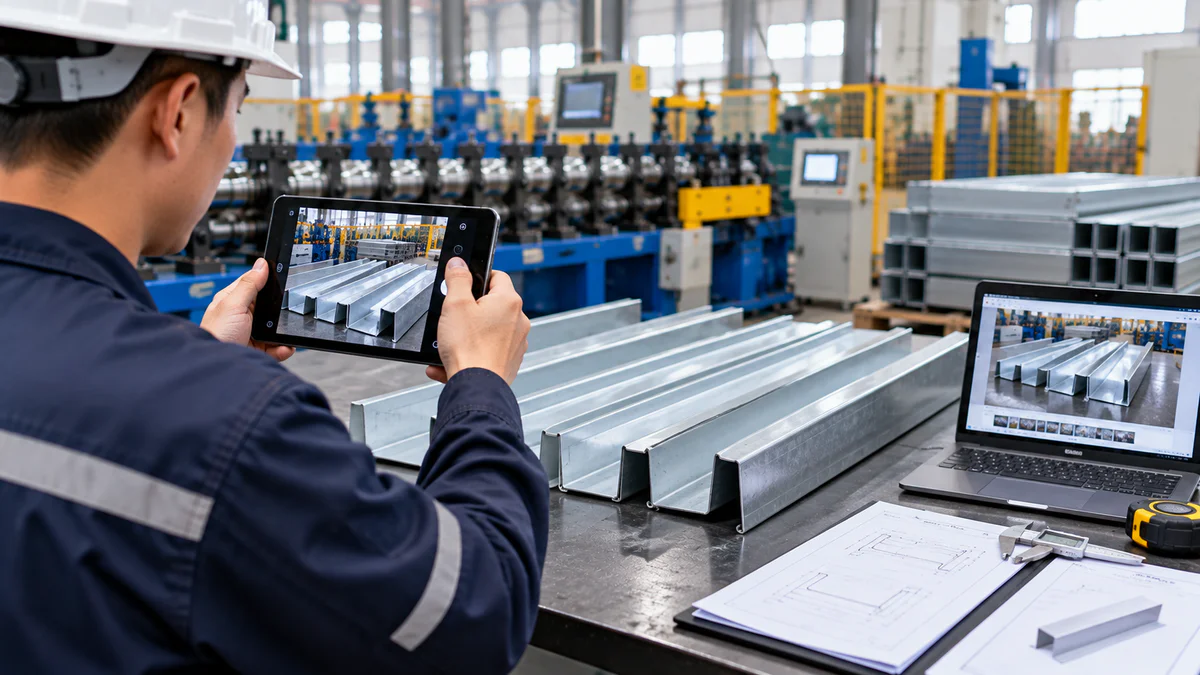
Share Test Results Before Shipment
After testing, we provide photos, videos or sample confirmation per the project agreement. You review the finished profile condition before the machine is packed and shipped.
Testing before shipment means you confirm the finished profile, hole position, cutting length and surface condition first. The line you approve at our factory is the line that arrives at yours.
Want to see your profile run before you pay the balance?
Send your profile drawing and sample requirements. We use them as the reference during pre-shipment testing and share photos, videos or sample parts, so you confirm the finished profile before the line is packed.
Why Choose Our Roll Forming Factory
Buying a roll forming machine is not only about the machine body. You need a factory that understands your profile, checks the forming risks, designs the roll tooling, matches the punching and cutting system, and supports stable production after delivery.
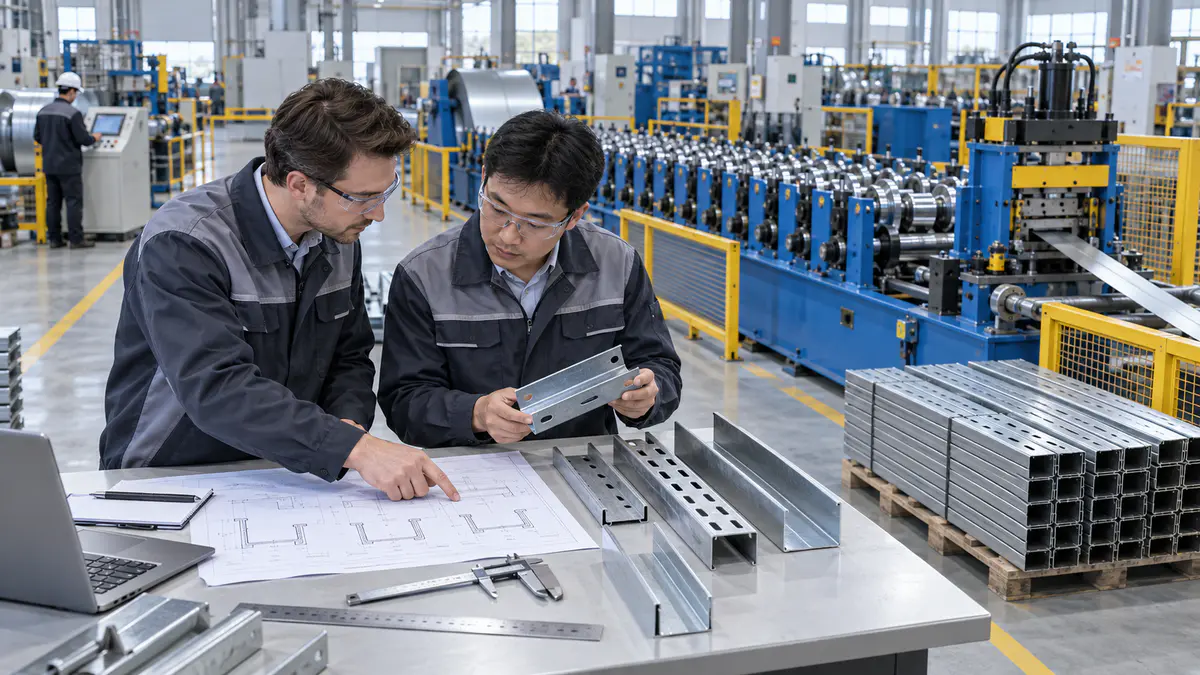
We Help You Check the Profile First
Before we recommend a machine, we review your profile drawing, material, thickness, hole layout, cutting length and tolerance. It keeps you from choosing a line that can't match your product, your material or your production plan.
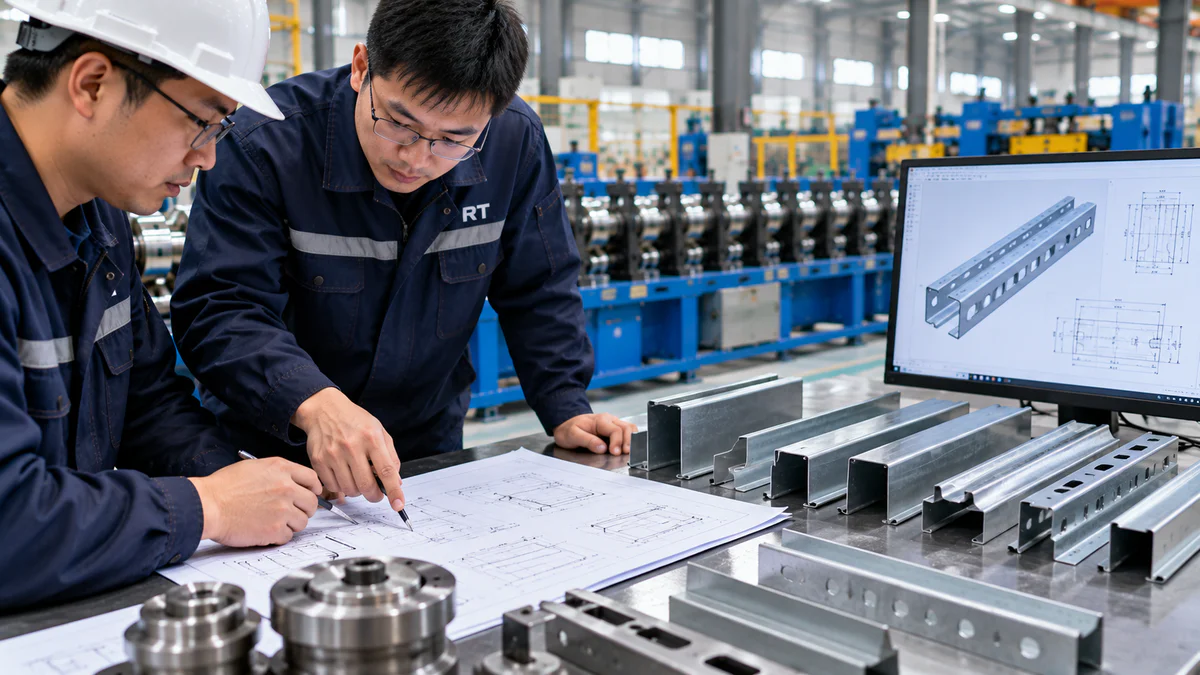
We Design Around Your Finished Product
The final profile is the target. Machine structure, forming stations, roll tooling, punching and cutting are all selected around the section you need to produce. You don't need a general machine, you need a line that fits your shape, material strength, hole position and output.
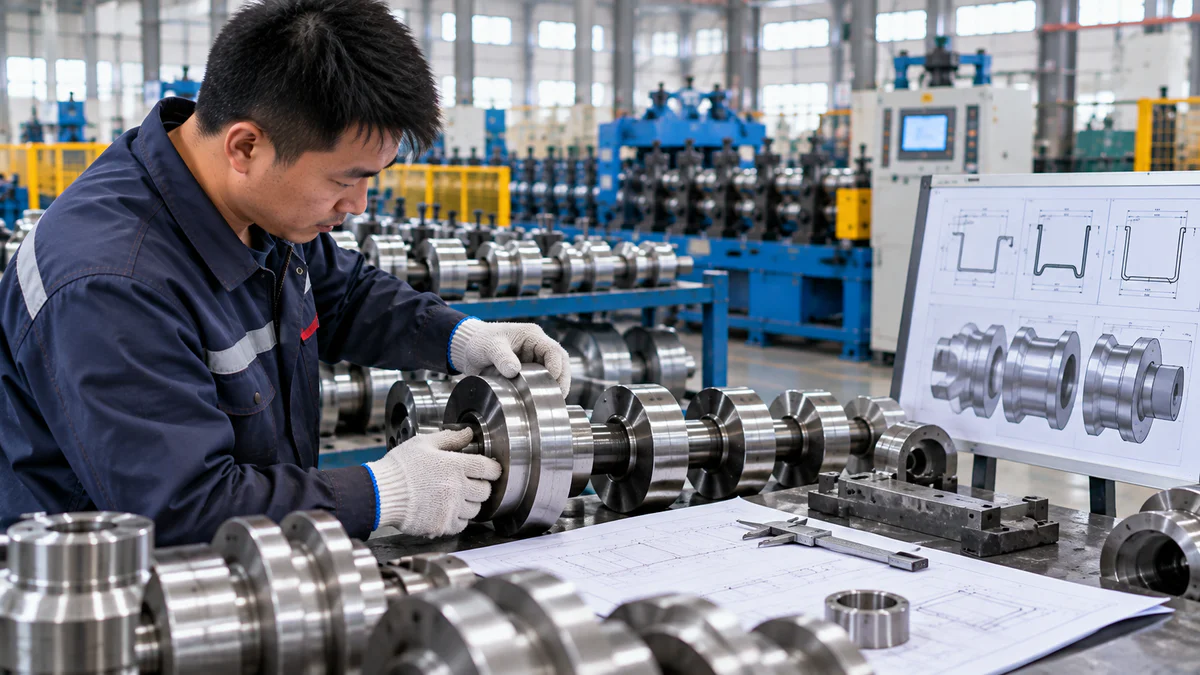
We Focus on Roll Tooling Quality
Roll tooling drives profile size, straightness, twisting, springback and surface condition. We review the forming sequence, roller arrangement, adjustment space and material contact area before tooling production, so the line forms your profile step by step with better stability.
We Plan Punching and Cutting Together
For many products, punching and cutting problems cost more than forming problems. We help you confirm whether holes go before or after forming, how the cutting die matches the profile, and how the line controls hole position, cutting length and end deformation.
We Consider Your Material Risks
Different materials need different line designs. Galvanized, PPGI, stainless, aluminum and high-strength steel each affect forming load, roller design, surface protection, punching force and cutting. Checking material before quotation lets us recommend the right frame, shaft size, drive system, tooling and cutting solution.
We Test the Line Before Shipment
Before shipment, the machine is tested to the agreed profile and requirements. We check profile dimensions, hole position, cutting length, surface condition, straightness and visible twisting, so you review the finished sample before the line leaves our factory.
We Support You After Delivery
Once the machine arrives, you may still need help with installation, roll adjustment, operator training, spare parts, cutting blades, punching dies or future profile changes. Our support doesn't stop at shipment, we help you keep the line usable for production and later planning.
We Help You Make a Practical Decision
If one line can cover your size range, we help you plan the changeover. If a dedicated line is safer for your product, we explain why. The goal is a roll forming solution that matches your product, your factory space, your workers and your production volume.
Roll Forming Questions
The questions we hear most before a project starts, covering profile suitability, tooling, punching, cutting, material and pre-shipment testing. Don't see yours? Send your drawing and ask us directly.
Can you build a roll forming machine to my profile drawing?
Yes. The profile drawing is the starting point. We review the section shape, thickness, yield strength, hole layout, cutting length and tolerance before recommending the machine structure, roll tooling, punching system and cutting method.
How do I know if my profile is suitable for roll forming?
We check the profile shape, bending radius, open size, material strength, hole position and required tolerance. Some profiles form continuously with ease, others need extra forming stations, stronger tooling, special guiding or a revised punching and cutting process.
Can one roll forming line produce different sizes?
Yes, if the profiles belong to the same family and the size range suits shared or adjustable tooling. For C/Z purlins, solar brackets, strut channels, cable trays and rack profiles, we review your size list and suggest manual adjustment, automatic adjustment or dedicated tooling.
What information should I send before getting a solution?
Send your profile drawing, material type, thickness range, yield strength if available, coil width, hole or slot drawing, cutting length, tolerance and target production speed. Finished product photos or samples also help us understand the application better.
How do you control twisting, bowing and springback?
Through roll pass design, forming station arrangement, roller alignment, guide adjustment, material confirmation and testing. High-strength steel, asymmetric profiles and profiles with many holes need closer review, since they're more likely to twist, bow or spring back.
Should holes be punched before forming or after?
It depends on hole position, profile shape, thickness and assembly need. Some products pre-punch on flat strip before forming, others post-punch after the profile is formed. We review your hole layout and recommend the process that best supports hole accuracy and profile stability.
How do you reduce cutting deformation at the profile end?
End deformation depends on profile shape, thickness, strength, cutting position and die design. We choose the cutting method for your product, stop cutting, flying cutting, post-cutting or profile cutting dies. For deep, closed or heavy-gauge profiles, cutting die design matters most.
Can your roll forming line process high-strength steel?
It can, but it needs proper review first. High-strength steel may need stronger frames, larger shafts, more forming stations, stronger drive systems, suitable roll tooling and careful springback control. Send the material grade, thickness and yield strength before quotation.
How do you protect coated or decorative surfaces?
For galvanized, PPGI, stainless, aluminum and other coated materials, we review roller contact, guide position, feeding method and line adjustment. The goal is fewer scratches, pressure marks, coating damage and surface contamination during continuous production.
Can I check the finished profile before shipment?
Yes. Before shipment, the line is tested to the agreed profile drawing and material condition. We check profile dimensions, hole position, cutting length, surface condition, straightness and visible twisting, and provide photos, videos or samples per the project agreement.
Send Your Profile Drawing
Send your profile drawing, material, thickness, hole layout and cutting length. Our factory team checks the forming process and replies with a practical line configuration, usually within 24 hours.
Henry
Roll Forming Project Contact
Send me your profile drawing and I'll personally review the forming process, tooling plan and line configuration with our factory team before quoting. No pushy sales, just a straight answer on whether your profile is a good fit and what line you actually need.
Not sure where to start? Send a sample photo, a sketch or even a finished part, and I'll take it from there.